The beginning of the school year is full of excitement, energy, and endless questions. In Pre-K and Kindergarten, one of the most essential skills we teach during the first few weeks is how to use school supplies. While it might seem simple to adults, young learners need time, modeling, and meaningful practice to use materials responsibly. Establishing solid classroom expectations around supplies sets the tone for the rest of the year—and helps reduce future headaches!
Why Teaching School Supply Procedures Matters
Learning how to use school supplies is more than just helping students know which end of the glue stick to use; it also helps them understand the purpose of each item. It’s about teaching routines, respect for materials, and fostering independence. In the early childhood classroom, students need explicit instruction in:
- What supplies are used for
- How to use them safely and correctly
- How to clean up and store materials
- What to do if a supply is missing or broken
When students have clear classroom procedures in place, you’ll see fewer disruptions, fewer broken materials, and more confident learners.
Teach students what to do if they lose a pencil or glue stick. I have a lost crayon bin and an area with extra supplies that students can easily access if needed.
Classroom Procedures That Make a Difference
Before learning how to use school supplies, students need to know the routines and rules that keep the classroom running smoothly. Here are a few procedures to teach at the beginning of the school year.
📦 Where Are Supplies Stored?
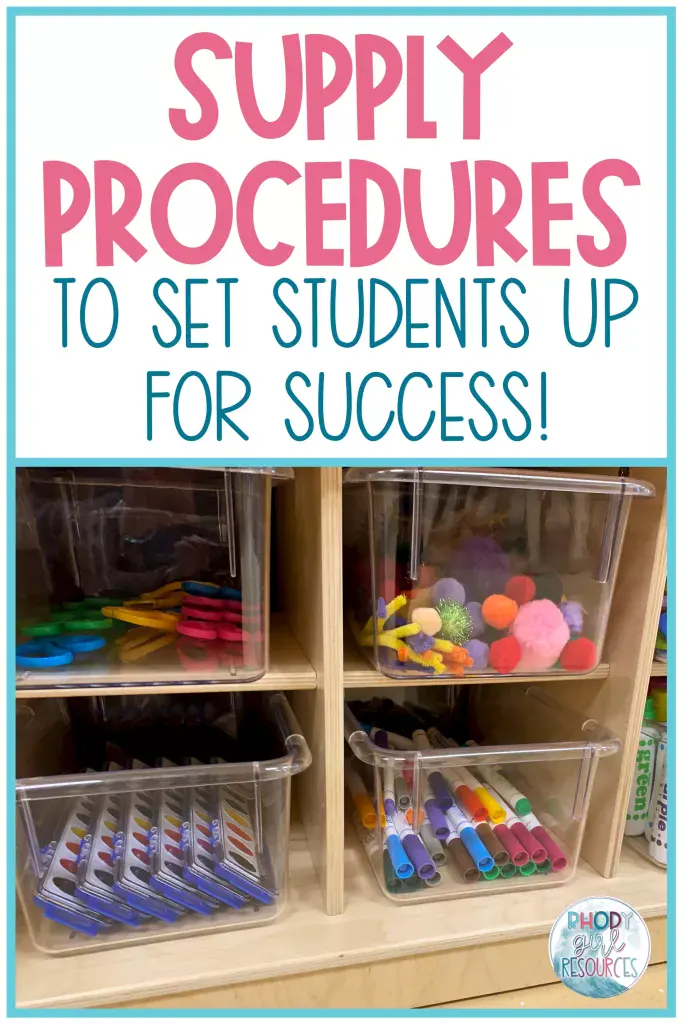
Designate clear areas for community and individual supplies. Use picture labels so even non-readers can find what they need. Demonstrate how to remove materials and store them properly.
❓ What If I Lose Something?
Teach students what to do if they lose a pencil or glue stick. I keep a labeled “Lost Crayon Bin” where students can find a missing color, and I also have extra supplies labeled and easily accessible for students.
🧼 How Do We Clean Up?
We sing clean-up songs and practice transitions from the very first day. Teach students that being responsible includes returning supplies to their home—and keeping them in good condition.
Getting Started with School Supplies
Once procedures are established, I introduce how to use each school supply. We focus on:
- How to carry them properly
- How to share them with classmates
- How to use just the right amount
- Where to put them when finished
This slow, intentional introduction helps students build strong habits from the start.
Books to Support How to Use School Supplies
Books are an excellent way to start conversations and reinforce classroom expectations. These titles tie into your lessons on how to use school supplies:
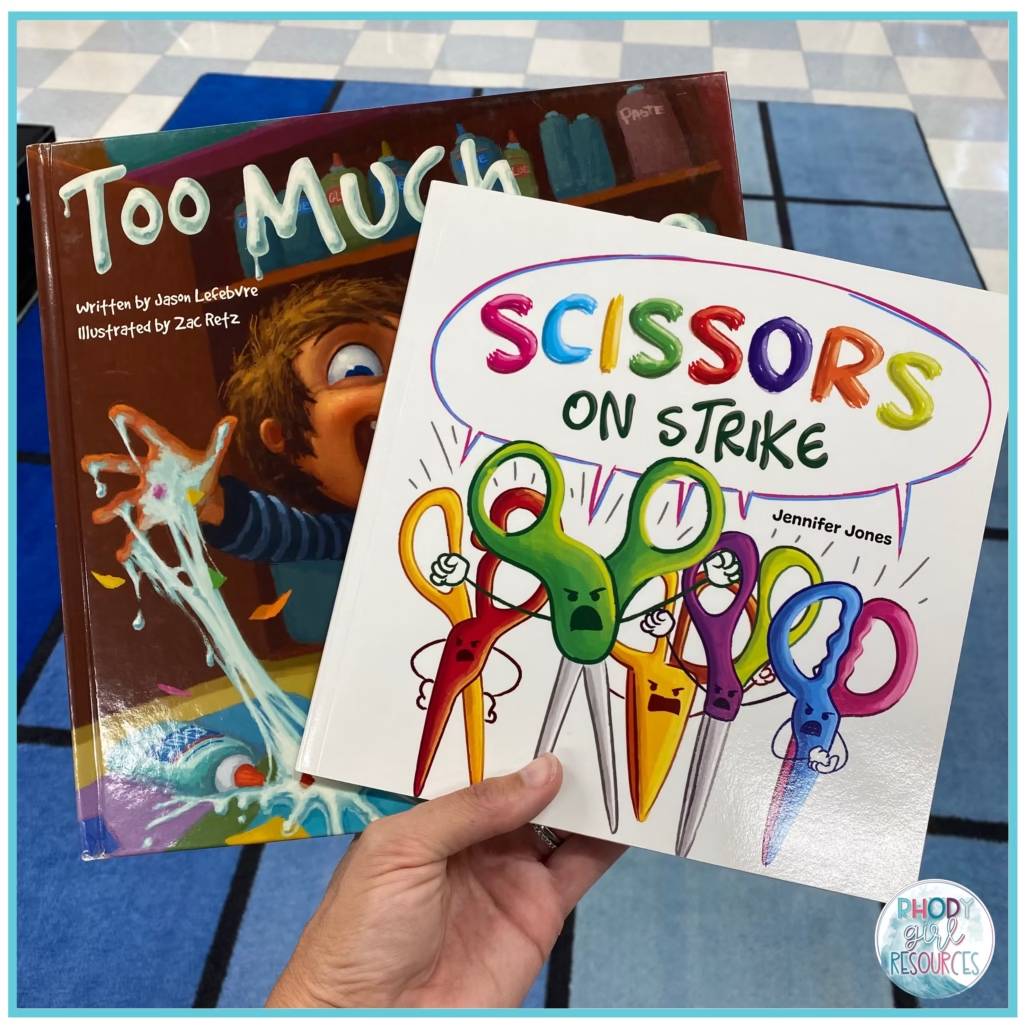
📘 The Day the Crayons Quit by Drew Daywalt
A hilarious look at how crayons feel when they’re overused, underused, or misused—great for teaching respectful use of supplies.
📘 Scissors on Strike by Jennifer Jones
Scissors need love, too! This book helps young students understand the importance of using supplies correctly.
📘 Too Much Glue by Jason Lefebvre
Spark a discussion about using school supplies responsibly, especially glue!
Supply Superheroes 🦸♀️🖍️✂️
To make learning how to use school supplies more engaging, I created an activity called Supply Superheroes. Students go on a mission to complete supply challenges. For each challenge completed, they earn a badge for their superhero supply shield. These challenges can be completed one at a time or in a station rotation. For each supply, we create an anchor chart together and sort the things you should and shouldn’t do with that supply into a pocket chart.
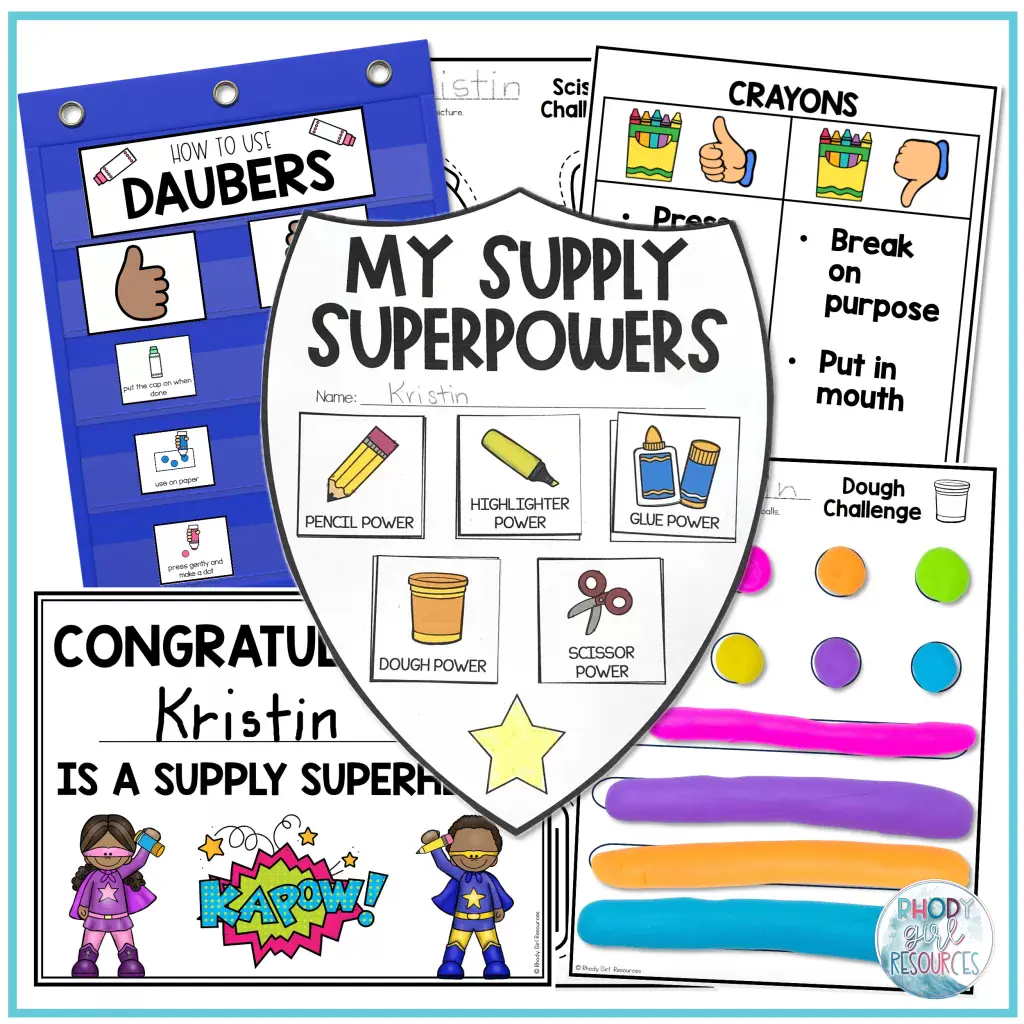
Supply Superheroes is an excellent opportunity for a classroom transformation, too. Cut plastic tablecloths to make capes, print the included masks, and let students decorate. Alternatively, grab a few superhero backdrops to bring this activity to life.
✨ You can grab the complete Supply Superheroes resource here. It includes pocket chart sorts, anchor chart templates, shields, and easy-to-print worksheets to make teaching how to use school supplies a breeze.
Consistency and Repetition Are Key
Staying consistent in how you model, reinforce, and correct student behavior makes all the difference. Build time into your day—especially during the first few weeks—to revisit procedures often. And remember, your goal is not perfection. It’s progress. Every time a student remembers to cap their marker or return scissors without prompting, that’s a win worth celebrating.
Teaching how to use school supplies doesn’t have to be stressful. With a bit of prep, clear modeling, and a fun approach like Supply Superheroes, you’ll have a classroom full of confident, capable learners who know how to take care of their materials and how to use school supplies.