Learning to read can feel overwhelming for young children, but the right tools make all the difference. One simple and effective strategy you can use in your K–2 classroom is decodable sentence pyramids. These structured reading exercises help students build fluency, decoding skills, and confidence—one word at a time. Whether you teach whole-group lessons, work with small groups, or run literacy centers, sentence pyramids provide your students with the support they need to grow as readers.
What are Decodable Sentence Pyramids?
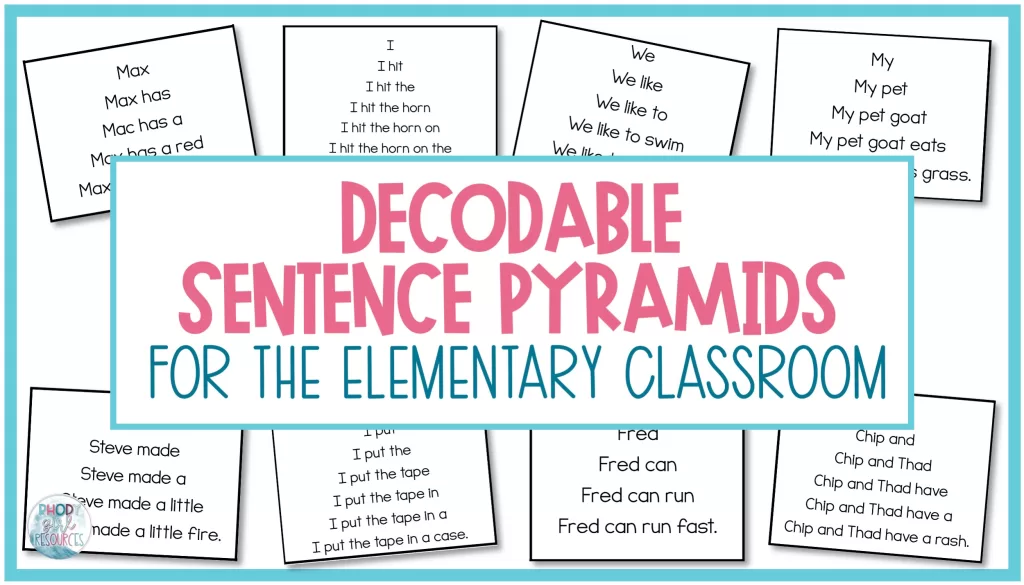
Decodable sentence pyramids, also known as fluency pyramids, help young readers practice fluency in a structured way. These tools start with a single word and add one word per line. Each line builds on the last until students read a complete sentence. Here’s an example:
I
I see
I see a
I see a cat.
This format allows students to focus on one word at a time. Then, they reread each line to build speed and confidence. These pyramids utilize simple, decodable words that align with students’ phonics knowledge and skills. They also include high-frequency words students need to know.
In short, sentence pyramids give students repeated exposure to the same words in a predictable format. As a result, they gain fluency while building meaning in a step-by-step manner. Additionally, the pyramid shape gives students a clear visual structure. As they read each new line, they experience a sense of accomplishment and motivation to continue.
Benefits of Using Decodable Sentence Pyramids
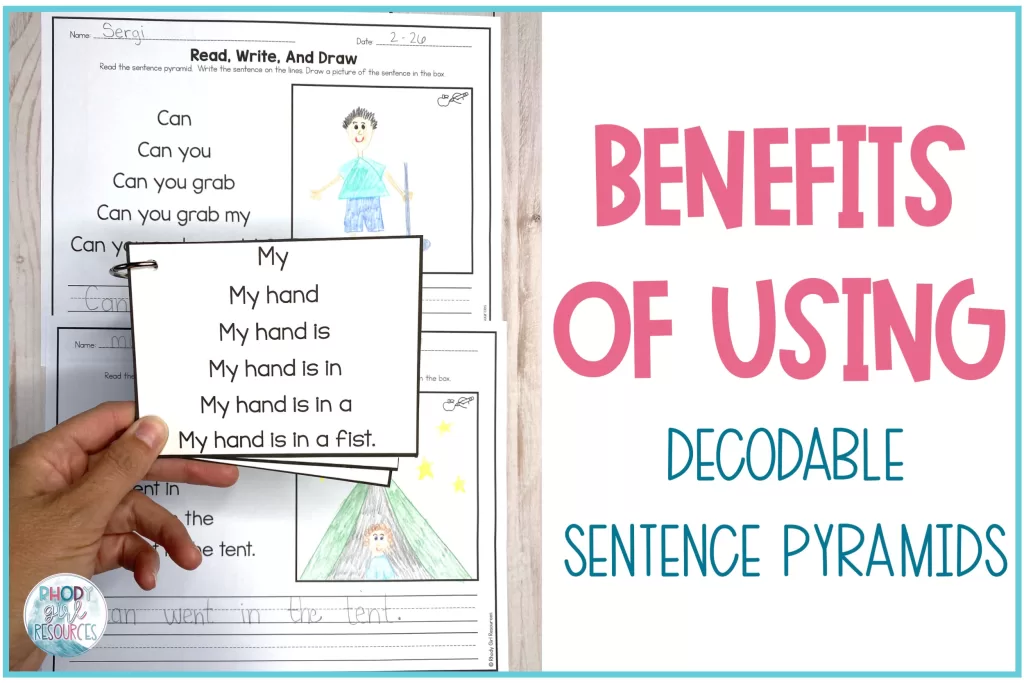
Using decodable sentence pyramids offers many benefits for early readers. Here are a few key advantages:
Build Fluency
Sentence pyramids encourage repeated reading. Each line adds one word, so students reread and become more fluent with each step. Moreover, they experience success early in the pyramid, which boosts their motivation.
Reinforce Phonics Skills
Pyramids use only decodable words and sight words that students have learned. As a result, this helps students transfer phonics skills from isolated words to complete sentences.
Support Comprehension
As each line grows, the sentence becomes clearer. Students use context to make meaning. This helps with early comprehension skills.
Keep Students Engaged
The pyramid format makes reading feel like a fun challenge. Students feel proud as they read the whole sentence at the bottom.
Easy to Differentiate
You can easily create pyramids for different reading levels. Some students may use three-line pyramids, while others use longer six-line versions.
Simple Progress Monitoring
You can use pyramids to track growth. Record words correct per minute or note decoding strategies students use.
4 Ways Use Decodable Sentence Pyramids in the Classroom
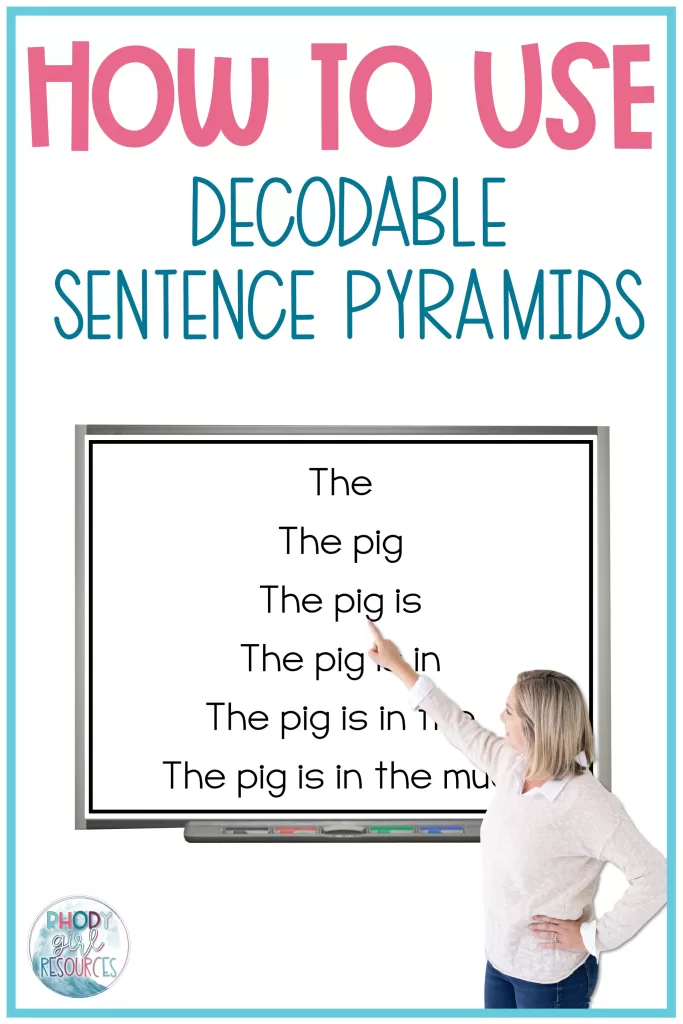
You can use sentence pyramids in many parts of your literacy block. Whether you’re teaching whole-class phonics or supporting students one-on-one, fluency pyramids can be easily adapted to any setting.
1. Whole Group Decodable Sentence Pyramids Activities
- Morning Meeting/Message Practice: Start your day with a fluency pyramid warm-up. Project the pyramid on the board and read it aloud together. Students can echo each line after you or read it chorally as a class.
- Shared reading connection: You can also use pyramids after shared reading. Choose a pyramid that uses vocabulary or patterns from a familiar story. This helps students apply phonics and sight word knowledge in new ways.
- Phonics reinforcement: When teaching a new skill (like digraphs or blends), use a related pyramid to provide immediate application and reinforce the skill in context
2. Small-Group Reading with Decodable Sentence Pyramids
Next, bring decodable sentence pyramids into your small groups. In groups, give students pyramids that match their skill level. They can take turns reading each line or read together with a partner. Use these moments to focus on fluency and decoding strategies. As a result, students get targeted practice and repeated exposure to patterns they need to master.
You can also track reading speed. Time students as they read the whole pyramid. Have them reread it and try to beat their first time. This fun challenge helps students stay engaged while practicing fluency.
3. Intervention
Fluency pyramids can be effective when used during reading interventions.
- Target key skills: Choose pyramids aligned to the student’s instructional gap.
- Guide with scaffolding: Read line by line, offer corrections, and celebrate success.
- Track growth: Use completed pyramids to document improvement in accuracy and fluency.
Ultimately, these tools provide high-frequency, structured practice without overwhelming the student.
4. Literacy Centers
Finally, sentence pyramids are a great addition to literacy centers. For example, try these activities:
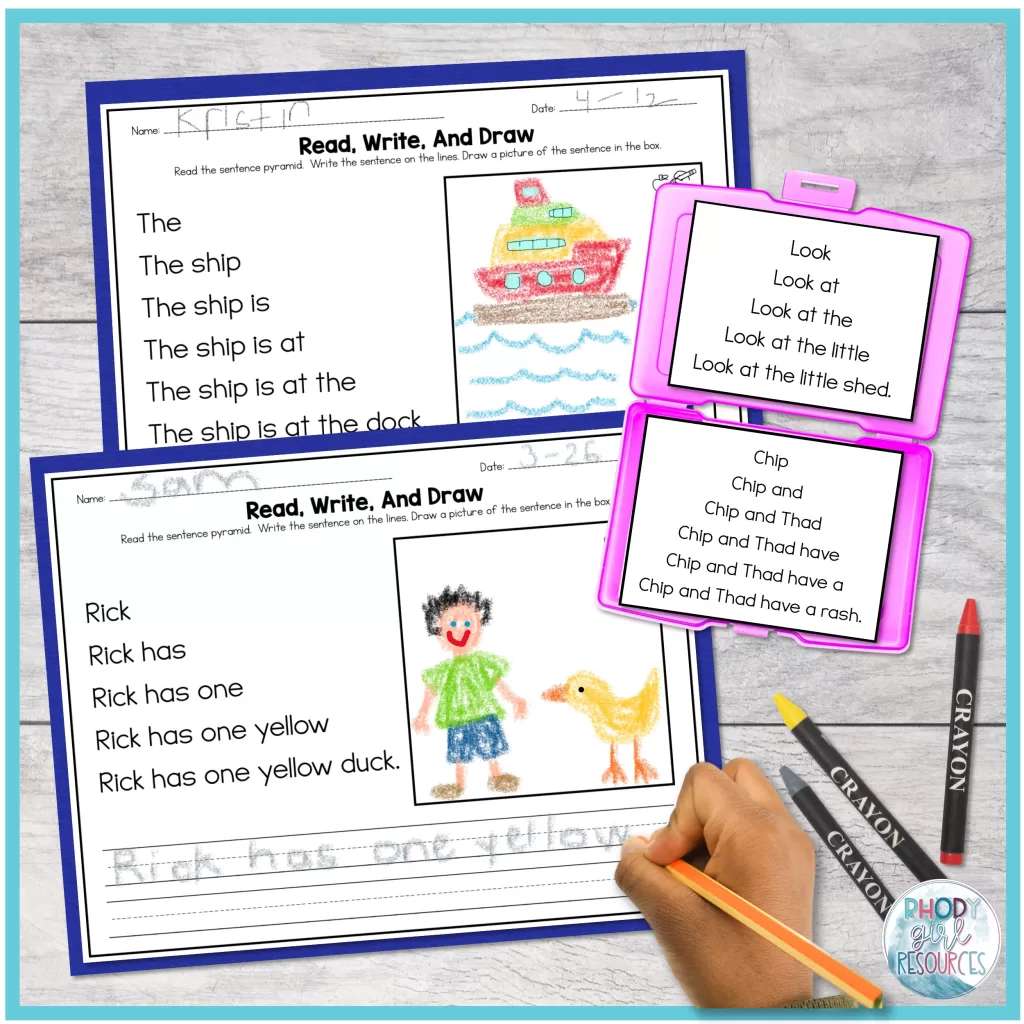
- Fluency center: Students read laminated pyramids with a partner or independently.
- Writing center: Students build or write their own pyramids using phonics patterns or word families.
- Listening station: Record yourself reading a pyramid and allow students to listen and follow along.
Because sentence pyramids are predictable and visual, students can complete them independently and successfully. This keeps students engaged while reinforcing their decoding, fluency, and comprehension skills.
Tips for Using Decodable Sentence Pyramids Effectively
To get the most out of decodable sentence pyramids, follow these simple tips. Each one builds on the last to help you implement them smoothly and successfully.
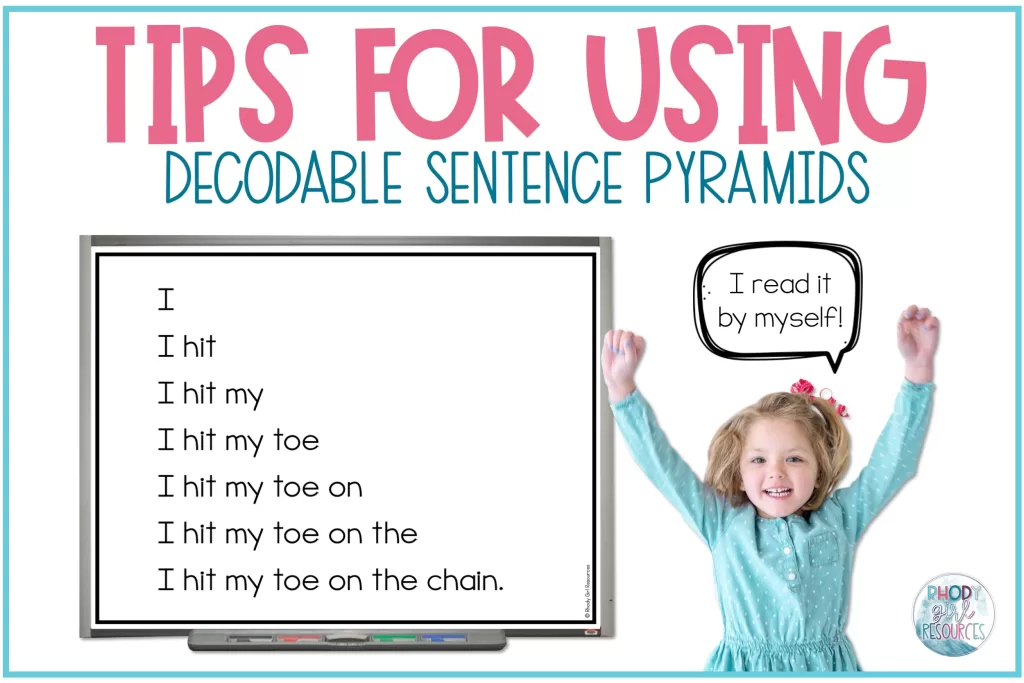
- To begin, align each pyramid with your current phonics skill. This ensures that the content aligns with what students already know.
- Next, begin with high-frequency and short vowel words. These words are easier to decode and build confidence quickly.
- Additionally, use simple fonts and large text. This makes the text easier for young readers to see and follow.
- Then, model fluent reading with expression. When you demonstrate prosody, students learn how to read with proper pacing and tone.
- After that, encourage repeated reading. The more students reread, the more fluent they become.
- Also, allow students to create their own pyramids. This boosts engagement and lets them take ownership of their learning.
- Furthermore, celebrate completed pyramids. Use stickers, stamps, or a fluency chart to recognize progress and motivate students.
- Finally, laminate the pyramids or place them in dry-erase sleeves. That way, students can use markers to highlight phonics patterns or circle tricky words.
By using these strategies consistently, you’ll turn sentence pyramids into a powerful, low-prep tool that supports all readers.
Adding sentence pyramids into my daily routines and instruction has significantly impacted my students’ automaticity, fluency, and confidence! Whether you use them in small groups, whole-class lessons, or centers, these simple tools make a big difference. Decodable sentence pyramids are easy to use, fun for students, and highly effective. They help your K–2 learners become more fluent, confident, and engaged readers.
Would you like to try decodable sentence pyramids in your classroom? Download your free decodable sentence pyramid pack below and start building fluency with ease!