Rhody Girl Resources

  • Rhody Girl Resources
  • Home
  • About Me
  • Blog
    • Teaching Resources
      • Phonics
      • Math
      • Writing
      • Science
      • Social Studies
      • Holidays
        • St. Patrick’s Day
      • Fine Motor & Sensory
      • Dramatic Play
      • Classroom Fun & Community Building
    • Book Reviews
    • Words From the Heart
  • Free Resource Library
    • Sign Up for Freebies
    • Member Library
  • Shop
    • ELA Resources
    • Math Resources
    • Science Resources
    • Social Studies Resources
    • Writing Resources
    • Seasonal Resources
    • Technology Resources
    • Fine Motor Activities
    • Dramatic Play
    • Classroom Fun & Community Building
    • TPT Store
  • Contact

Leprechaun Punch: An Easy Way to Create Magic and Practice How-to Writing

If you’re looking for a magical and memorable treat this March, leprechaun punch is the perfect addition to your St. Patrick’s Day celebration! This simple, kid-friendly drink doubles as a hands-on activity and a meaningful writing opportunity for your students.
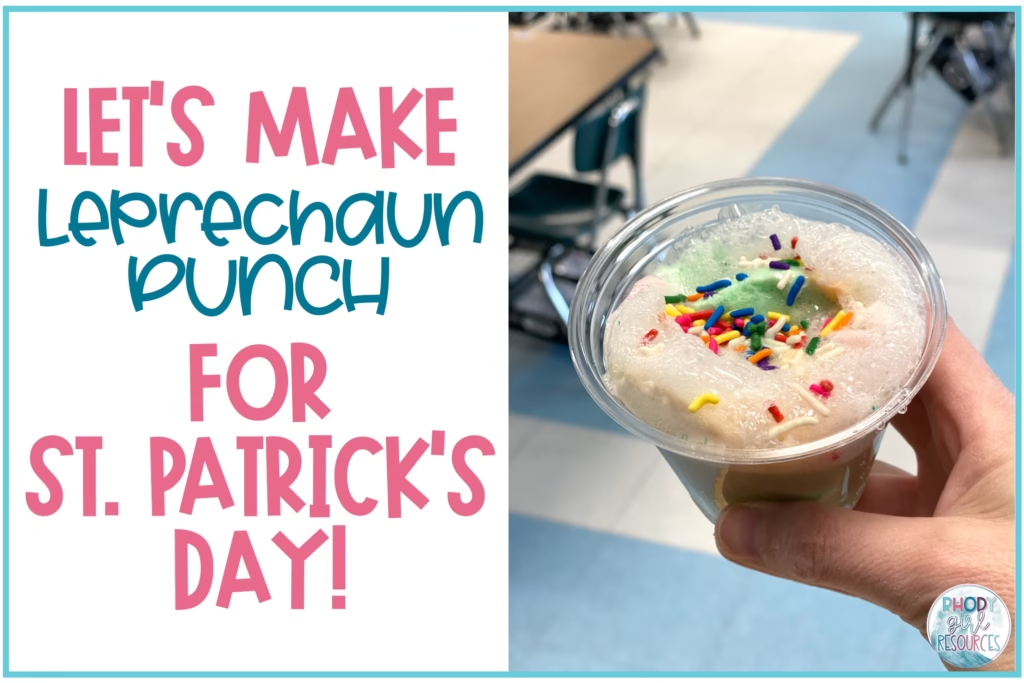
A hand holding St. Patrick's Day sherbet punch.

What Is Leprechaun Punch?

Leprechaun punch is a festive green drink made with sherbet and a fizzy base like Sprite or lime-flavored water. Topped with sprinkles, it looks like a magical potion! Best of all, it’s quick to prepare and easy for little learners to help make.
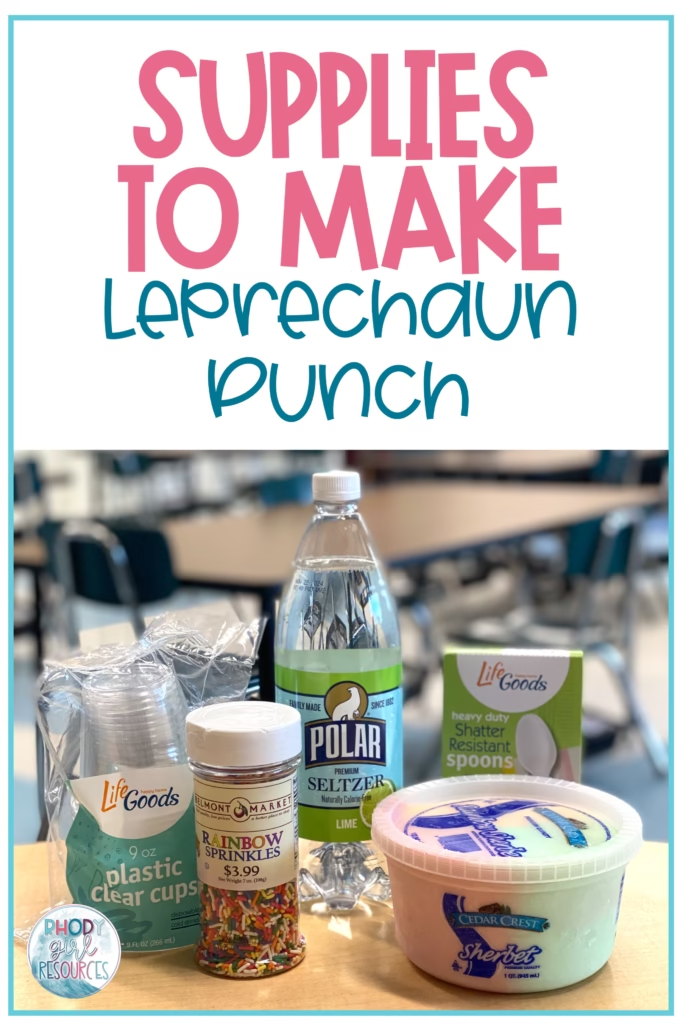
The supplies needed (cups, rainbow sprinkles, lime water, sherbet, and spoons) to make leprechaun punch.

This punch only needs a few ingredients. This is a great opportunity to ask for donations and get families involved, too!

Supplies for Leprechaun Punch

To make leprechaun punch with your students, you’ll need:

  • Lime or rainbow sherbet
  • Sprite or lime-flavored water
  • Green or rainbow sprinkles
  • Cups
  • Spoons or straws

Using clear cups lets students see the fizzing reaction as the liquid mixes with the sherbet, adding an element of excitement and observation!

How to Make Leprechaun Punch
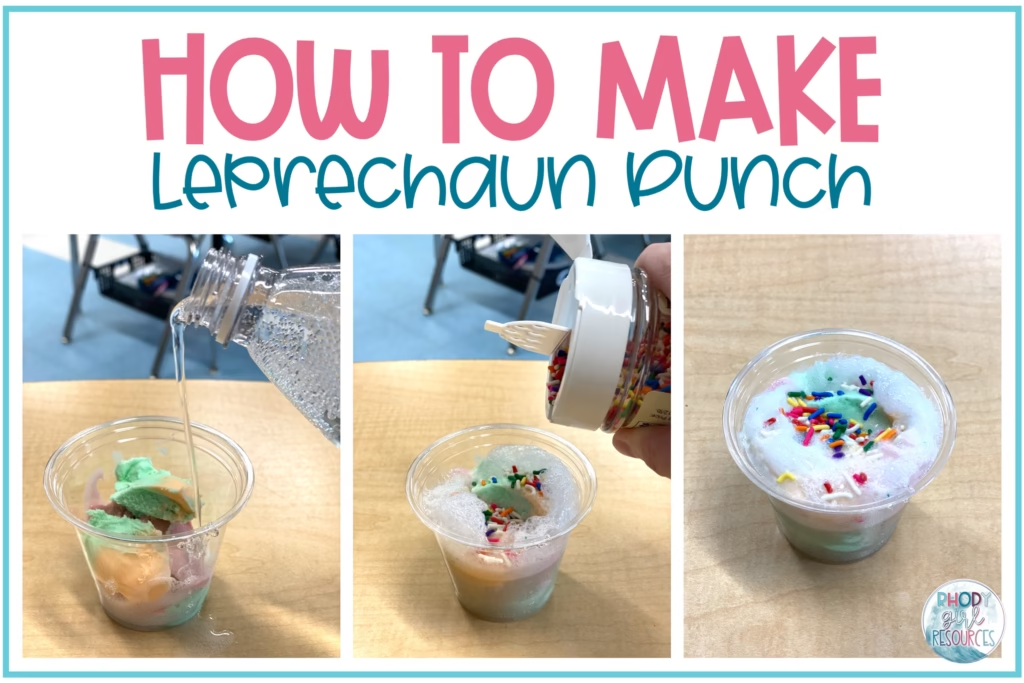
Three pictures showing adding lime water to sherbet, adding rainbow sprinkles on top, and what leprechaun punch looks like when it is finished.

Follow these simple steps to create your punch:

  1. Place one scoop of sherbet into each cup.
  2. Slowly pour Sprite or lime-flavored water over the sherbet.
  3. Watch the fizz and foam form at the top.
  4. Top with festive sprinkles.

That’s it! Your leprechaun punch is ready to serve. Enjoy it with a spoon or straw.

Skills Supported by This Activity

Using leprechaun punch as part of your St. Patrick’s Day lesson supports:

  • Sequencing skills
  • Procedural (how-to) writing
  • Oral language development
  • Fine motor skills through drawing and writing
  • Following multi-step directions

It also makes learning feel magical — which is always a win in early childhood classrooms!

Sequencing and How-to Writing

Making this punch isn’t just fun — it’s also the perfect opportunity to practice how-to writing. How-to writing (also called procedural writing) is an essential skill in the elementary classroom. Activities like making leprechaun punch give students a real-life experience they can write about, which makes the writing process more meaningful and less abstract. Students physically scoop the sherbet, pour the drink, and add toppings, allowing them to mentally replay the steps as they write. This connection between action and writing strengthens comprehension and retention.

After making the punch together, gather students to work on writing. This can be a shared writing opportunity or a chance for students to explore and try their own how-to writing.
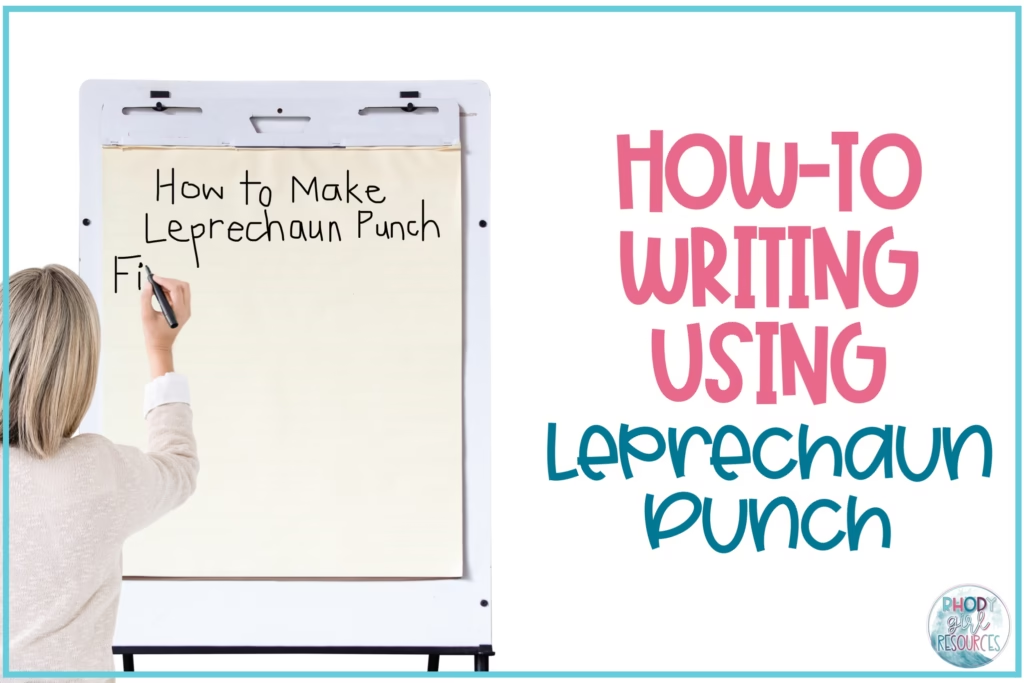
Teacher writing the steps to make leprechaun punch on chart paper.

Shared Writing

Shared writing is a strategy in which the teacher and students collaborate to generate a piece of writing. This is your chance to model shared writing to your early learners. Model thinking aloud and gathering input from students through questioning, such as, “What did we do first?” The teacher guides the writing and models correct sentence formation. They may even “share the pen” with students to help spell specific sounds or words. This can be completed on chart paper or an interactive whiteboard. This activity will help students understand that print carries meaning.

How-to Writing

While gathered, discuss the steps students followed to make their punch. Turn and talk is an easy way for students to share their steps orally, preparing them to write. Have students focus on using transition words such as first, next, then, and last. Afterward, provide students with the paper you can grab in the freebie at the end of this post, where they will write and illustrate the steps for making leprechaun punch.

Are you ready to try leprechaun punch in your classroom? Save this idea for March and watch your students light up with excitement — and grow as writers at the same time.

If you are looking for more St. Patrick’s Day fun, check out these blog posts: St. Patrick’s Day Minute to Win It Games or How to Make Leprechaun Rocks, and resources.
Filed Under: Holidays, Uncategorized, Writing Tagged With: St. Patrick's Day, writing Leave a Comment

Ready Confetti

For many young learners, the first day of school can be filled with big emotions. They may face their first classroom experience, new teachers, and unfamiliar routines. Some feel anxious about leaving their grown-ups. As educators, we want to help ease these fears and build a sense of trust and excitement—and that’s where ready confetti comes in.

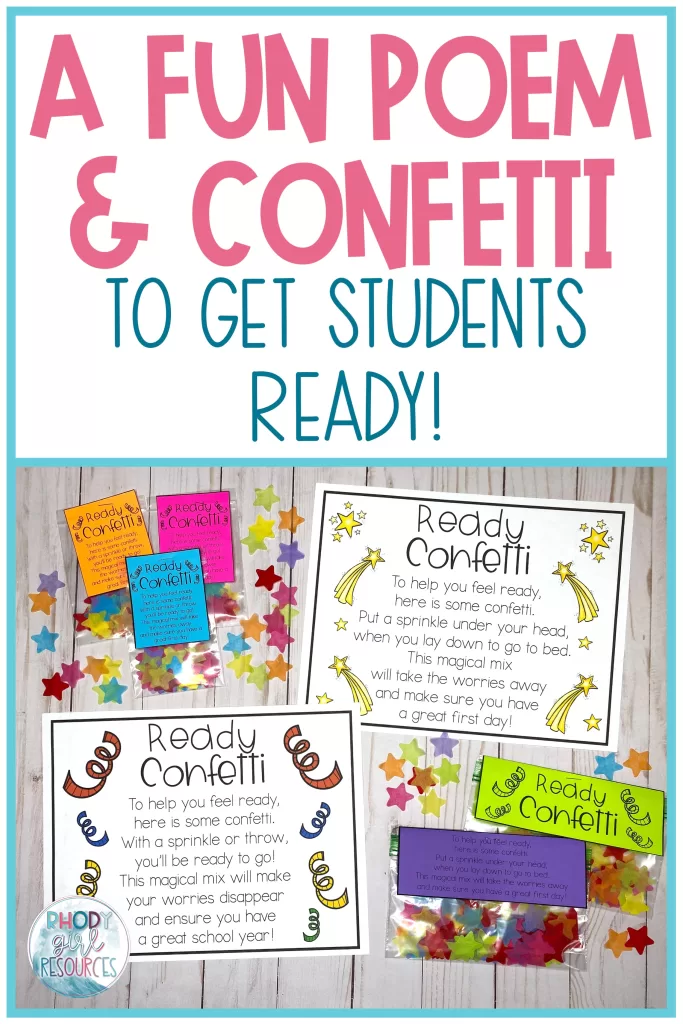
star ready confetti

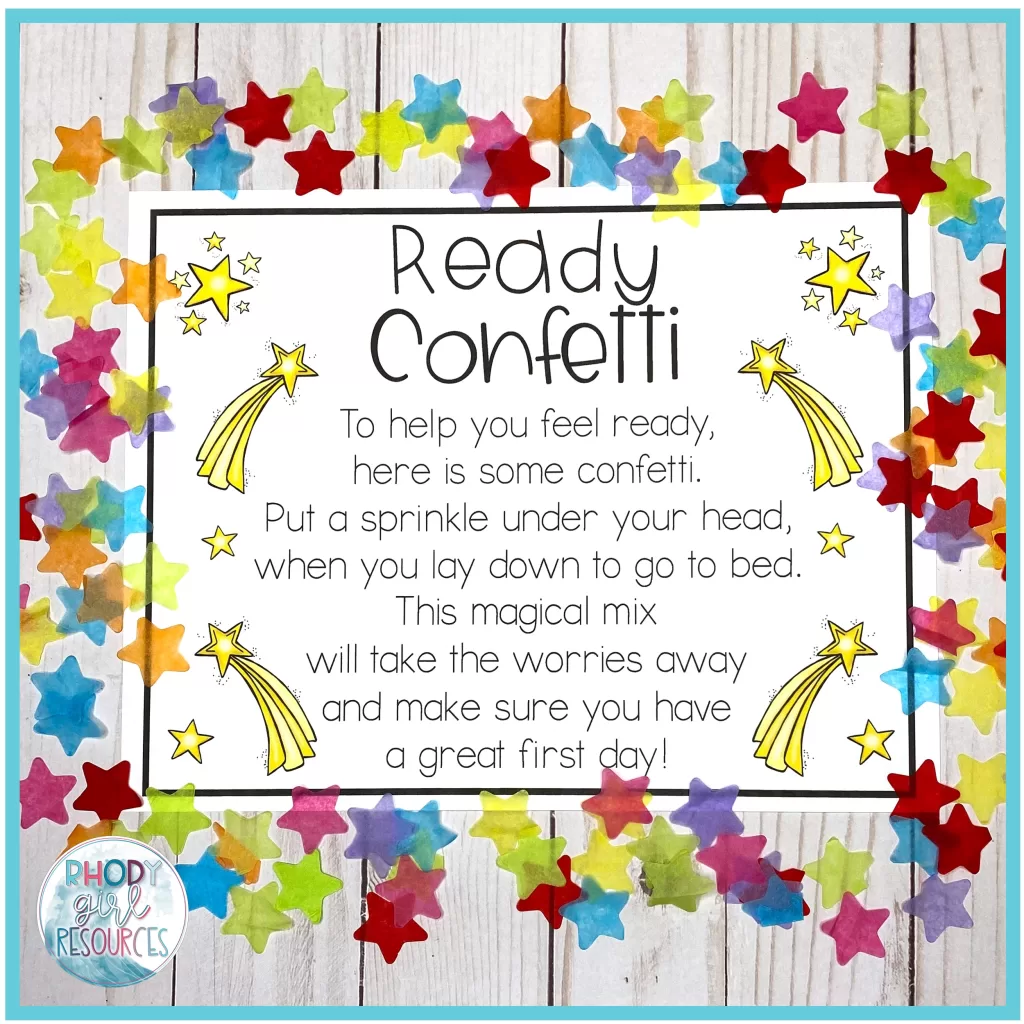
This activity is a fun, simple way to ease those jitters. It helps build a connection before school begins. Paired with a poem, this tradition welcomes students with comfort and joy.

What is Ready Confetti?

Ready confetti is a bag of magic that can be thrown or slept upon to help ease worries and celebrate successes.

You’ll need:

  • A printed, ready confetti poem
  • Small bags (zip or treat size)
  • Confetti (see filler ideas below)
  • Tape or a stapler to attach the poem

Filler ideas:

  • Shredded paper
  • Glitter
  • Hole-punched paper shapes
  • Mini foam shapes
  • Table scatter
poems and confetti bags showing examples of what you can do with Ready Confetti resource

You can grab a done-for-you resource that includes multiple poem styles, editable formats, and printable labels here: Ready Confetti Poem for Back to School.

Build Classroom Community

One of the most powerful aspects of this activity is that it helps you establish a classroom community right from the start. When students know that their teacher sees them, believes in them, and is excited to meet them, they feel safe and supported.

This small gesture makes a big difference. It tells students:

  • “You are welcome here.”
  • “You are not alone.”
  • “Your teacher cares about you.”

Ways to Use

There are many ways to use ready confetti to meet your classroom’s needs and traditions. Here are a few favorite ideas to get you started:

ready confetti poem example

✉️ 1. Mail It Before School Starts

Sending ready confetti in the mail is a great way to introduce yourself and build a connection before students walk through the classroom doors. Include a note introducing yourself, a photo of your classroom, and the ready confetti poem. It’s an easy way to build excitement and start your teacher-student relationship on a warm note.

🤝 2. Hand It Out at Meet the Teacher

If your school hosts a meet-the-teacher or open house event, hand out confetti to each child as they visit. Let them know it’s something special to open at home the night before school. You’ll be amazed at how much it helps them look forward to the first day.

🎉 3. Use It After a Successful First Day

Turn it into a celebration! At the end of the first day, give each child their confetti bag and read the ready confetti poem together. It’s a fun way to wrap up the day and honor their bravery. This version works well if you didn’t have time to send it ahead.

Starting school is a big deal—for little learners and their families. Using ready confetti is a meaningful, memorable way to ease those first-day jitters, strengthen your teacher-student connection, and start building a warm classroom community from the very beginning.

Whether you send it by mail, share it at the meet-the-teacher event, or celebrate with it after the first day, ready confetti helps make students feel seen, supported, and, most of all, ready.

Filed Under: Classroom Fun & Community Building, Uncategorized Tagged With: back to school, community building, ready confetti

Decodable Sentence Pyramids: 4 Easy Ways to Use Them in K-2

Learning to read can feel overwhelming for young children, but the right tools make all the difference. One simple and effective strategy you can use in your K–2 classroom is decodable sentence pyramids. These structured reading exercises help students build fluency, decoding skills, and confidence—one word at a time. Whether you teach whole-group lessons, work with small groups, or run literacy centers, sentence pyramids provide your students with the support they need to grow as readers.

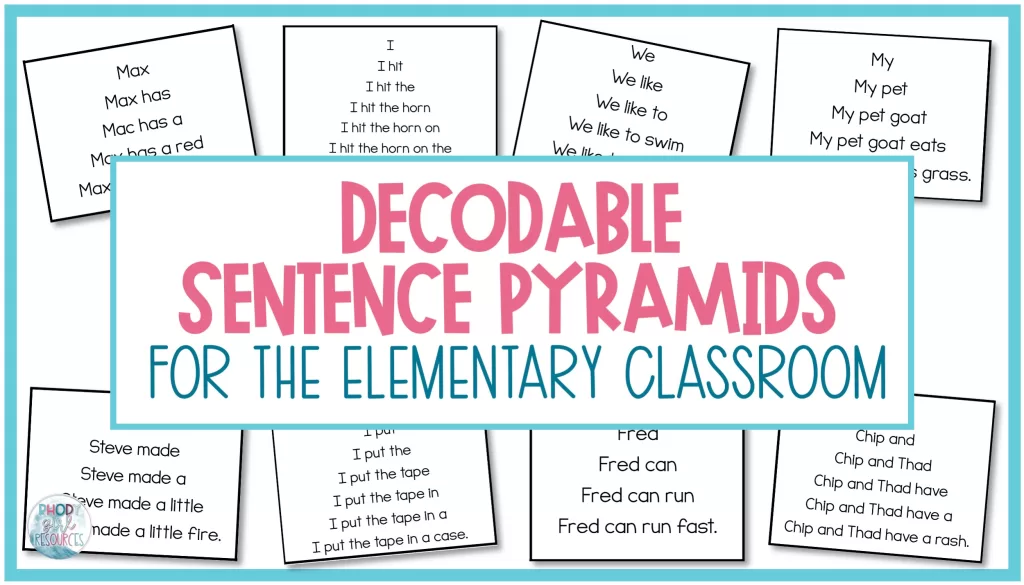
examples of small task card size decodable sentence pyramids

What are Decodable Sentence Pyramids?

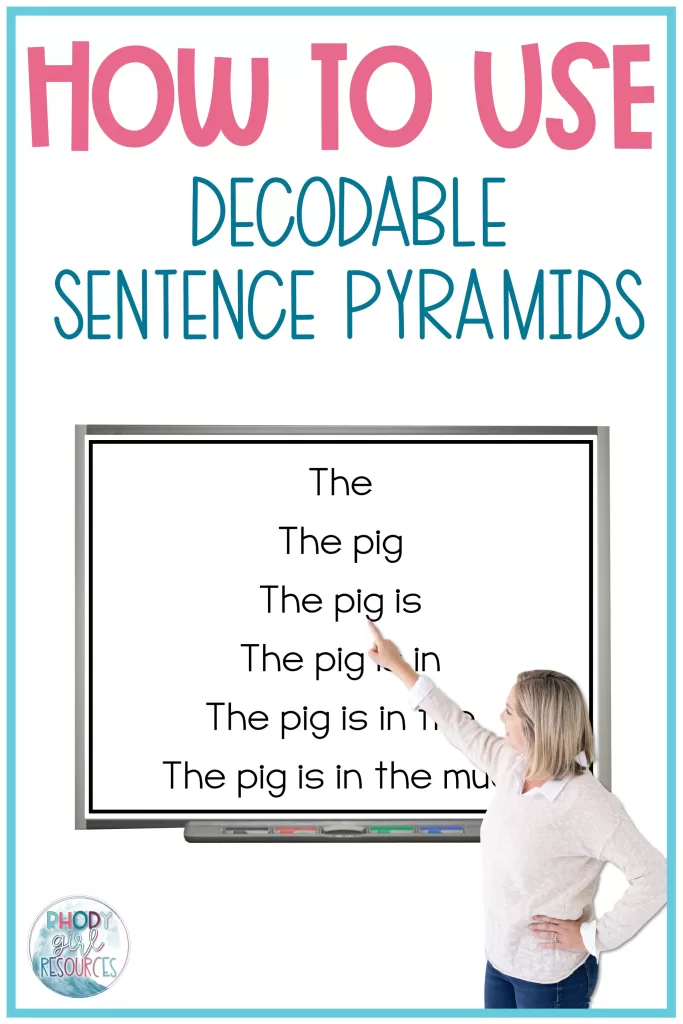
Decodable sentence pyramids, also known as fluency pyramids, help young readers practice fluency in a structured way. These tools start with a single word and add one word per line. Each line builds on the last until students read a complete sentence. Here’s an example:

I

I see

I see a

I see a cat.

This format allows students to focus on one word at a time. Then, they reread each line to build speed and confidence. These pyramids utilize simple, decodable words that align with students’ phonics knowledge and skills. They also include high-frequency words students need to know.

In short, sentence pyramids give students repeated exposure to the same words in a predictable format. As a result, they gain fluency while building meaning in a step-by-step manner. Additionally, the pyramid shape gives students a clear visual structure. As they read each new line, they experience a sense of accomplishment and motivation to continue.

Benefits of Using Decodable Sentence Pyramids

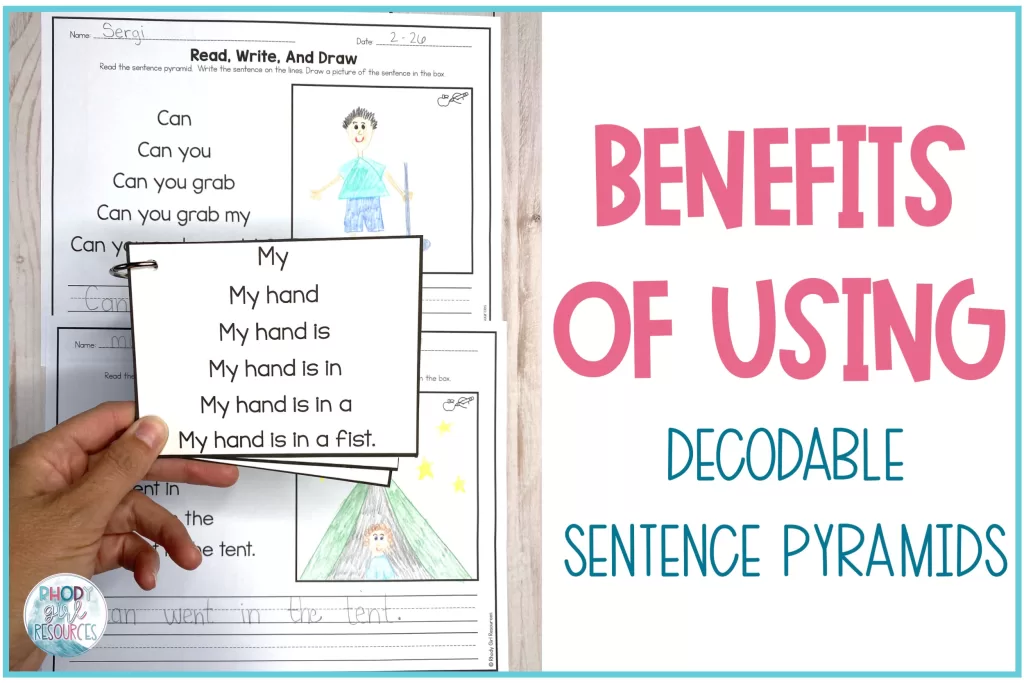
hand holding an example of a decodable sentence pyramid

Using decodable sentence pyramids offers many benefits for early readers. Here are a few key advantages:

Build Fluency

Sentence pyramids encourage repeated reading. Each line adds one word, so students reread and become more fluent with each step. Moreover, they experience success early in the pyramid, which boosts their motivation.

Reinforce Phonics Skills

Pyramids use only decodable words and sight words that students have learned. As a result, this helps students transfer phonics skills from isolated words to complete sentences.
Support Comprehension

As each line grows, the sentence becomes clearer. Students use context to make meaning. This helps with early comprehension skills.

Keep Students Engaged

The pyramid format makes reading feel like a fun challenge. Students feel proud as they read the whole sentence at the bottom.

Easy to Differentiate

You can easily create pyramids for different reading levels. Some students may use three-line pyramids, while others use longer six-line versions.

Simple Progress Monitoring

You can use pyramids to track growth. Record words correct per minute or note decoding strategies students use.

4 Ways Use Decodable Sentence Pyramids in the Classroom

a teacher pointing and reading a decodable sentence pyramid on an interactive whiteboard

You can use sentence pyramids in many parts of your literacy block. Whether you’re teaching whole-class phonics or supporting students one-on-one, fluency pyramids can be easily adapted to any setting.

1. Whole Group Decodable Sentence Pyramids Activities

  • Morning Meeting/Message Practice: Start your day with a fluency pyramid warm-up. Project the pyramid on the board and read it aloud together. Students can echo each line after you or read it chorally as a class.
  • Shared reading connection: You can also use pyramids after shared reading. Choose a pyramid that uses vocabulary or patterns from a familiar story. This helps students apply phonics and sight word knowledge in new ways.
  • Phonics reinforcement: When teaching a new skill (like digraphs or blends), use a related pyramid to provide immediate application and reinforce the skill in context

2. Small-Group Reading with Decodable Sentence Pyramids

Next, bring decodable sentence pyramids into your small groups. In groups, give students pyramids that match their skill level. They can take turns reading each line or read together with a partner. Use these moments to focus on fluency and decoding strategies. As a result, students get targeted practice and repeated exposure to patterns they need to master.
You can also track reading speed. Time students as they read the whole pyramid. Have them reread it and try to beat their first time. This fun challenge helps students stay engaged while practicing fluency.

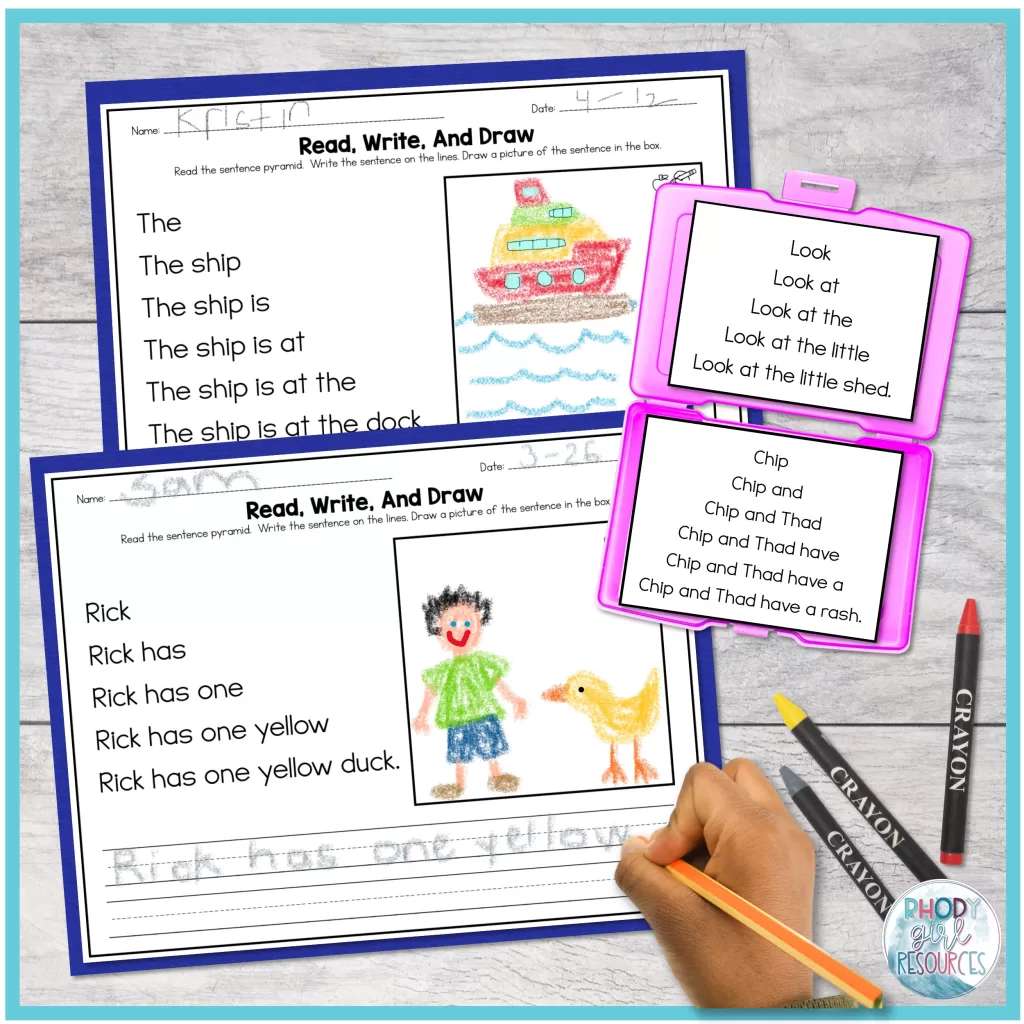
decodable sentence pyramid tasks cards in a task cards box and completed decodable sentence pyramid read, write, and draw worksheet examples

3. Intervention

Fluency pyramids can be effective when used during reading interventions.
  • Target key skills: Choose pyramids aligned to the student’s instructional gap.
  • Guide with scaffolding: Read line by line, offer corrections, and celebrate success.
  • Track growth: Use completed pyramids to document improvement in accuracy and fluency.

Ultimately, these tools provide high-frequency, structured practice without overwhelming the student.

4. Literacy Centers

Finally, sentence pyramids are a great addition to literacy centers. For example, try these activities:

  • Fluency center: Students read laminated pyramids with a partner or independently.
  • Writing center: Students build or write their own pyramids using phonics patterns or word families.
  • Listening station: Record yourself reading a pyramid and allow students to listen and follow along.

Because sentence pyramids are predictable and visual, students can complete them independently and successfully. This keeps students engaged while reinforcing their decoding, fluency, and comprehension skills.

Tips for Using Decodable Sentence Pyramids Effectively

To get the most out of decodable sentence pyramids, follow these simple tips. Each one builds on the last to help you implement them smoothly and successfully.

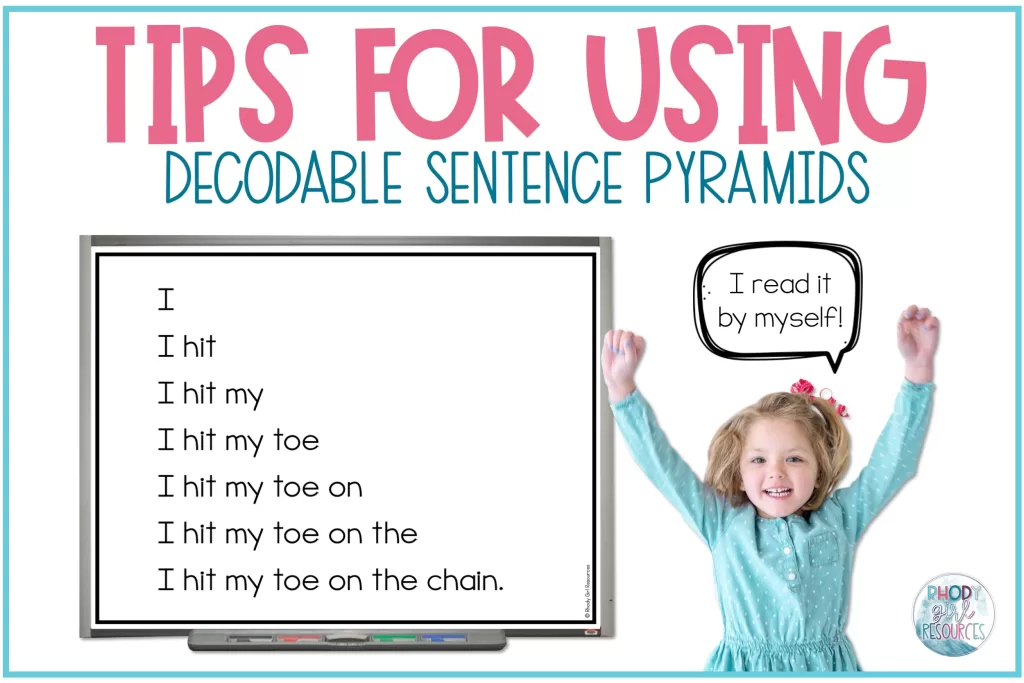
a student excited about reading a fluency pyramid independently
  • To begin, align each pyramid with your current phonics skill. This ensures that the content aligns with what students already know.
  • Next, begin with high-frequency and short vowel words. These words are easier to decode and build confidence quickly.
  • Additionally, use simple fonts and large text. This makes the text easier for young readers to see and follow.
  • Then, model fluent reading with expression. When you demonstrate prosody, students learn how to read with proper pacing and tone.
  • After that, encourage repeated reading. The more students reread, the more fluent they become.
  • Also, allow students to create their own pyramids. This boosts engagement and lets them take ownership of their learning.
  • Furthermore, celebrate completed pyramids. Use stickers, stamps, or a fluency chart to recognize progress and motivate students.
  • Finally, laminate the pyramids or place them in dry-erase sleeves. That way, students can use markers to highlight phonics patterns or circle tricky words.

By using these strategies consistently, you’ll turn sentence pyramids into a powerful, low-prep tool that supports all readers.

Adding sentence pyramids into my daily routines and instruction has significantly impacted my students’ automaticity, fluency, and confidence! Whether you use them in small groups, whole-class lessons, or centers, these simple tools make a big difference. Decodable sentence pyramids are easy to use, fun for students, and highly effective. They help your K–2 learners become more fluent, confident, and engaged readers.

Would you like to try decodable sentence pyramids in your classroom? Download your free decodable sentence pyramid pack below and start building fluency with ease!

Filed Under: Phonics, Uncategorized Tagged With: fluency, intervention, literacy, phonics, reading, small group

10 Fun and Exciting Math and Literacy Glow Day Activities

Glow Day has quickly become one of my favorite classroom transformations! It can be used any time of the year, but I love to include Glow Day as part of an ABC Countdown or an end-of-year theme day. Glow Day activities are also a great way to review previously learned phonics and math skills in a fun way!

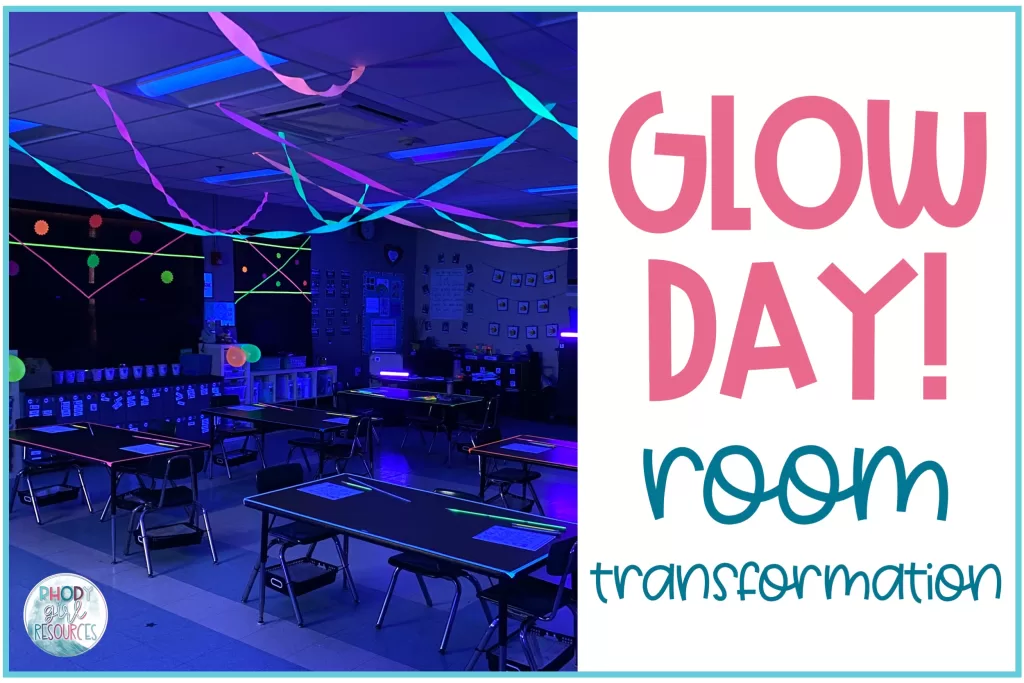
Classroom decorated and ready for glow day activities.

Glow Day can seem intimidating and like a lot of work, but if you start simple and have a plan, you won’t regret it. Check out some of my tips and tricks to make Glow Day activities run smoothly!

Preparing for Glow Day Activities

The great thing about Glow Day activities is that they can be successful with only a few materials. When I first began, I went simple. I borrowed black lights and just used highlighters and white paper. The kids were thrilled with only these minimal supplies! Once I decided this would be a yearly activity, I added on and made an Amazon wishlist asking families to help. I have been able to reuse many of the materials I received for several years.

Suggested Materials for Glow Day Classroom Transformation

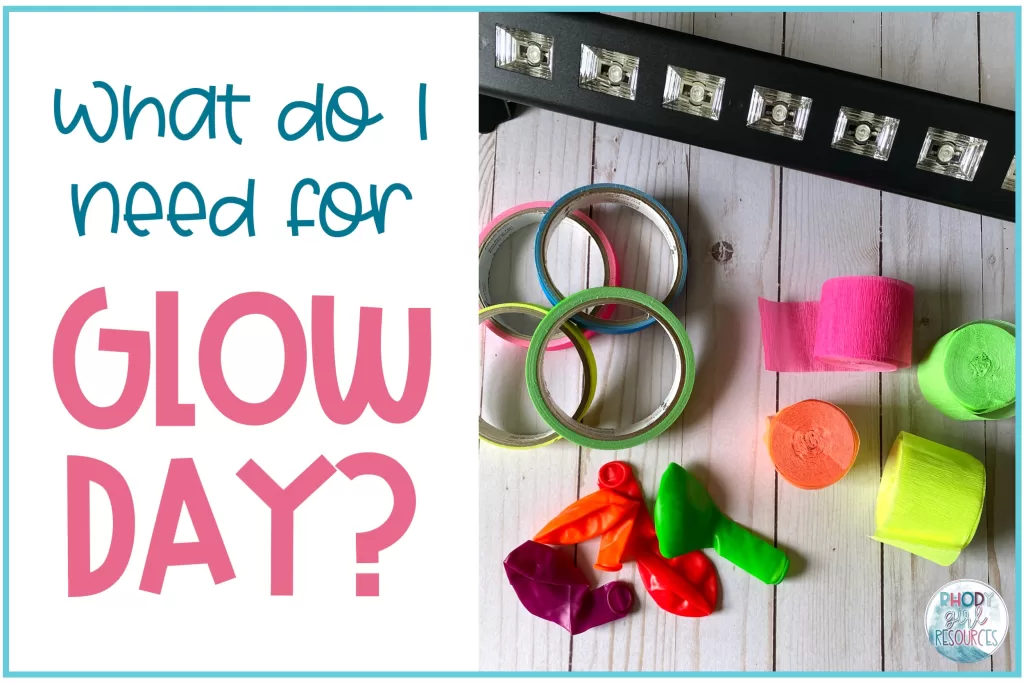
Don’t get tricked into thinking only glow-in-the-dark or UV things will glow in a black light. Anything white or neon will glow. Start with what you might already have available. I can access paper, bulletin board paper, and highlighters at school. Then, I grab balloons, streamers, and glowsticks from the Dollar Store. All other items have been purchased from Amazon. You can check out my Glow Day Amazon storefront to see the products I use in my classroom.

Materials you can use for Glow Day including a black light, neon, tape, streamers, and balloons.

Here are a few of my favorite supplies for a Glow Day classroom transformation.

  • Black Lights
  • Highlighters
  • White or Astrobright Paper
  • Neon Streamers & Balloons
  • Glow in the Dark Tape
  • Glowsticks
  • Black Bulletin Board Paper

Setting Up for Glow Day Activities

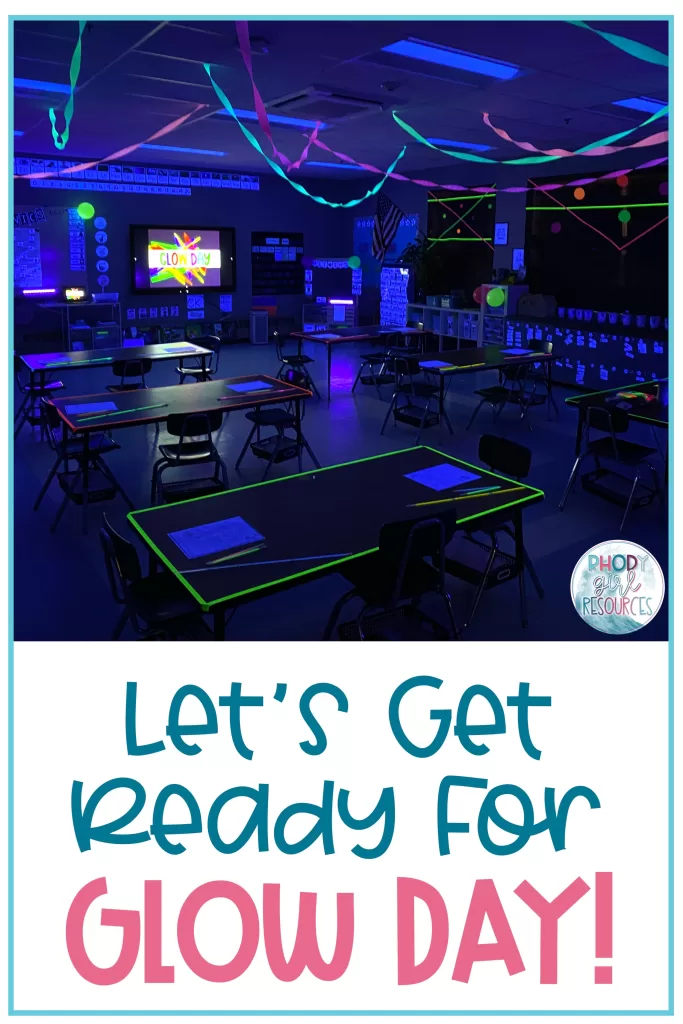
Once you have your materials, it’s time to set up. I typically prepare everything after school the day before, so I am not scrambling that morning. To get the best effect, you want your room to be DARK! My old classroom accomplished that simply by turning off the lights. My classroom now has a wall of windows; even with the shades down, lots of light still comes in. I took black bulletin board paper and covered the windows to fix this. Covering the windows takes extra effort, but the results are worth it!

Next, I place the backlights around the classroom. We complete Glow Day activities in stations all around the room. To get the glow everywhere, I have 5 blacklights and try to space them out around my whole classroom.

Classroom set up and glowing for Glow Day activities.

Now it’s time to decorate! This is not necessary, but I like the effect it adds. Your glow day would be just as magical without it. First, I blow up some neon balloons and tape them around the room. Then, I use neon-colored tape to outline each table and floor workspace. One year, I grabbed neon shapes from the Dollar Store. I attached these to the black paper I hung across the windows. My last addition is string streamers from the ceiling.

10 Glow Day Activities

Now, it’s time to choose your Glow Day activities. First, determine how much time you want to dedicate to Glow Day and how you want to divide your students. I like to split my students into partners or small groups and rotate them through each activity. Each station usually lasts 10-12 minutes.

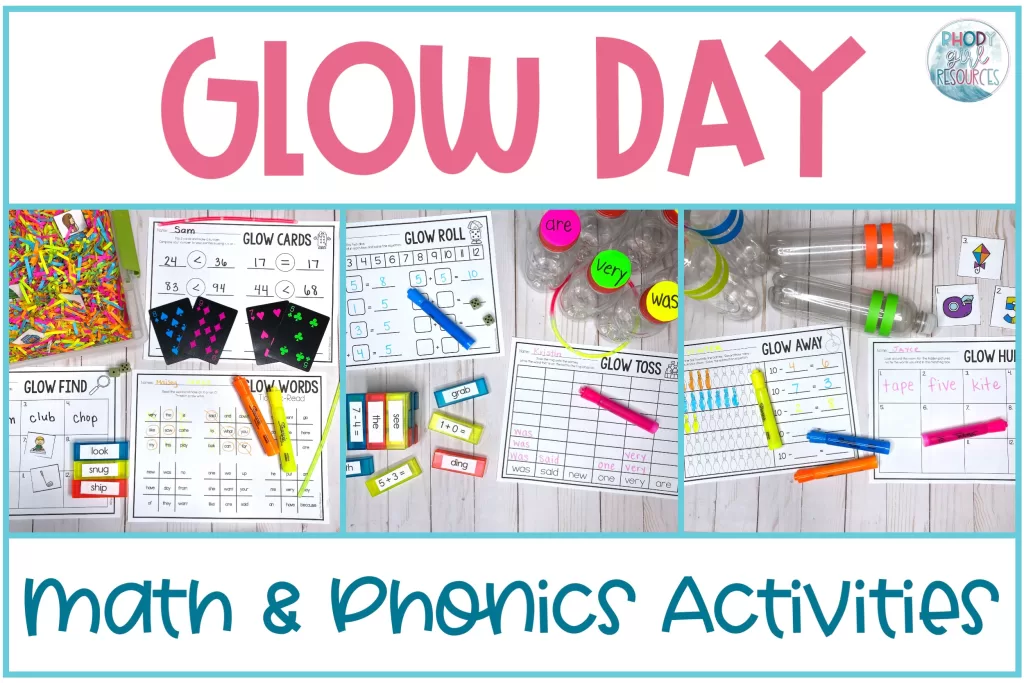
Examples of math and phonics Glow day activities.

Our schedule varies daily. Some years, I have only done Glow Day in the morning; others, I have stretched it through the whole day. When I do it only for part of the day, I will do 4-5 stations. If I fill the whole day, I will do 8-10 Dlow day activities. Below, I will share 10 of my favorite Glow Day activities that I have used in my classroom.

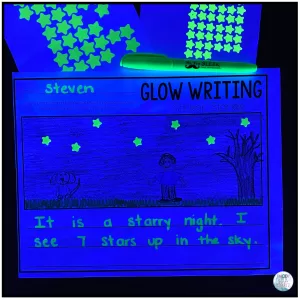
1. Glow Writing

An example of writing using a highlighter and glow in the dark stickers.

Materials: Paper, Highlighters, Drawing Materials, Glow in the Dark Stickers, crayons

Spice up writing with a few glow-in-the-dark stickers and highlighters. Let students write about anything they want, or have them share their favorite Glow Day activity.

2. Glow Away Subtraction Glow Day Activities

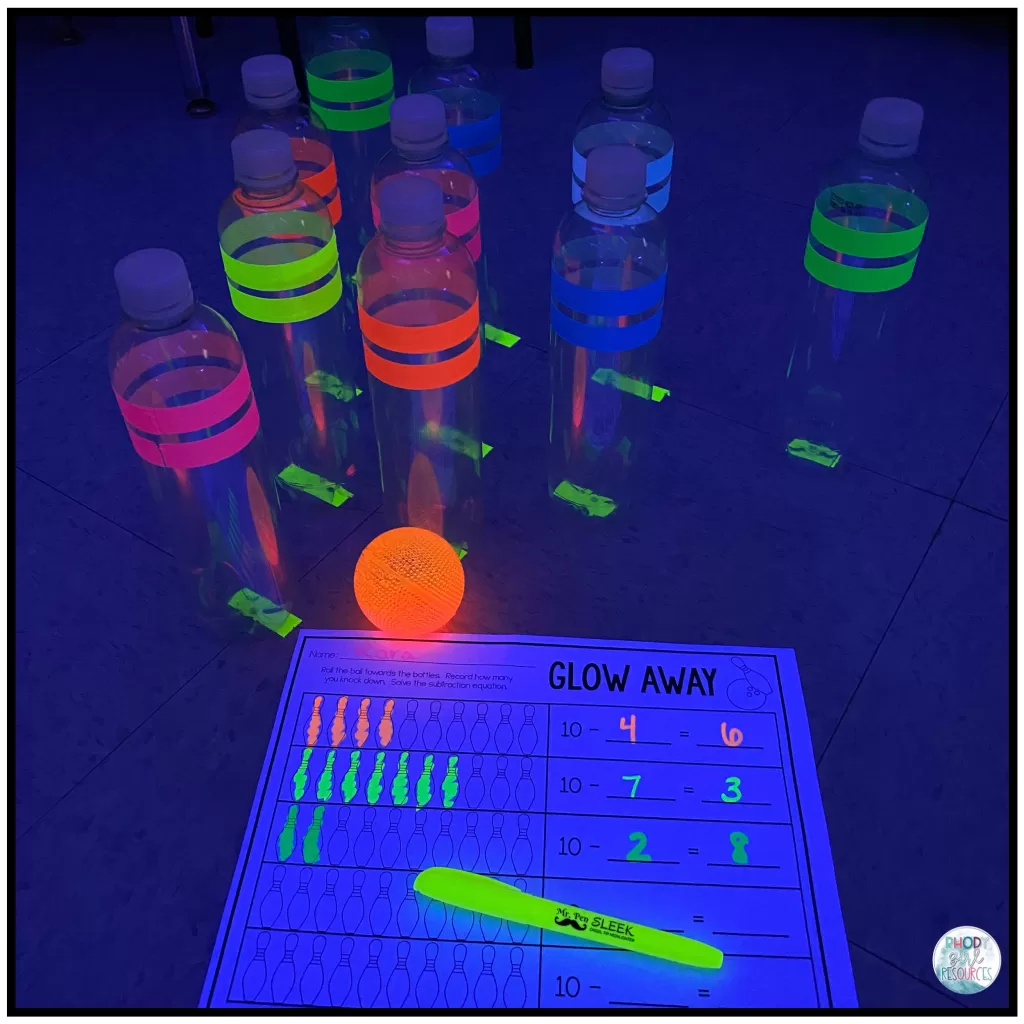
Empty water bottles set up for subtraction bowling activity.

Materials: Empty Bottles, Glow/Neon Tape, Ball, Highlighter, Recording Sheet

Practice subtraction from ten with the Glow Day activity “Glow Away.” Line up the empty bottles like bowling pins. Take turns rolling the ball and recording a subtraction equation to match the number of pins knocked down.

3. Glow Cards

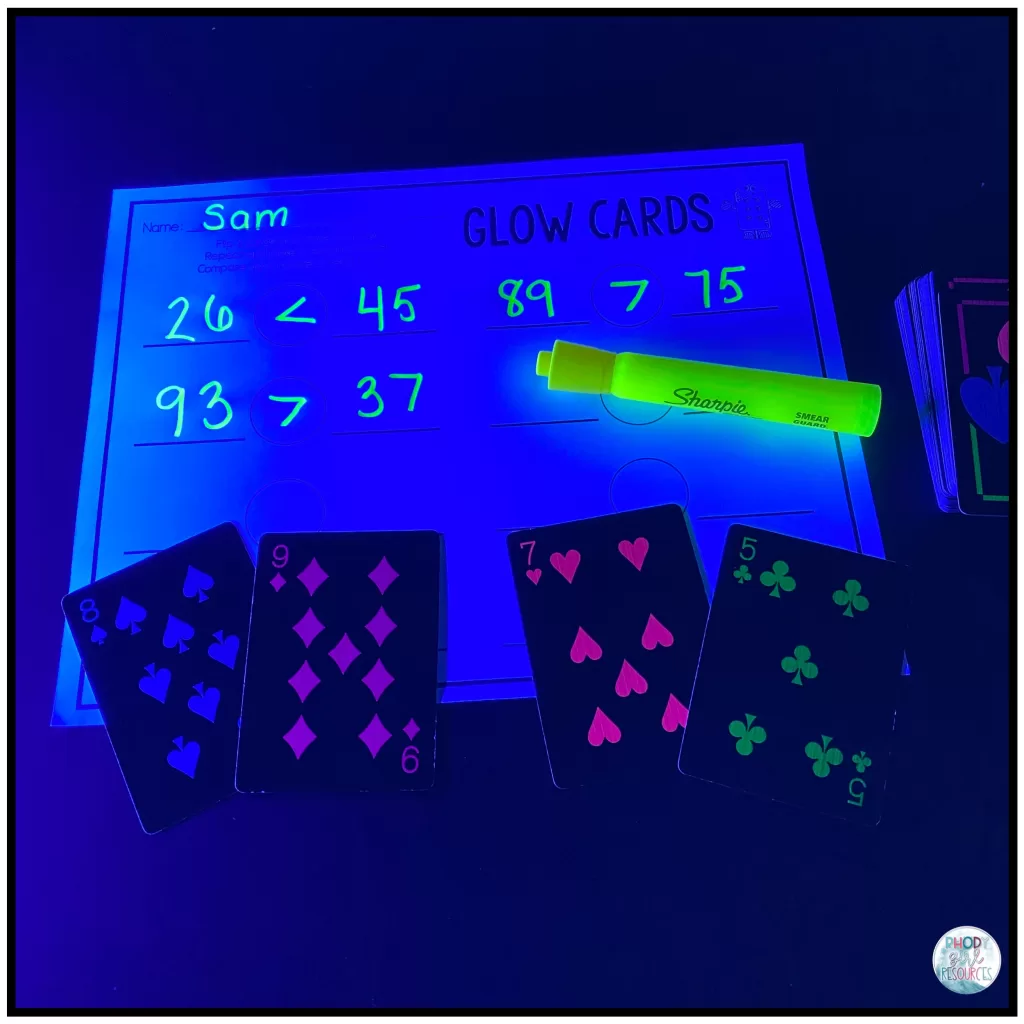
Students playing math game by flipping over two cards each and comparing the value using <, >, or =.

Materials: Deck of Cards (only number cards), Highlighter, Recording Sheet

“Glow Cards” focuses on comparing numbers. It can be differentiated by having players flip 1, 2, or 3 cards to build numbers, or they can flip and add cards. Students can play alone or compare their flip against a partner.

4. Glow Cups

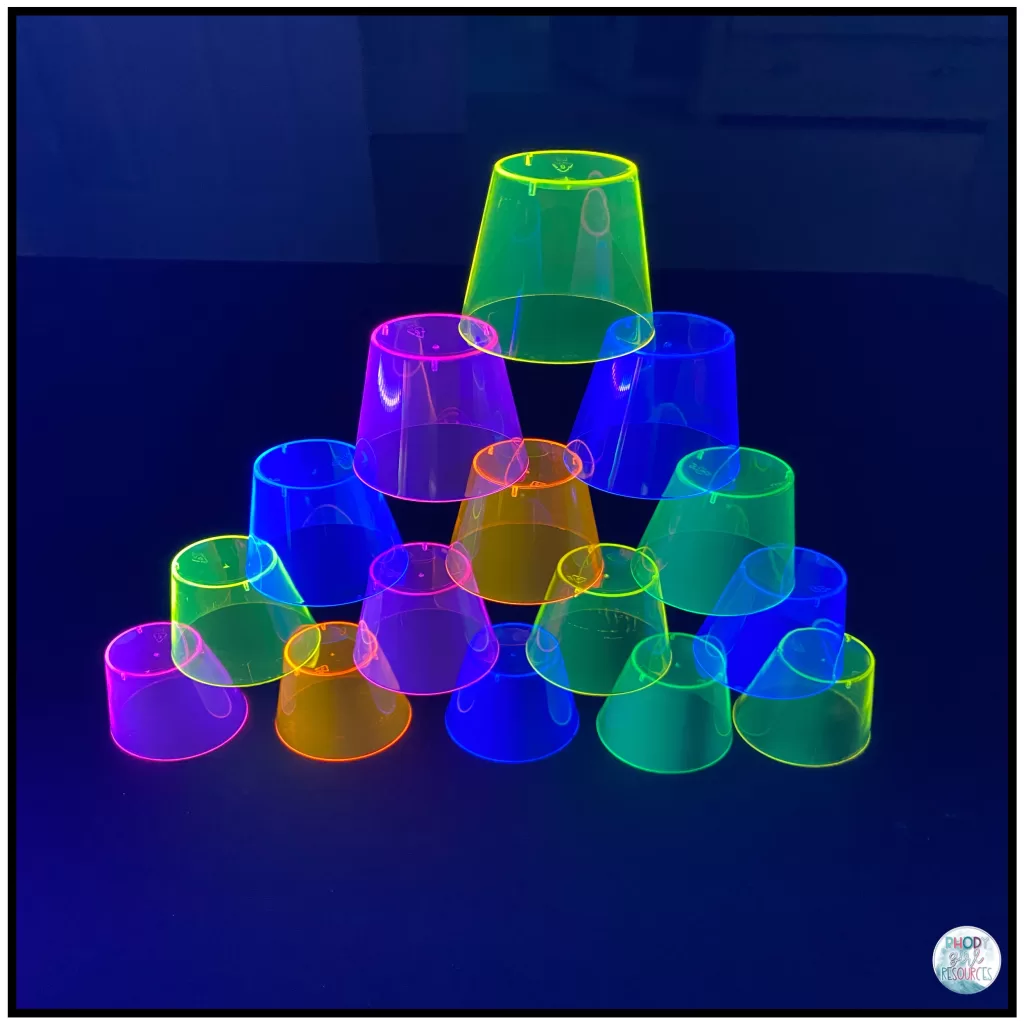
Neon cups stacked in a tower.

Materials: Neon Cups

“Glow Cups” can be a challenge to build the tallest tower of cups, or you can add an academic twist. To extend “Glow Cups,” use a Sharpie to write equations or words on each cup. As students build their tower, have them read or solve the equations on the cups.

5. Glow Roll Addition Glow Day Activities

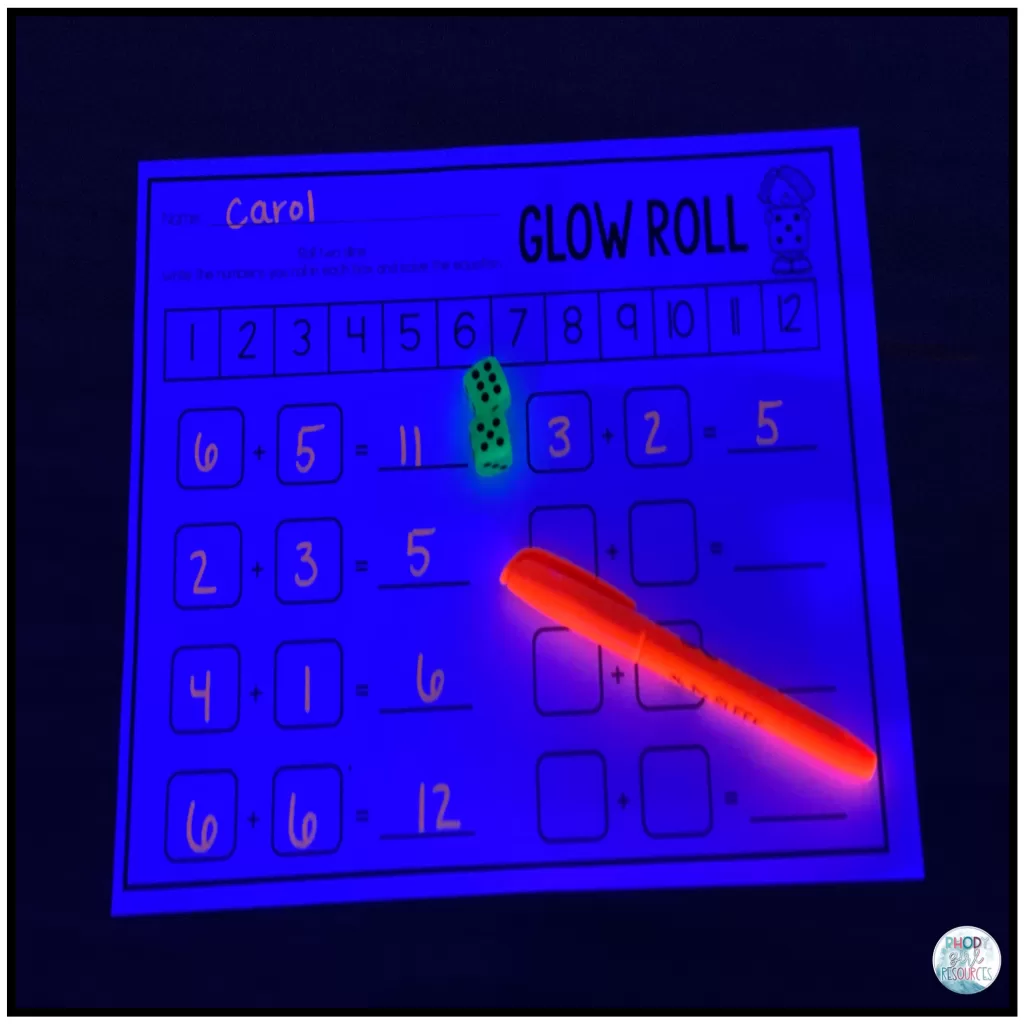
A recording sheet showing how to rll and add two dice.

Materials: White Dice, Highlighter, Recording Sheet

To play “Glow Roll,” students roll two dice and record the addends. Then, they solve the problem and record the sum.

6. Glow Jenga

Jenga game with added words and subtraction equations on each block.

Materials: Jenga Game, Labels

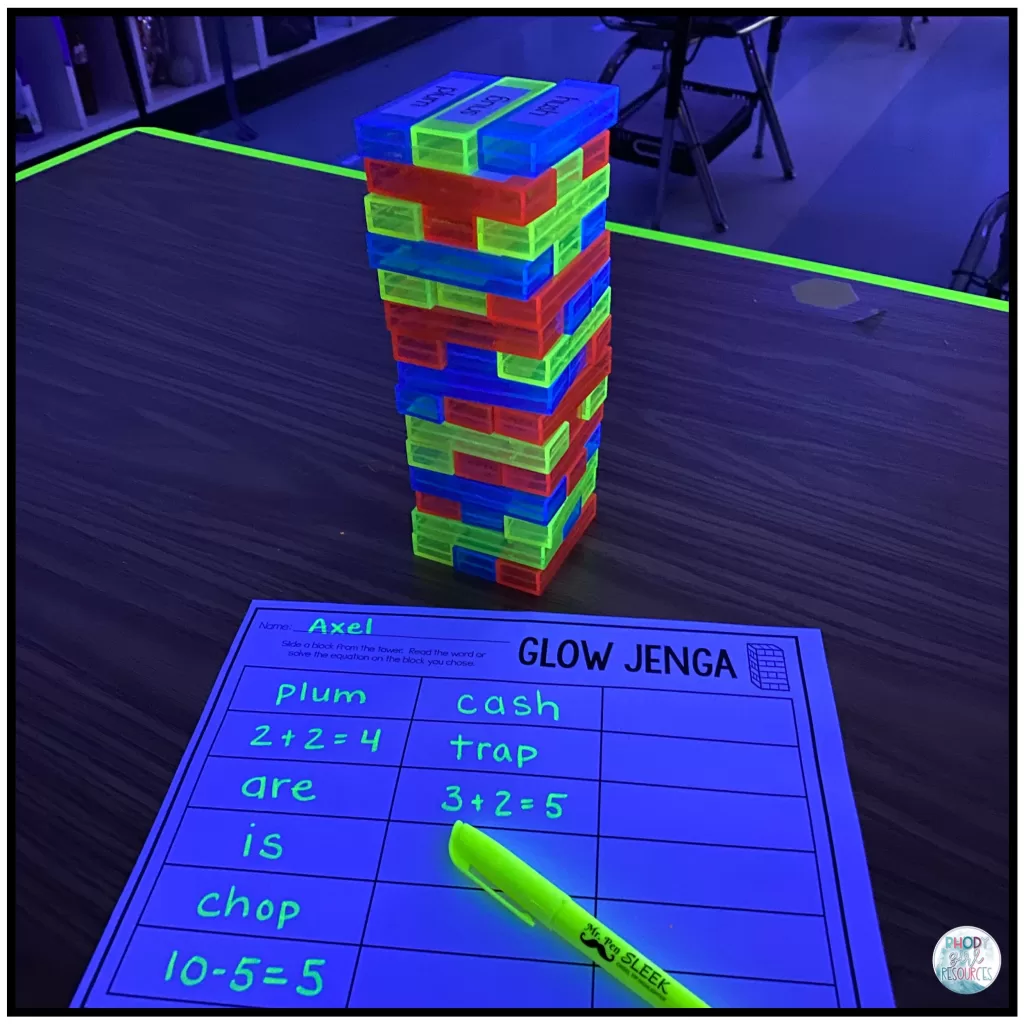
Any Jenga game will work. If you add white labels to the blocks, they will glow! On the labels, you can write words, numbers, equations, etc. As students remove a block from the tower, they must read/solve it and place it back on the top. A recording sheet is provided but not necessary.

7. Glow Toss

Six bottles with sight words on the lids, set up to play "Glow Toss."

Materials: 6 Bottles, Glow Sticks, Recording Sheet, Highlighter

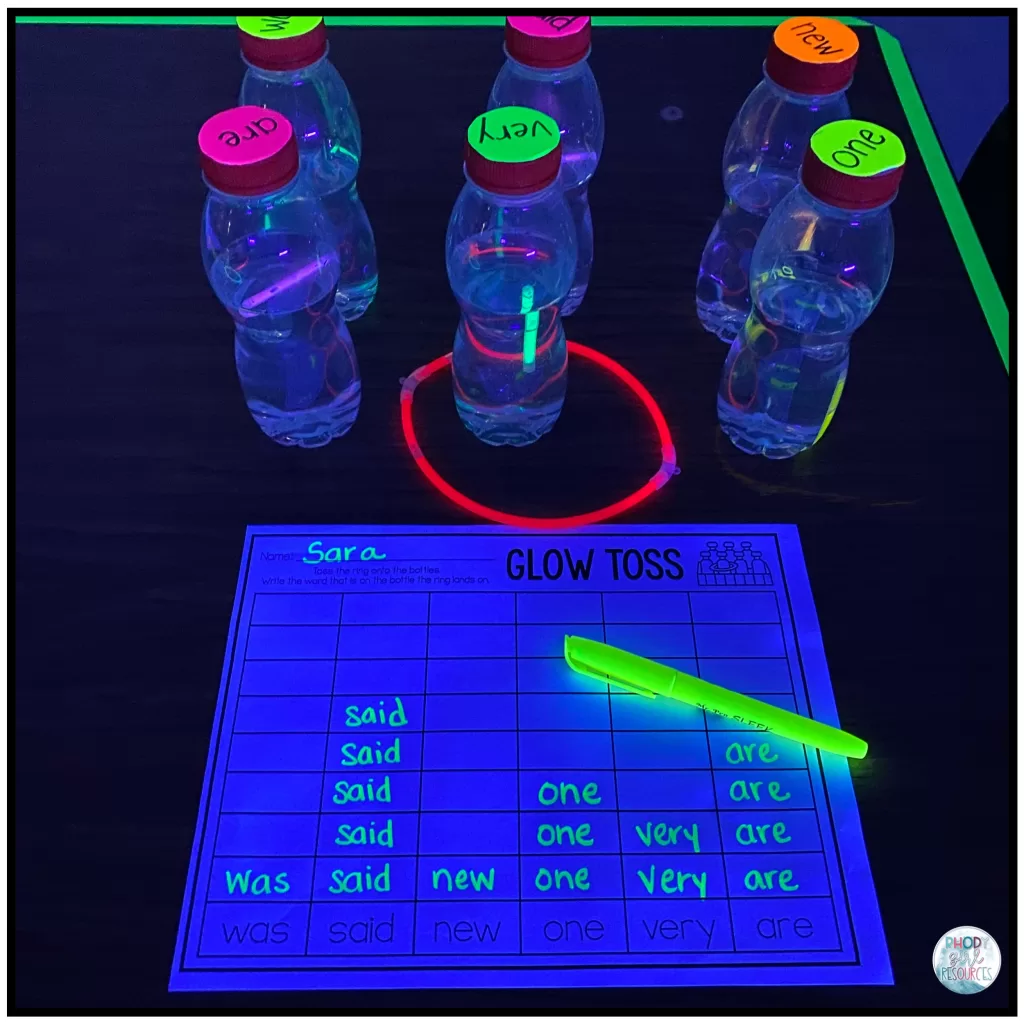
Fill six bottles with water and add a word to each lid. Students will take turns tossing a glow ring towards the bottles. When a ring goes around a bottle, read the word, then write it on the recording sheet.

8. Glow Find Sensory Glow Day Activities

A  sensory bin filled with shredded paper and picture cards to play "Glow Find."

Materials: Bin, Sensory Filler, Picture Cards, Recording Sheet, Highlighter

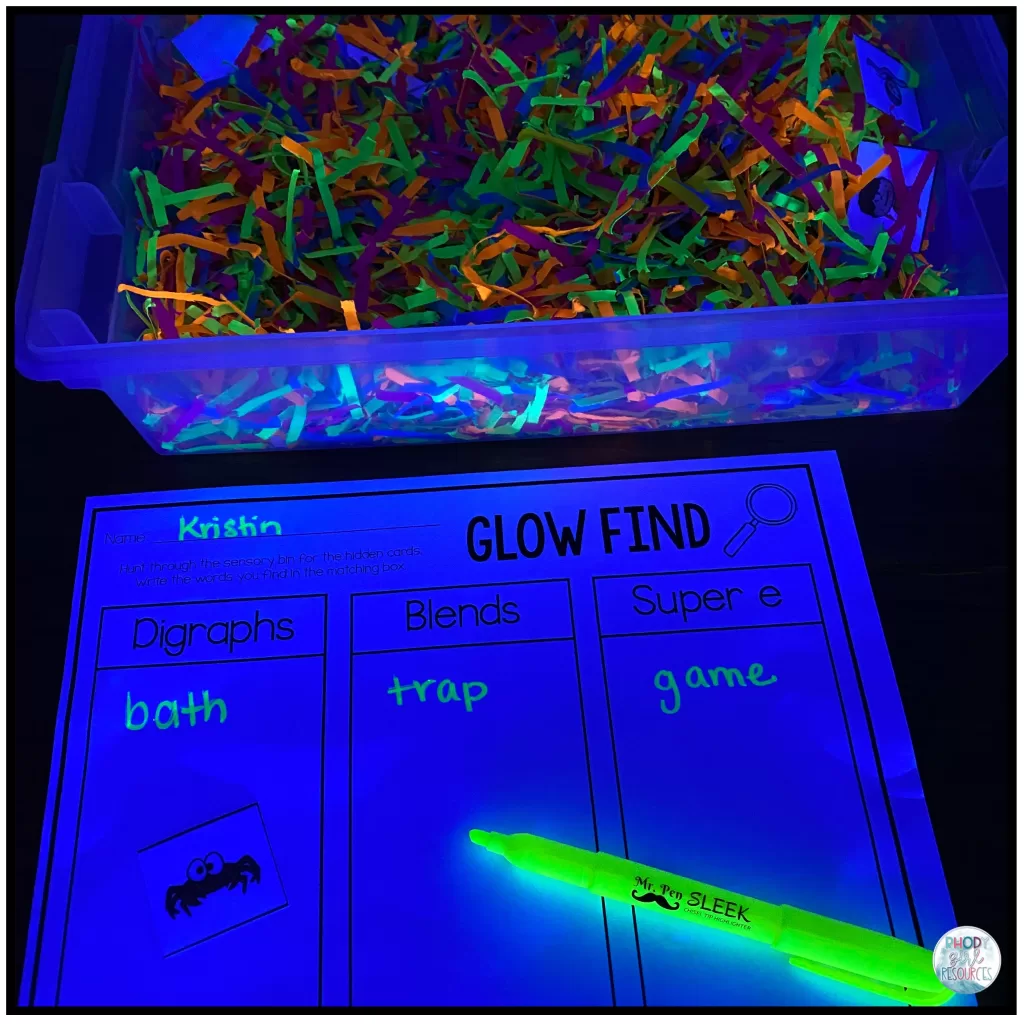
Grab a bin and fill it with sand, paper, beans, etc. I used shredded Astrobright paper. Choose the cards you want to use, print them, and hide them in the bin. Students will search the bin, pull out a card, and spell the word.

9. Glow Words

Materials: Recording Sheet, Highlighters

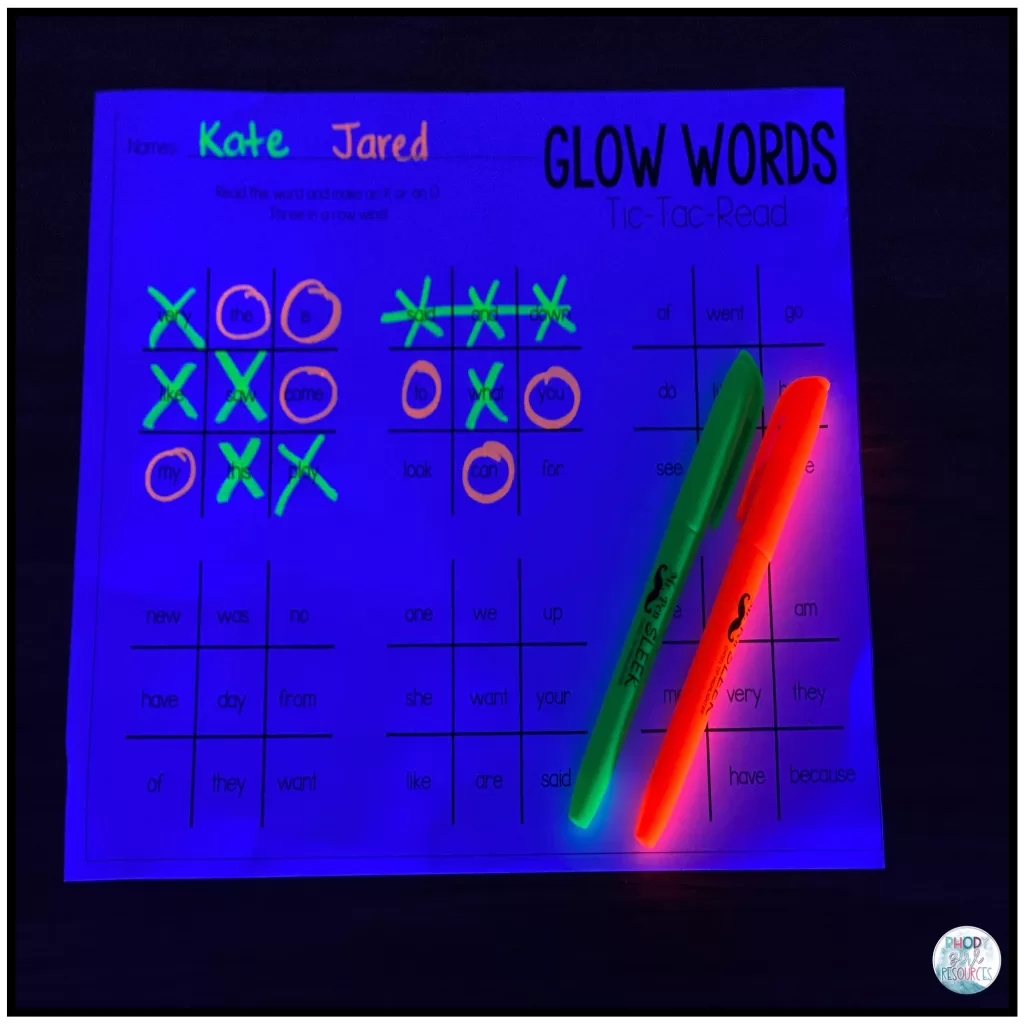
Students play “Glow Words” like Tic Tac Toe. Students will take turns reading a word and making an X or an O. The first player to get three in a row wins that game.

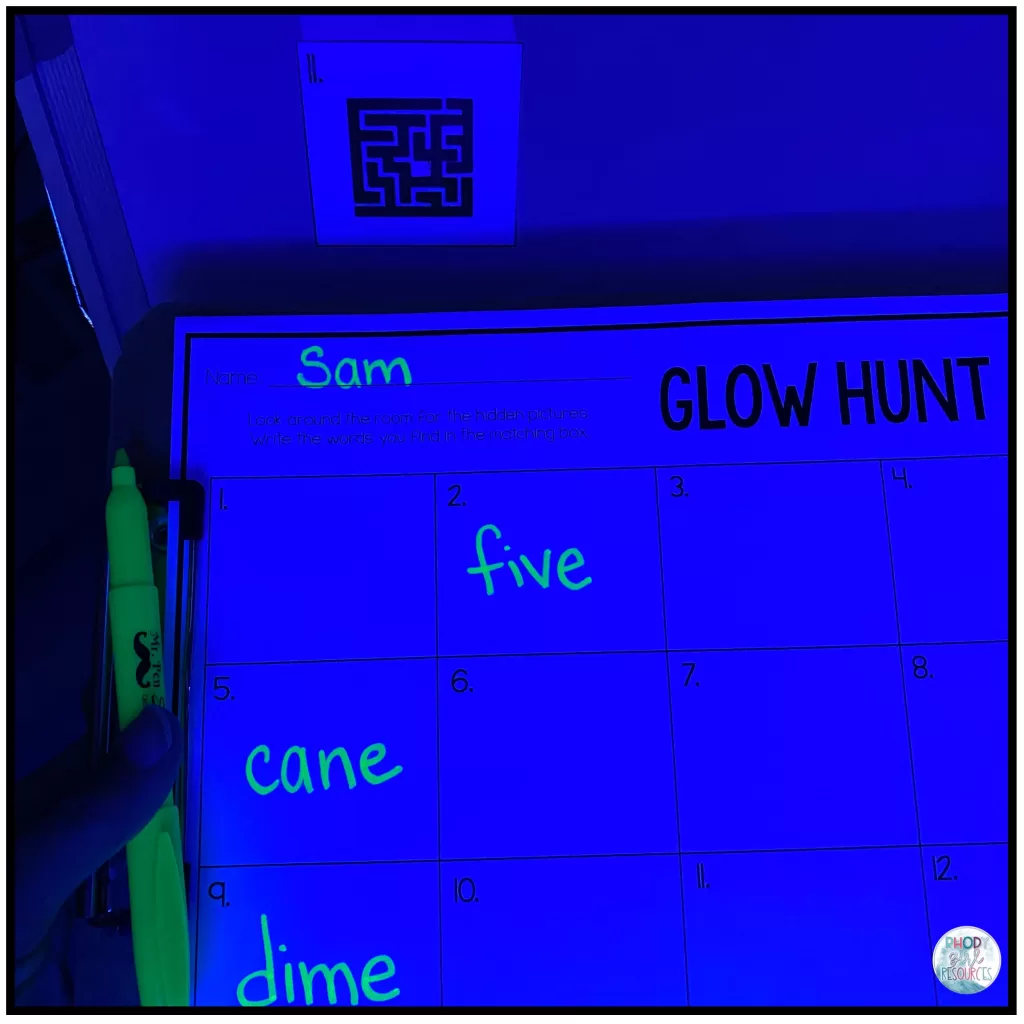
10. Glow Hunt

Materials: Picture Cards, Clipboards, Recording Sheets, Highlighters

This is a write-the-room activity. Students will walk around looking for the hidden cards. When they find a card, they spell and write the word pictured on their recording sheet.

If you like the activities above, you can check them out in my Glow Day Activities pack. This resource includes the recording sheets and printable materials for the pictured Glow Day stations. In addition to activities focusing on math and literacy skills, other printables include a coloring sheet, maze, word search, notes to families, and station signs.

Filed Under: Classroom Fun & Community Building, Teaching Resources, Uncategorized Tagged With: ABC Countdown, Classroom Transformation, End of Year Activities, Glow Day

Quick, Easy, and Hand-on Earth Day Activities for Kindergarten

With the arrival of spring, Earth Day (April 22nd) is right around the corner. Earth Day is a holiday that may be overlooked. It often falls during spring break, state testing, or on weekends. What’s great is that these Earth Day activities for kindergarten don’t need much time to complete; they are quick, easy, and hands-on!

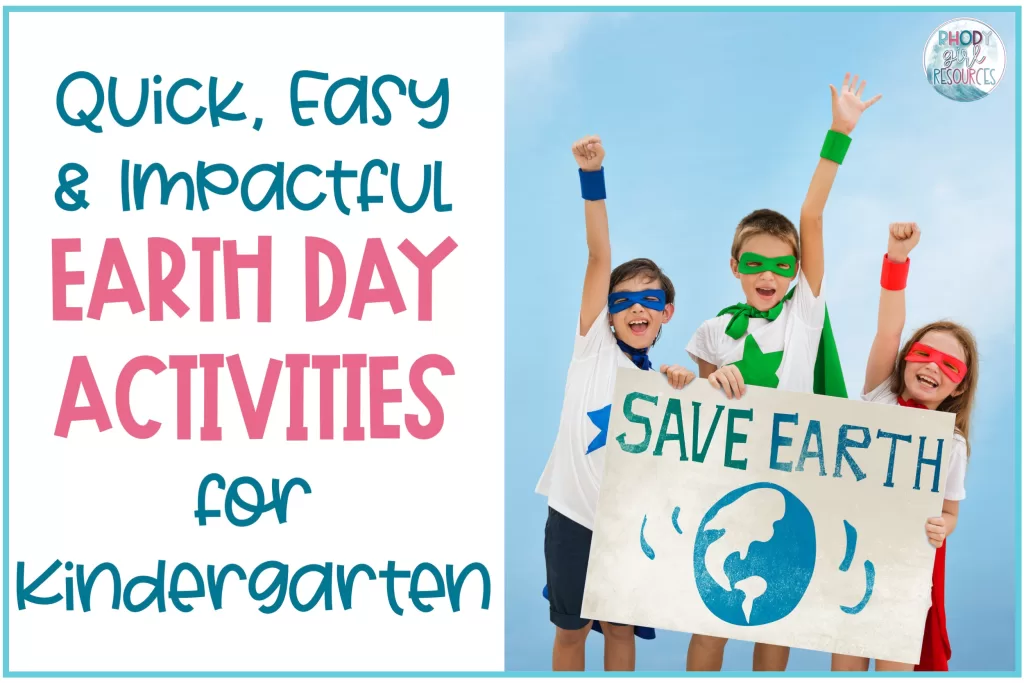
Three kids dressed as superheroes holding a "Save Earth" sign to promote Earth day activities for kindergarten.

Earth Day Activities for Kindergarten to Get Started

I like to kick off units and build excitement through videos and read-alouds. Earth Day is the perfect opportunity to do this. There are many great Earth Day read-alouds and free videos available on YouTube. Rocket Say’s Clean Up is one of my favorite books, while Harry Kindergarten’s “We’re Going Green” is a catchy tune that grabs their attention yearly!

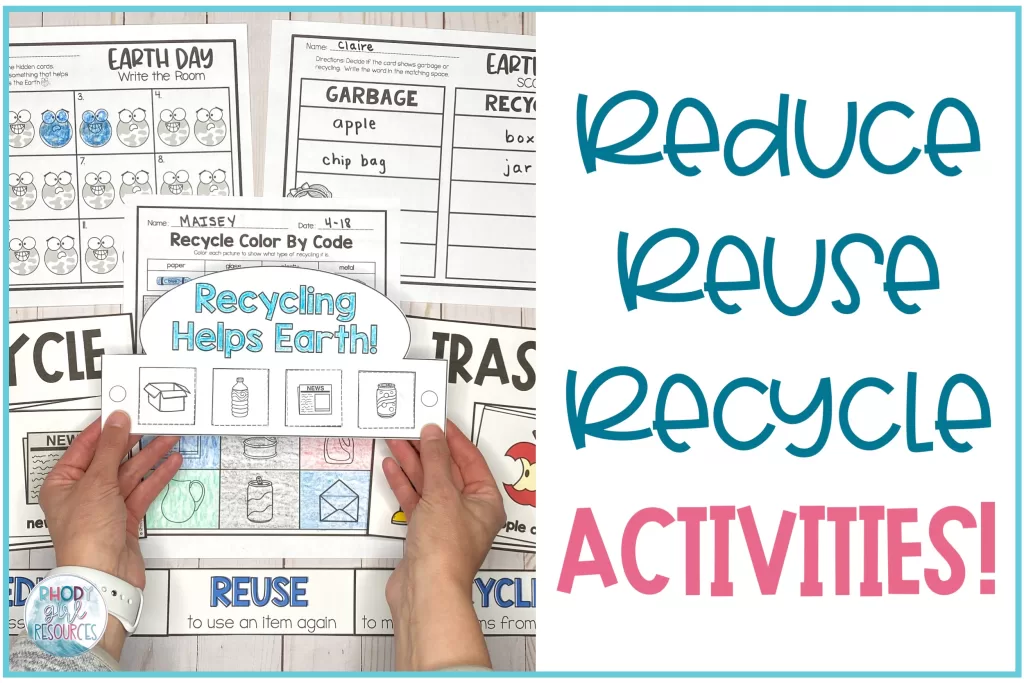
Providing multiple exposures and ways to practice helps my students understand ways to care for the Earth. I usually start with the concept of reduce, reuse and recycle. First, we gather on the rug and work together to sort using picture cards in a pocket chart. Using what we have learned from books, videos, and this sort, we work in small groups or independently to complete individual sorts, a write-the-room activity, color by codes, and more. To see more of the activities I complete with my students, check out this Earth Day resource.

Earth Day activities for kindergarten to learn about reducing, reusing, and recycling.

Earth Day Activities for Kindergarten to Apply What You’ve Learned

Now that students understand the importance of caring for the Earth, it’s time to bring learning to life through real-life applications.

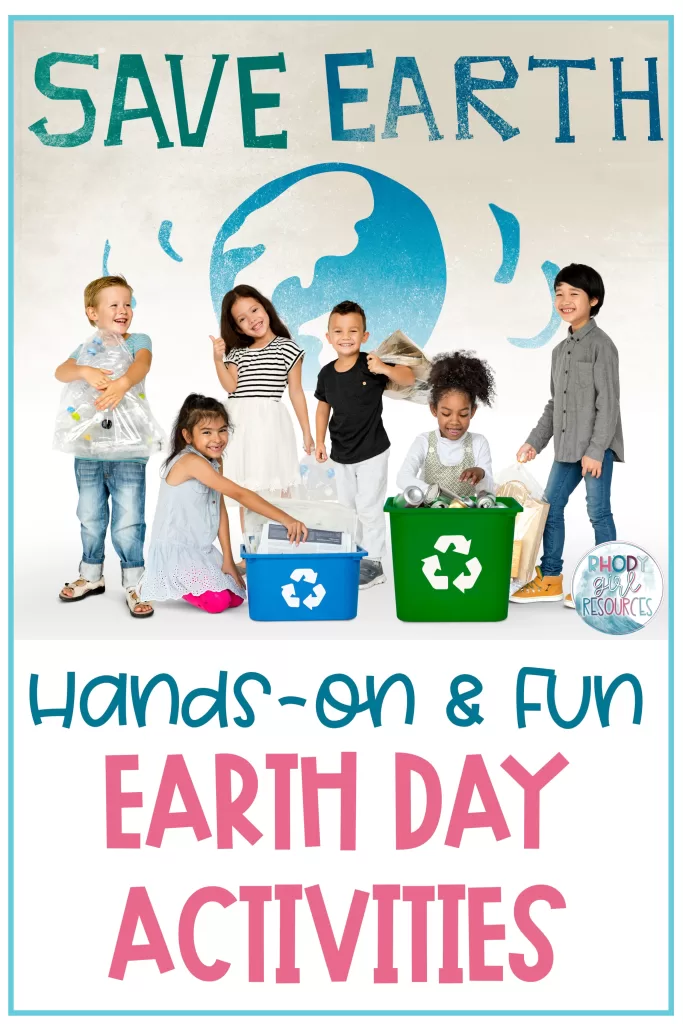
Six kids recycling and modeling to Earth day activities for kindergarten.

Get Outside!

This time of year provides the opportunity to spend time outside! Get some fresh air while students help clean up the school grounds, take a nature walk, or listen to an Earth Day story.

  • Take a Nature Walk: Head outside to observe the school environment’s different trees, plants, and animals. Take this a step further and make it a scavenger hunt!
  • Pick up Litter: Provide students with gloves and trash bags. Walk around the school grounds and have them help pick up the litter they see.
  • Garden/Compost: If you have a school garden, you can observe the plants and learn about composting. Our science curriculum has a unit on worms, plus lots of food scraps are thrown away each day in the cafeteria which would all work to support an authentic learning experience.
  • Plant a Tree: Let students plant trees or seeds to grow a pollinator garden. Around Earth Day, many places will offer to plant a tree for free. What a great experience for your students!

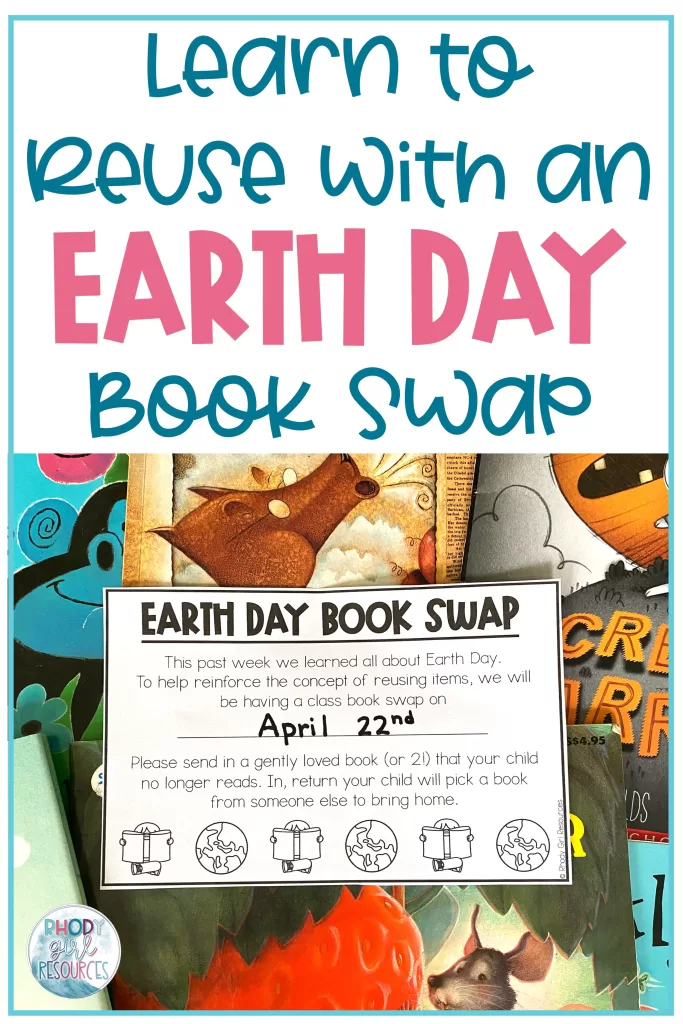
Book Swap

Bring the concept of reuse to life with a classroom book swap. Send a note inviting students to bring in a book or two they no longer read. To ensure I have enough for everyone, I always clean out my books or have extras that I’ve grabbed with points from Scholastic Book Club. Afterward, lay the collected books out for students to browse and choose a new one to take home.

If you are interested in trying a Earth Day book swap in your classroom, scroll down to grab the free letter at the end of this blog post.

Set up a Recycling Center

Ask for donations or collect various bottles, boxes, paper, and cans. Transform your dramatic play area into a recycling center, or take bins and let kids practice sorting recyclable materials by paper, plastic, glass, etc. Besides learning about recycling, this activity will support role play, conversations, and problem-solving.

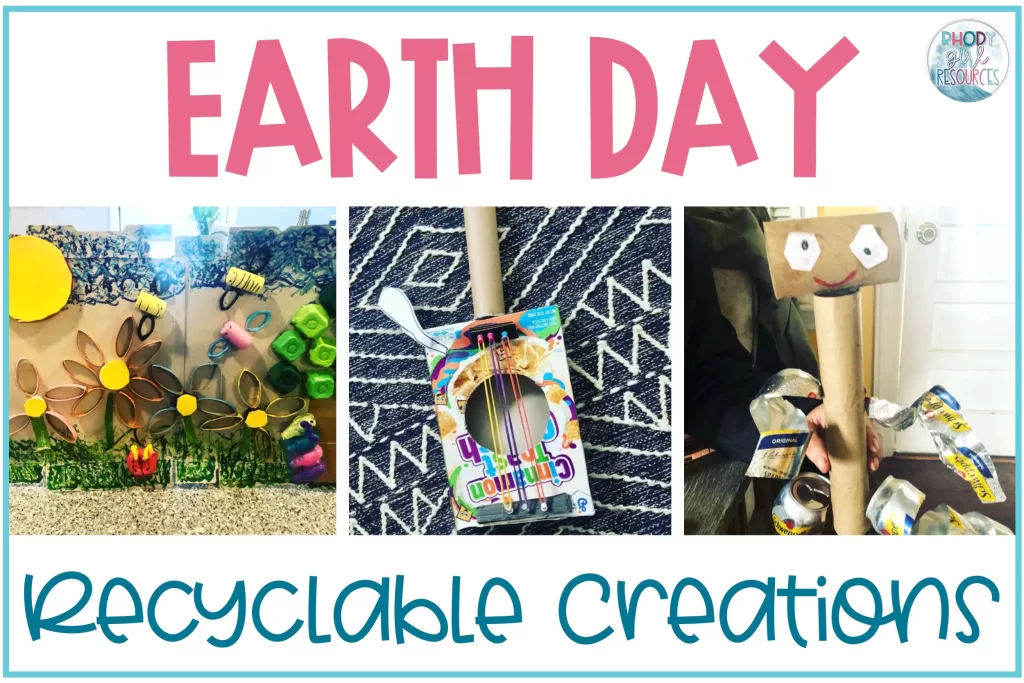
Recyclable Creations Earth Day Activities for Kindergarten

Making recyclable creations offers many opportunities. For example, have the whole class use recyclable materials to create robots or make it open-ended and let them create anything they want! Complete these Earth Day activities for kindergarten in class or at home. Ultimately, the idea is to use recyclable materials to create something new.

Flowers, a guitar, and a robot made using recyclable materials as part of Earth Day activities for kindergarten.

This activity can also make a great open-ended center. Paper, boxes, toilet paper rolls, lids, etc., are already abundant in our classroom recycling bin. Add tape, glue, string, etc., and see what your students’ imaginations create!

How to Wrap Up Earth Day Activities for Kindergarten

Now that you’ve done all these amazing activities have students show what they know. Let students perform a play, create a song, or write about everything they have learned.

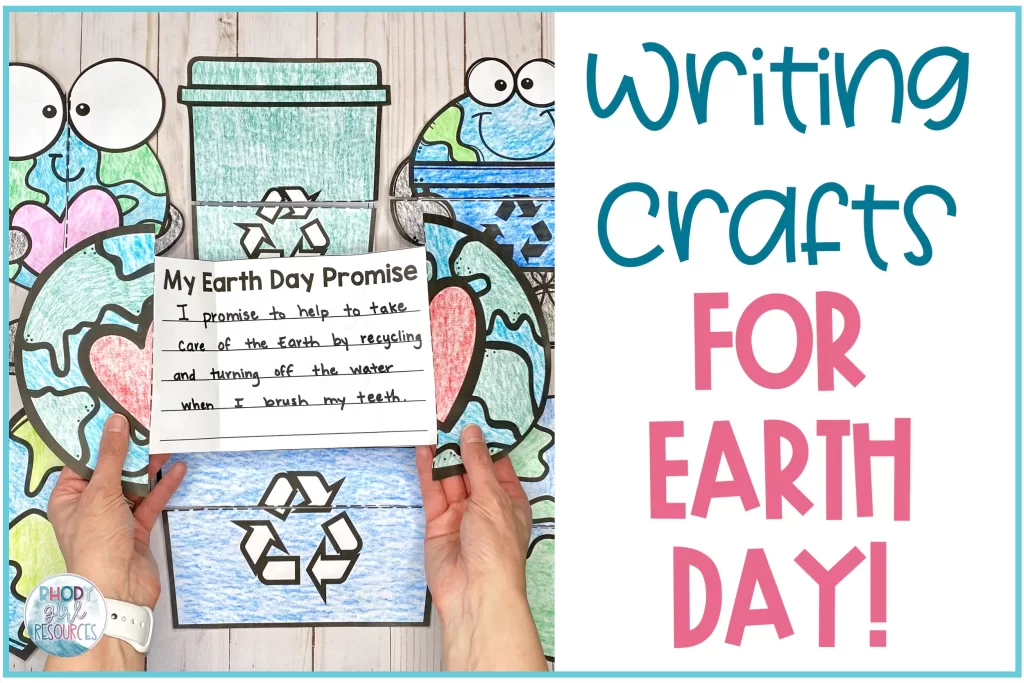
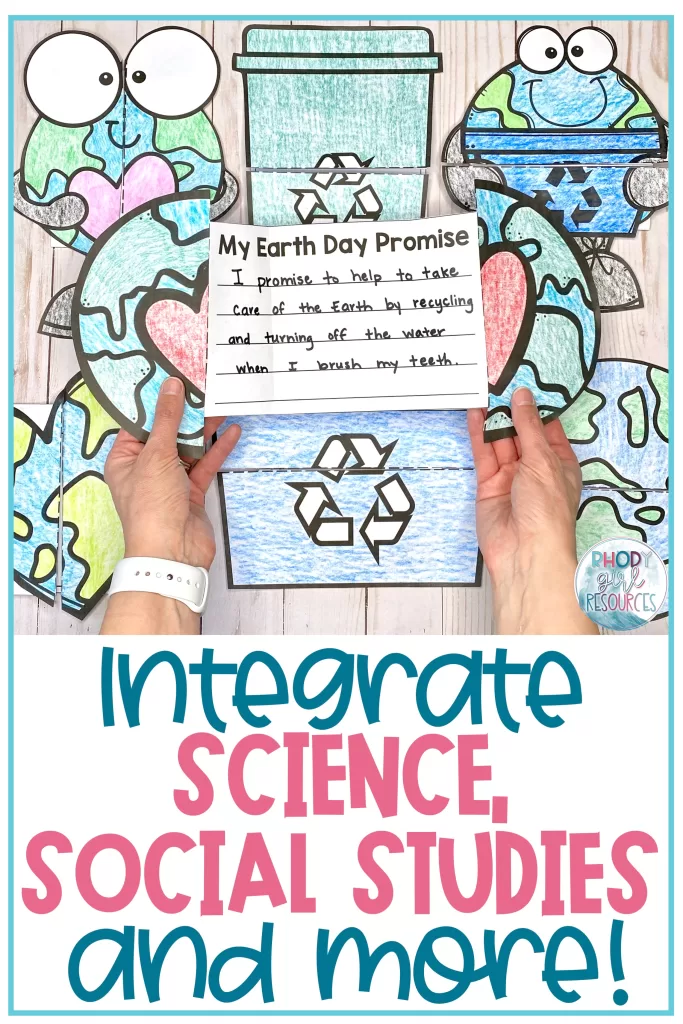
Earth Day Writing Crafts

Drawing and writing are great ways for students to share their learning. Display your students’ writing in a fun way with Earth Day writing crafts. Pick and choose the outside and inside parts to match your needs. Templates include a variety of prompts and options to write or draw, depending on your students’ levels.

An Earth Day writing craft sharing a student's Earth Day promise.

I’d love to hear your favorite ways to teach your students how to take care of the Earth. Leave your ideas in the comments!

Filed Under: Holidays, Science, Teaching Resources, Uncategorized Tagged With: Earth Day

How to Make Magic Leprechaun Rocks for St. Patrick’s Day

St. Patrick’s Day science can be easy and fun! Just grab baking soda, water, and green food coloring, and you are ready to make magic leprechaun rocks.

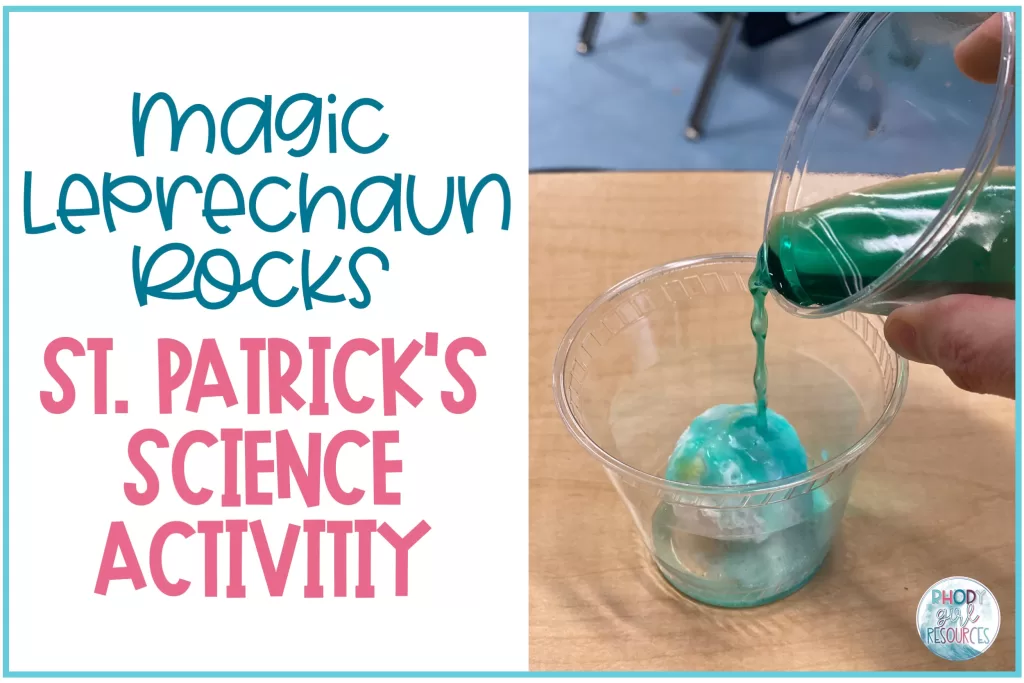
Green vinegar being poured over magic leprechaun rock for St. Patrick's Day science

The Science Behind Magic Leprechaun Rocks

This is a fun twist on the experiment using baking soda and vinegar. Baking soda is a base, and vinegar is an acid. When the two ingredients mix, they react and release bubbles, aka carbon dioxide. The fizzing and bubbles bring the magic to this St. Patrick’s Day science activity.

Let’s Make Magic Leprechaun Rocks

Making magic leprechaun rocks is quick and requires only a few ingredients. Warning: It can be messy, but it also brings out your inner child!

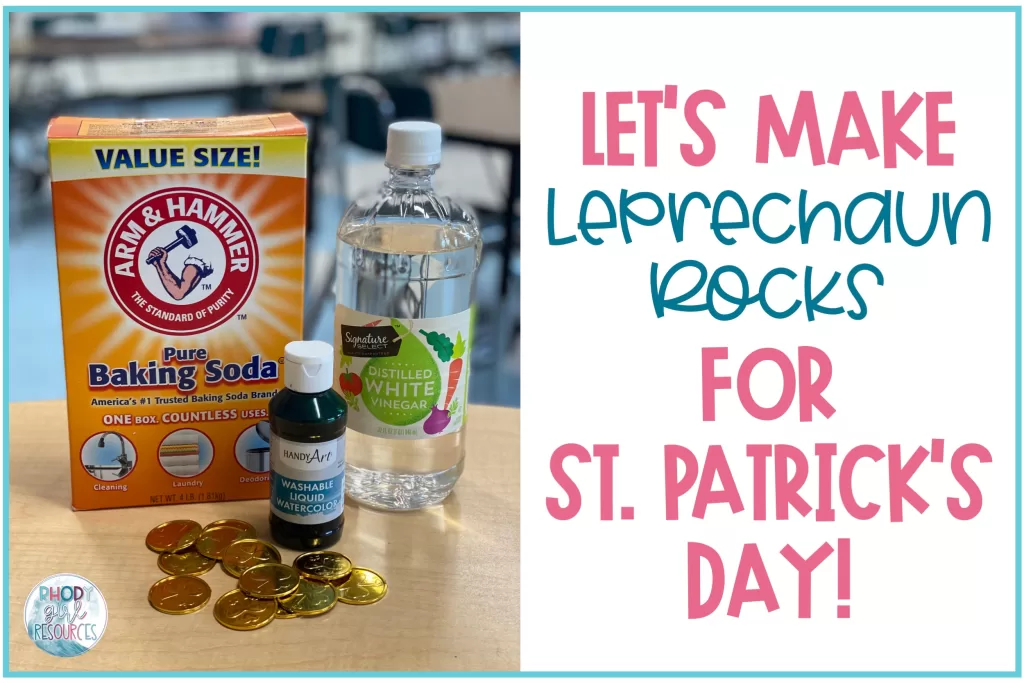
Baking soda, vinegar, green food coloring, and coins to make magic leprechaun rocks

Materials:

  • Baking Soda
  • Green Food Coloring/ Green Watercolor
  • Water
  • Gold Coins
  • Vinegar
  • Measuring Cups
  • Cookie sheet/tray
  • Mixing Bowl

How to Make:

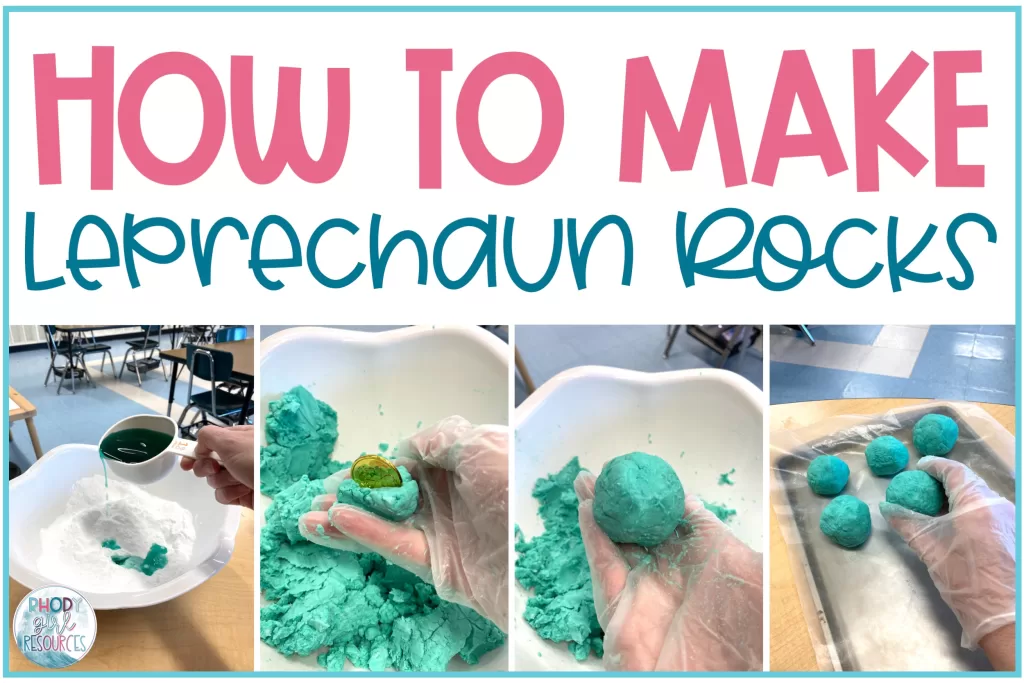
Once you have gathered all the ingredients, you are ready to begin. First, mix green food coloring or green liquid watercolor with the water. You’ll need 1 cup of baking soda for every 1/4 cup of water. Mix the baking soda and water until it becomes a moldable thick paste. If it seems too runny, add more baking soda; if it’s too crumbly, slowly add more water.

Mixing baking soda with green water, rolling the mixture into a ball with a gold con in the middle, and placing the rocks onto a cookie sheet to dry   to make magic leprechaun rocks

Now it’s time to shape the rocks! If you don’t want green hands, wear gloves…I learned the hard way! Carefully shape the rocks by adding a scoop of the paste, then a coin, topped with more paste. Squeeze and roll it into a ball shape. Finally, I place them onto a parchment-lined cookie sheet to dry. They need 1-2 days to dry, but you can also speed it up by placing them in the freezer.

View this post on Instagram

A post shared by Kristin (@rhodygirlresources)

While my students are at lunch or specials on St. Patrick’s Day, I sneak outside and spread the leprechaun rocks in the grass. When my students return to the classroom, they find a note left behind by the leprechauns. This note sends students out to hunt for leprechaun rocks and explains that using the leprechaun water on the rocks will reveal a surprise!

View this post on Instagram

A post shared by Kristin (@rhodygirlresources)

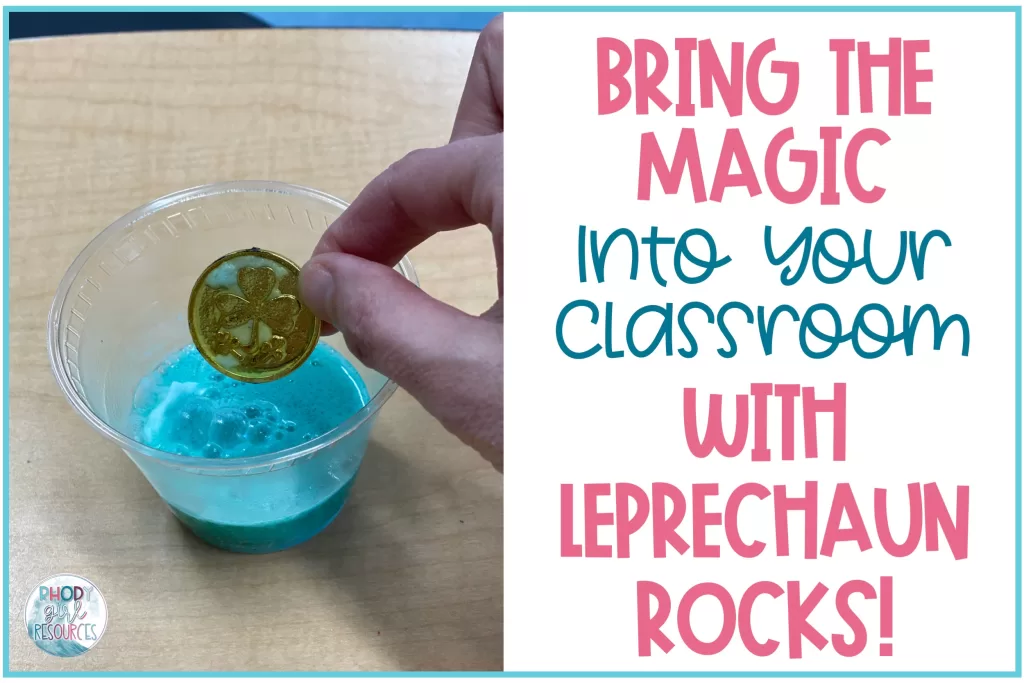
The bubbling reaction when the baking soda and vinegar mix are mixed will result in squeals of excitement, followed by absolute joy when they reveal the gold coin!

Tip and Tricks for Magic Leprechaun Rocks

There are several different ways you can do this activity. One way is to have a large bucket or bowl filled with leprechaun water and have students drop the leprechaun rocks into it. I like to let each student do their own.

I give each student a cup to place their magical leprechaun rock in. Then, I give each student a small cup of leprechaun water (green vinegar) to pour over their rock. You could also have them use droppers to slow down and stretch out the fun!

A coin being pulled out of a cup after St. Patrick's Day science.

The leprechaun water can be colored vinegar placed into a special container, or if you want to press the easy button like me, take the label off the bottle of vineger!

Looking for additional St. Patrick’s Day ideas? In the blog post, Bringing Excitement and Fun With St. Patrick’s Day for Kindergarten, I share ideas on integrating math, STEM, writing, and more!

Filed Under: Holidays, St. Patrick's Day, Teaching Resources, Uncategorized Tagged With: holidays in the classroom, science, St. Patrick's Day

17 St. Patrick’s Day Minute to Win It Games for Classroom Fun

Celebrate St. Patrick’s Day in your classroom with St. Patrick’s Day Minute to Win It games. These games can be used as part of a classroom party, for a classroom reward, or as an opportunity to build classroom community. For a bit of time and effort, your students will have a blast and ask to repeatedly play St. Patrick’s Day Minute to Win It.

17 St. Patrick's Day Minute to Win It games

Using St. Patrick’s Day Minute to Win It Games in the Classroom

Minute to Win It games are perfect for the classroom setting because they are simple, fun, and easy. Since each game is only one minute long, they can be used as time fillers or grouped to fill a longer chunk of time. Use them during indoor recess or a classroom party, or set a goal, such as quiet transitions for students to earn Minute to Win It Games. If you have the materials ready, you can play these games anytime!

Many of the materials to play these St. Patrick’s Day Minute to Win It games may already be in your classroom or can be purchased from a local grocery store, Target, or Walmart. Donations from families are also a great way to get everything you need.

How to Play St. Patrick’s Day Minute to Win It Games

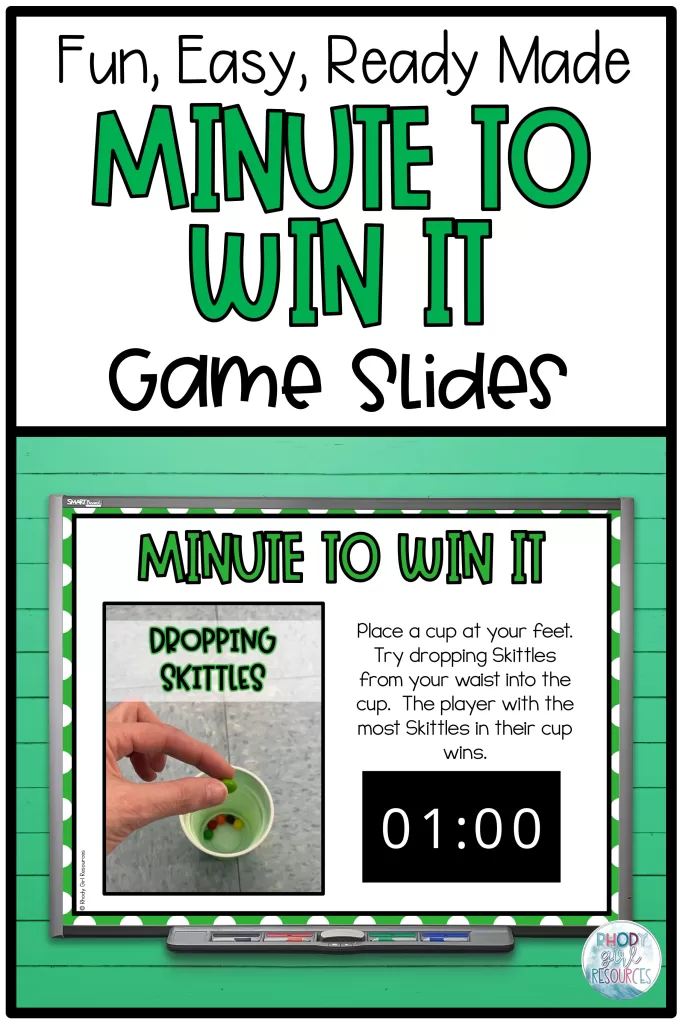
Students can play St. Patrick’s Day Minute to Win It games independently, with partners, or on teams. to play, explain the game, and set a timer, or use these slides, which include an image, description, and built-in timer for each game. Depending on the purpose of playing and the age of the players, decide if the games are just for fun or if points will be scored. Finally, choose the games you will play.

17 Possible Minute to Win It Games

There are endless options for Minute to Win it Games. These 17 St. Patrick’s Day Minute to Win It games use rainbow, leprechaun, gold, and green-themed items often associated with St. Patrick’s Day by kids. Pick and choose the ones you want to use to bring some competition and lots of fun into your classroom.

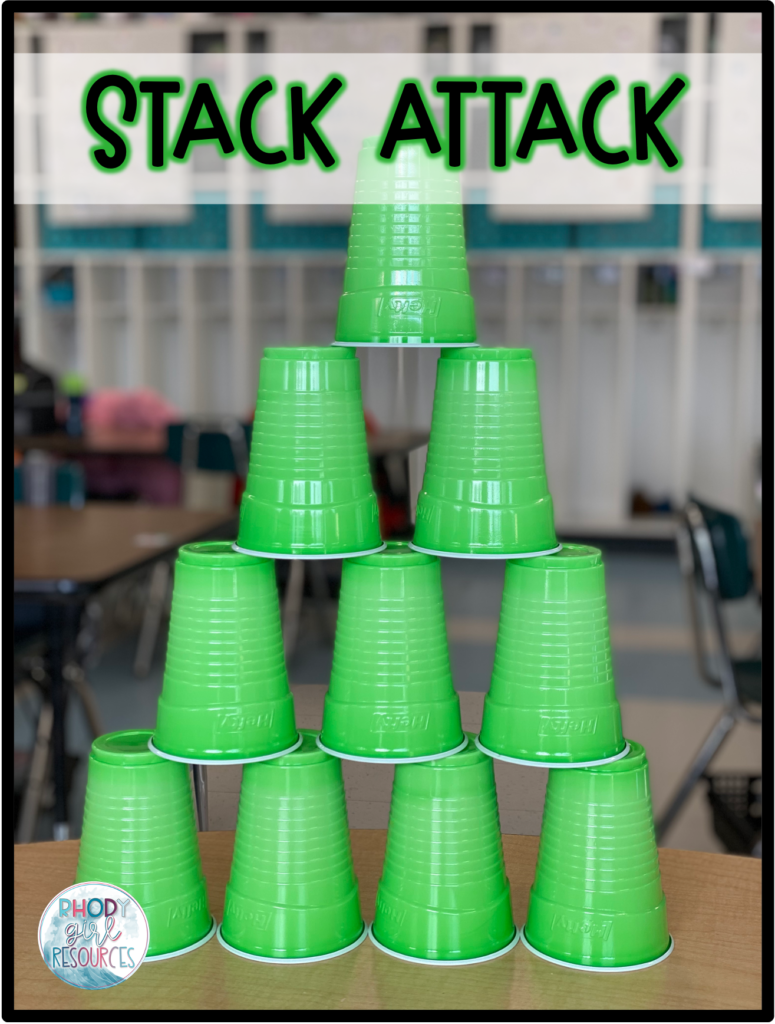
1. Stack Attack

Materials: 10 cups per player/team

How to Play: Race to stack and unstack the 10 cups in one minute.

Green cups in a stack showing how to play Stacks Attack as a St. Patrick's Day Minute to Win It game

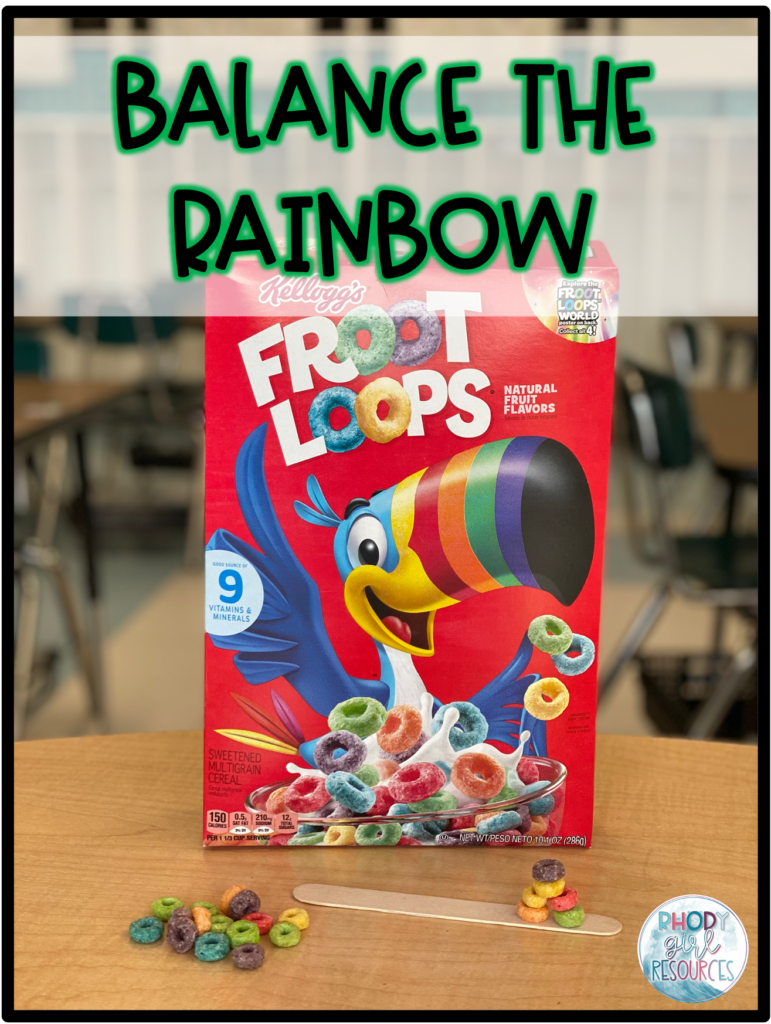
2. Balance the Rainbow

Materials: Froot Loops and Tongue Depressors

How to Play: See how many Froot Loops you can balance on the tongue depressor in one minute.

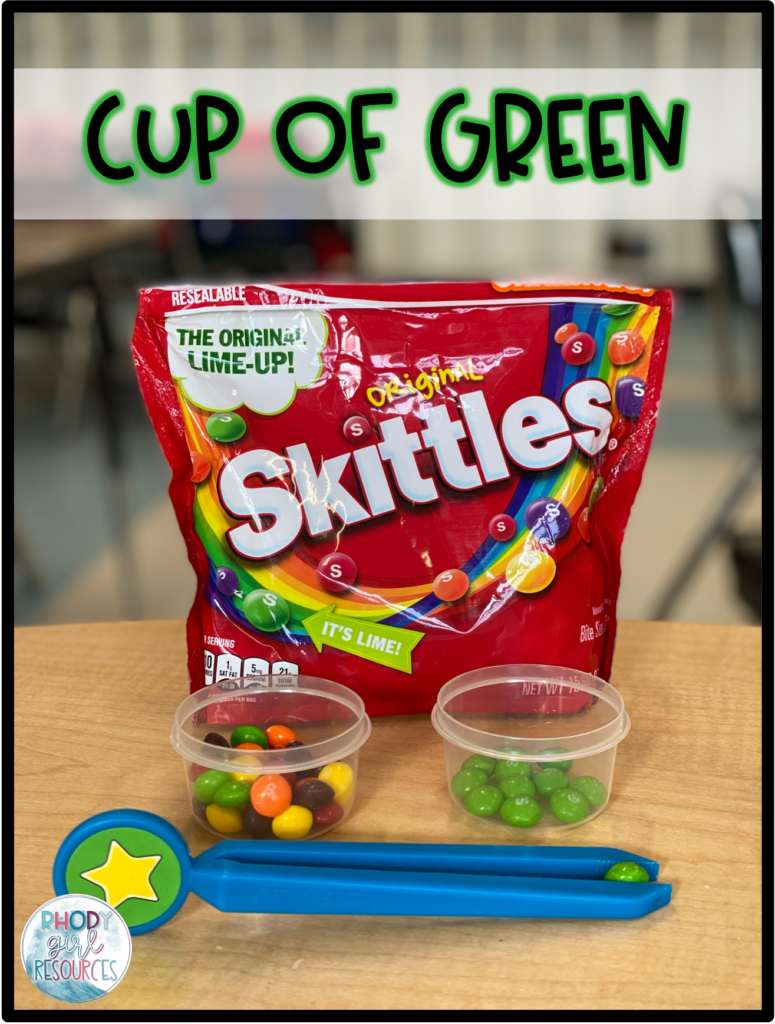
3. Cup of Green

Materials: Skittles, Tweezers, and Cups

How to Play: Race to see how many green Skittles you can transfer in one minute.

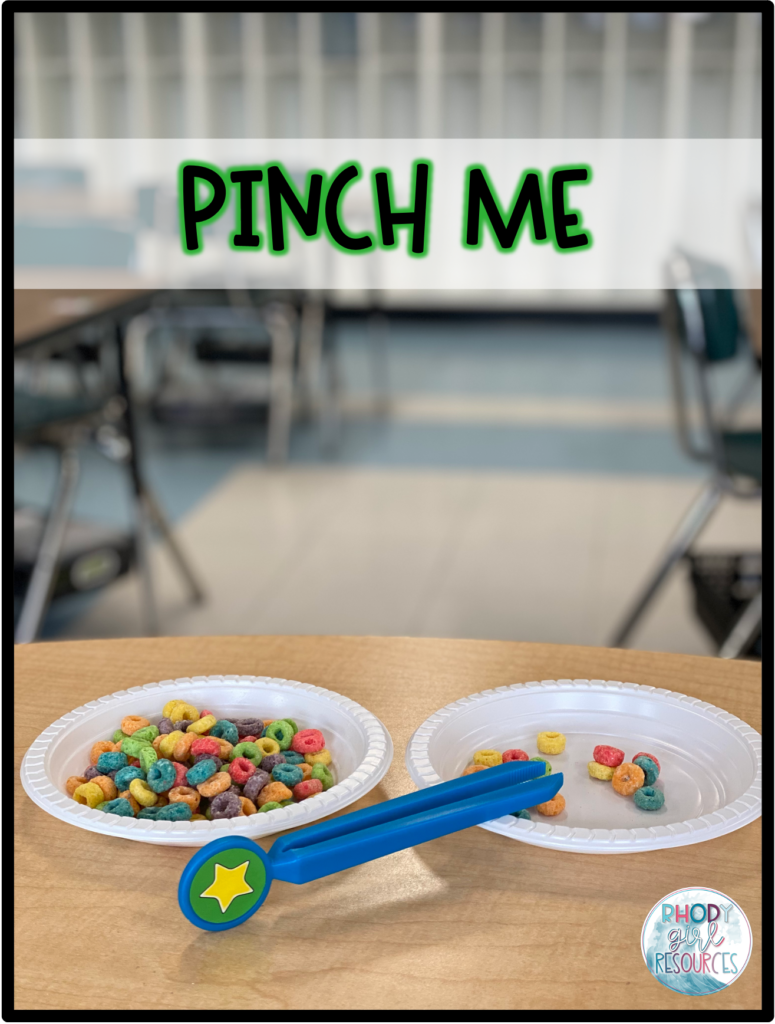
4. Pinch Me

Materials: Plates, Tweezers, and Froot Loops

How to Play: Players use tweezers to transfer Froot Loops from one plate to another in one minute.

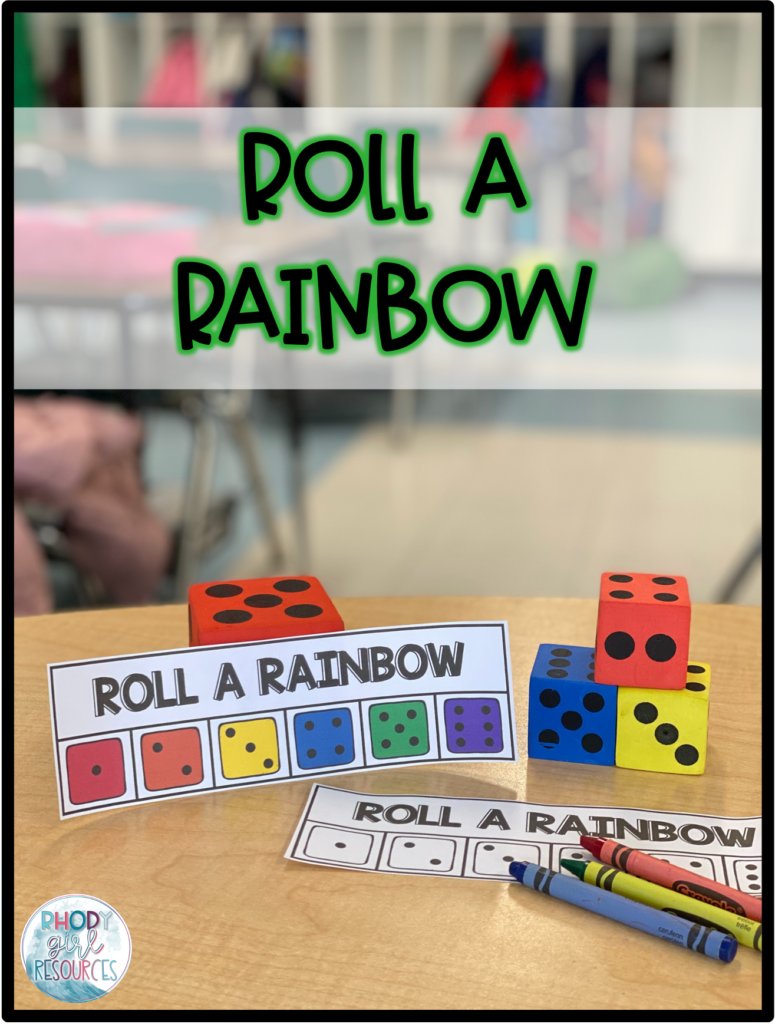
5. Roll a Rainbow

Materials: Dice, Crayons, and Roll a Rainbow printables

How to Play: Players race to roll a die and see if they can color all of the numbers within one minute.

Dice, crayons, and printables showing how to play Roll a Rainbow as a St. Patrick's Day Minute to Win It game

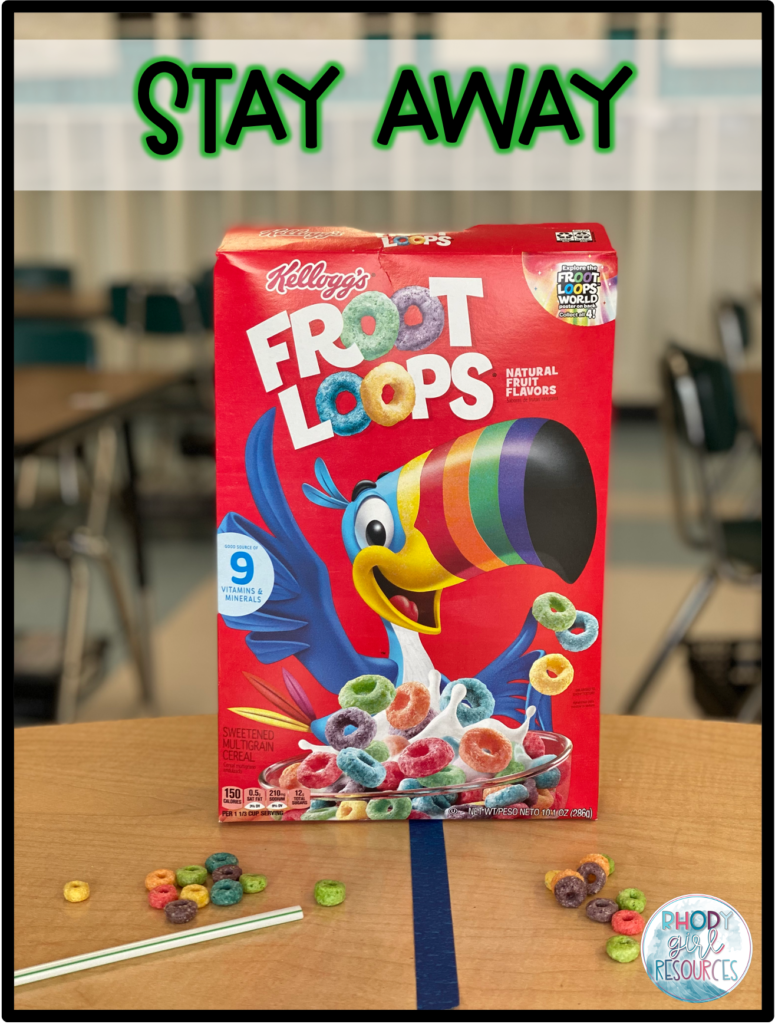
6. Stay Away

Materials: Straws, Froot Loops, and Tape

How to Play: Players use straws to blow the Froot Loops and see who has the least on their side after one minute.

Fruit Loops on a table showing how to play Stay Away as a St. Patrick's Day Minute to Win It game

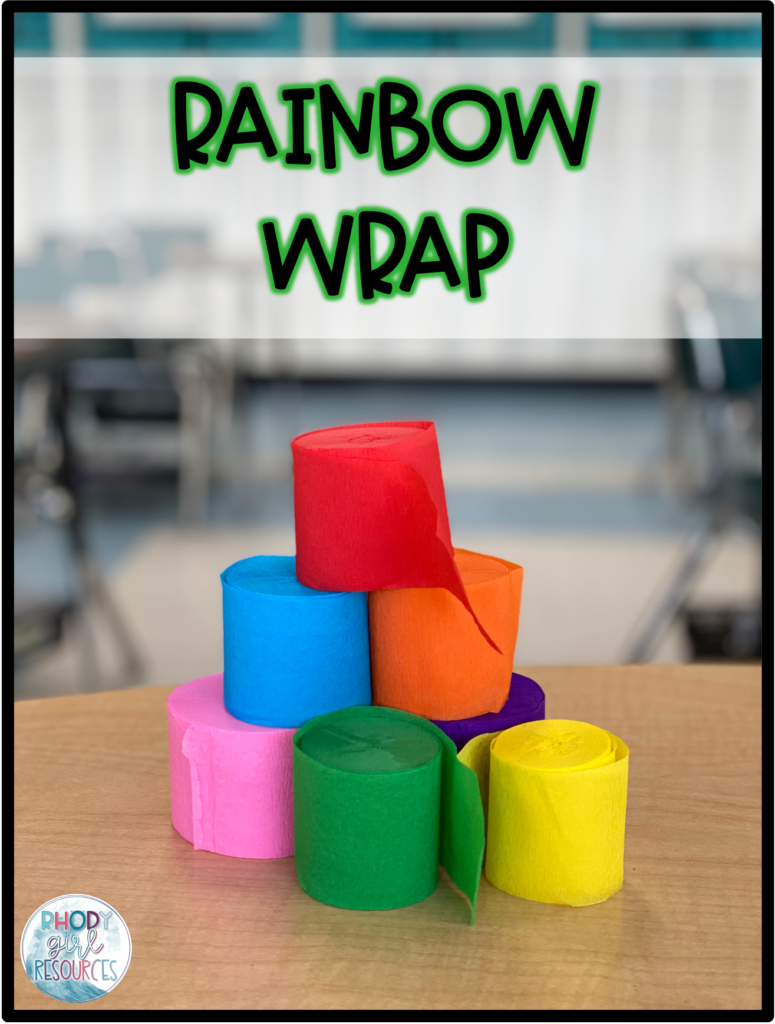
7. Rainbow Wrap

Materials: Streamers

How to Play: Players work in teams to wrap one player up in the streamers in one minute.

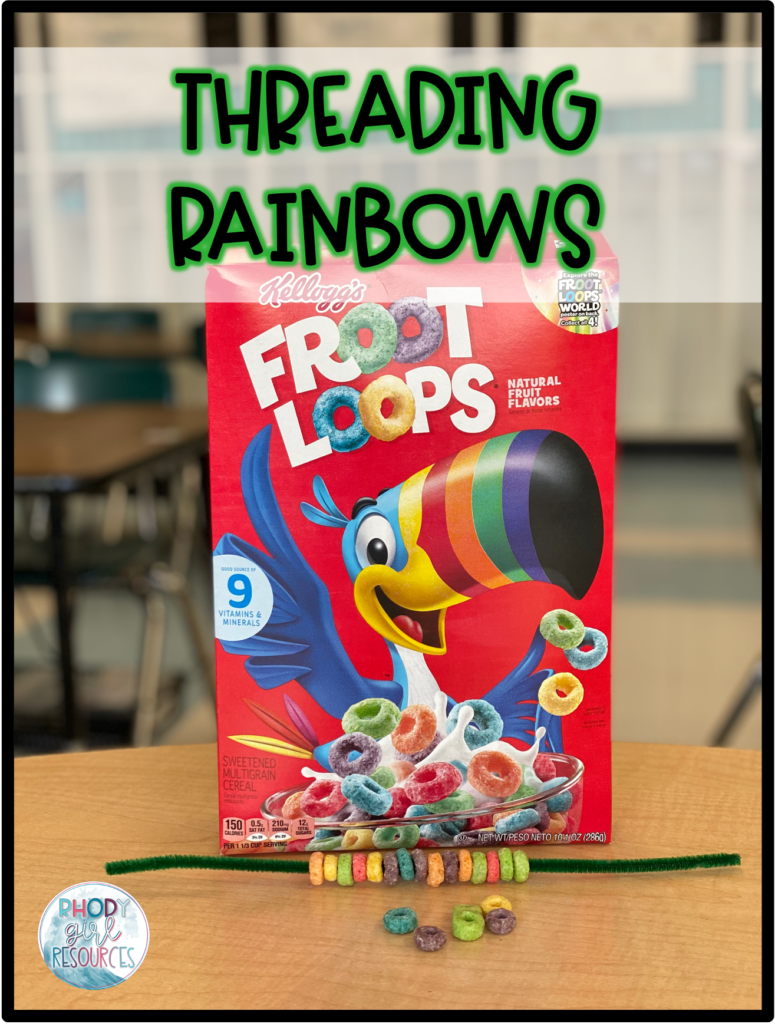
8. Threading Rainbows

Materials: Froot Loops and Pipe Cleaners

How to Play: Race to see who can thread the most cereal on the pipe cleaner in one minute.

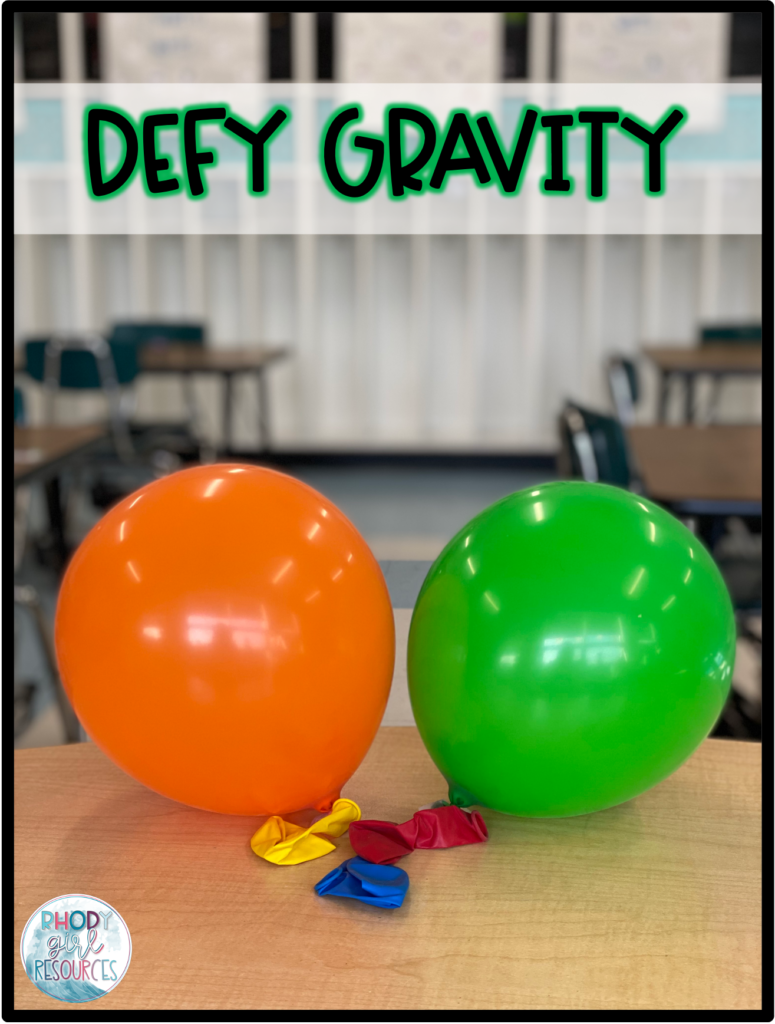
9. Defy Gravity

Materials: Balloons

How to Play: Players attempt to keep a balloon in the air for one minute without touching the ground.

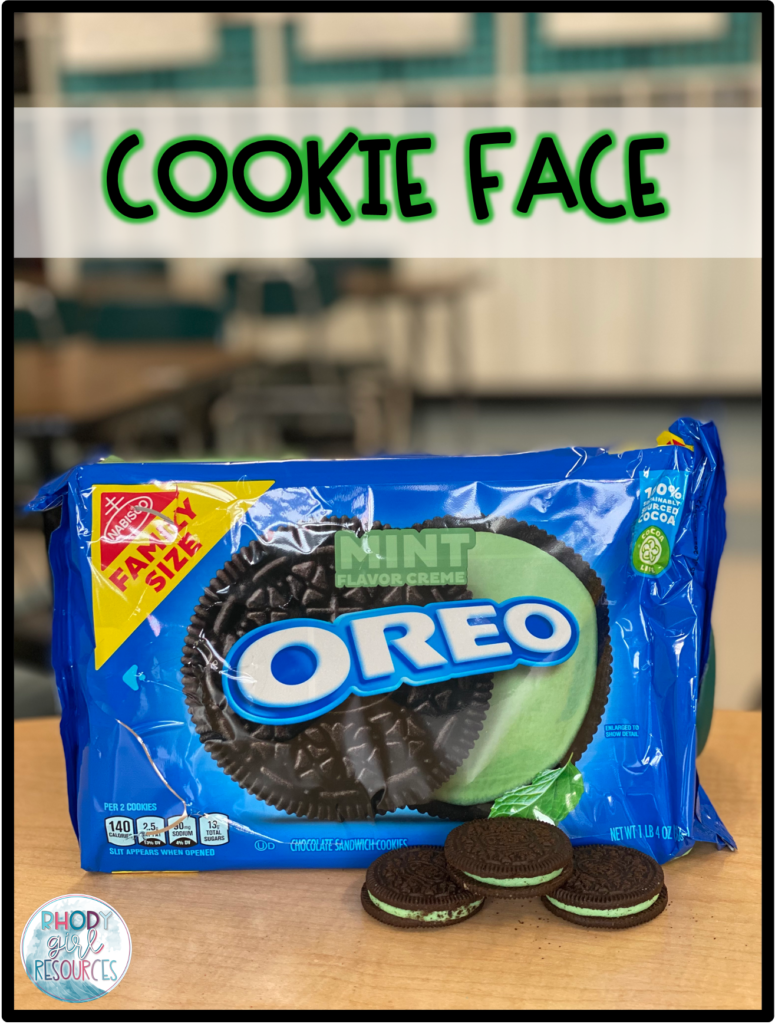
10. Cookie Face

Materials: Mint Oreos or another cookie

How to Play: Place the cookie on your forehead. Players can only move their faces as they try to move the cookie from their forehead to their mouth.

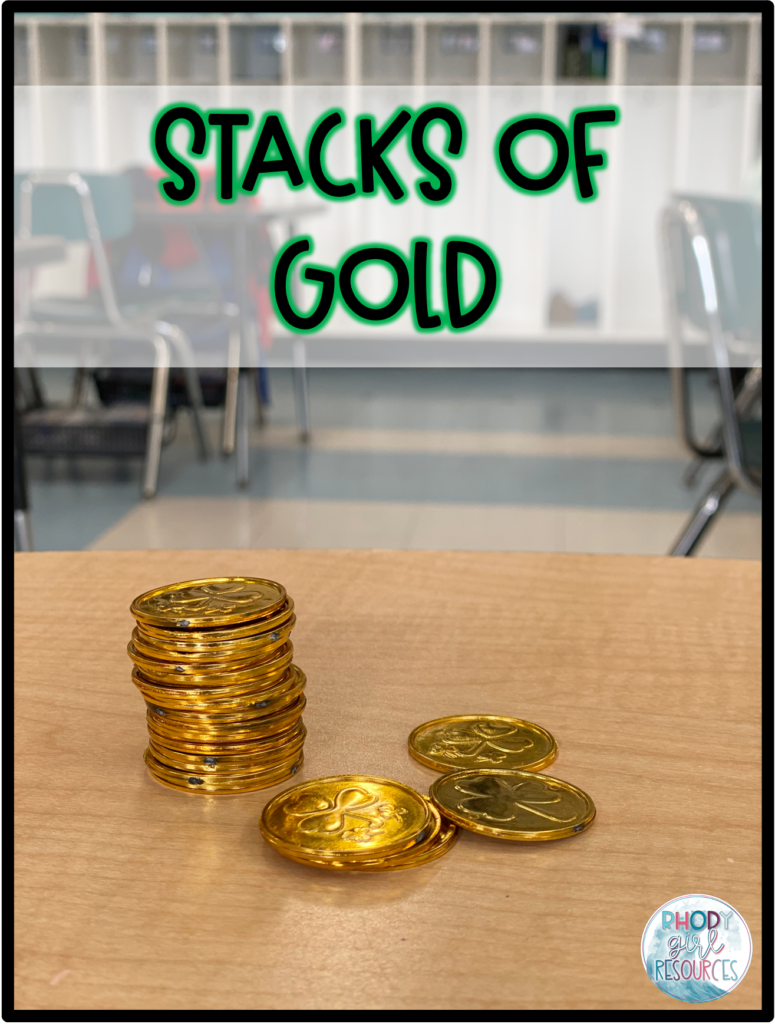
11. Stacks of Gold

Materials: Gold Coins

How to Play: Use one hand to stack as many gold coins as possible in one minute.

Gold coins in a stack showing how to play Stacks of Gold as a St. Patrick's Day Minute to Win It game

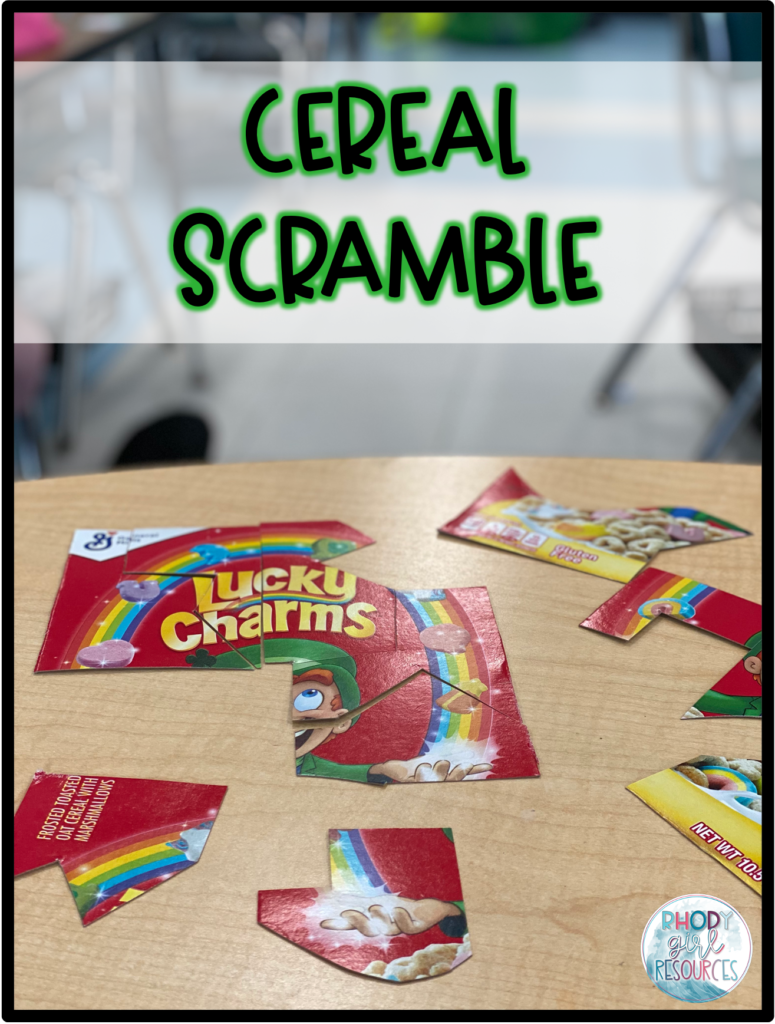
12. Cereal Scramble

Materials: Cereal Box

How to Play: Race to put the cereal box back together in one minute or less.

Cereal box pieces being put together  showing how to play Cereal Scramble as a St. Patrick's Day Minute to Win It game

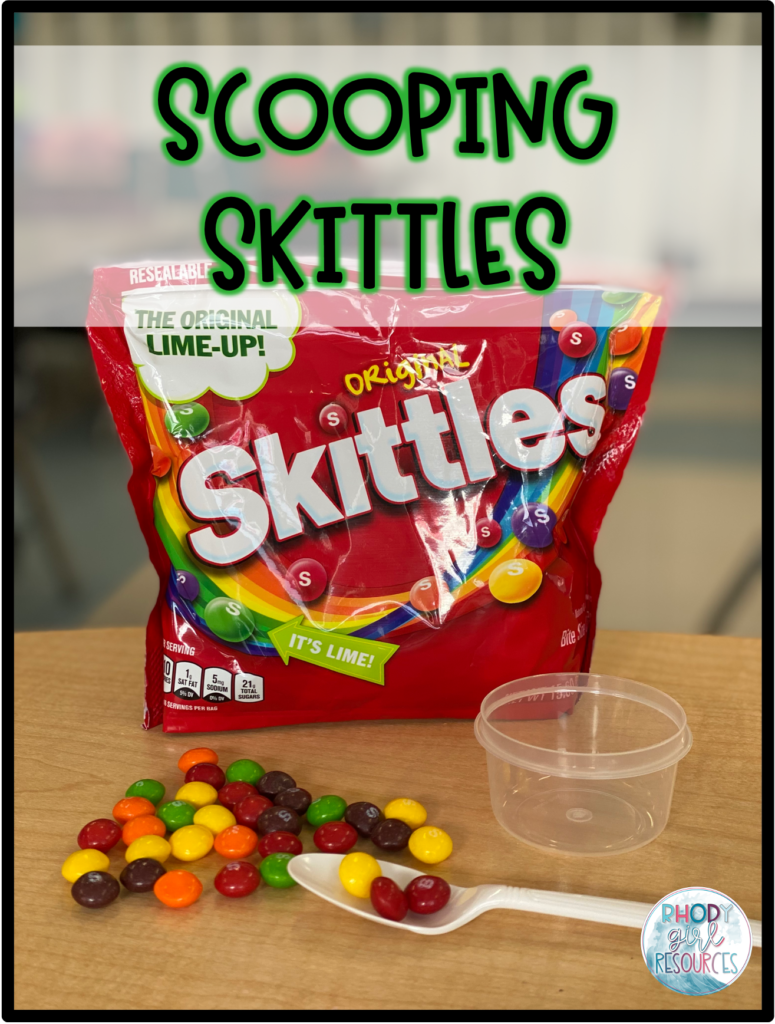
13. Scooping Skittles

Materials: Skittles, Spoons, and Cups

How to Play: Race to move the Skittles off the table to the cup using only a spoon in one minute.

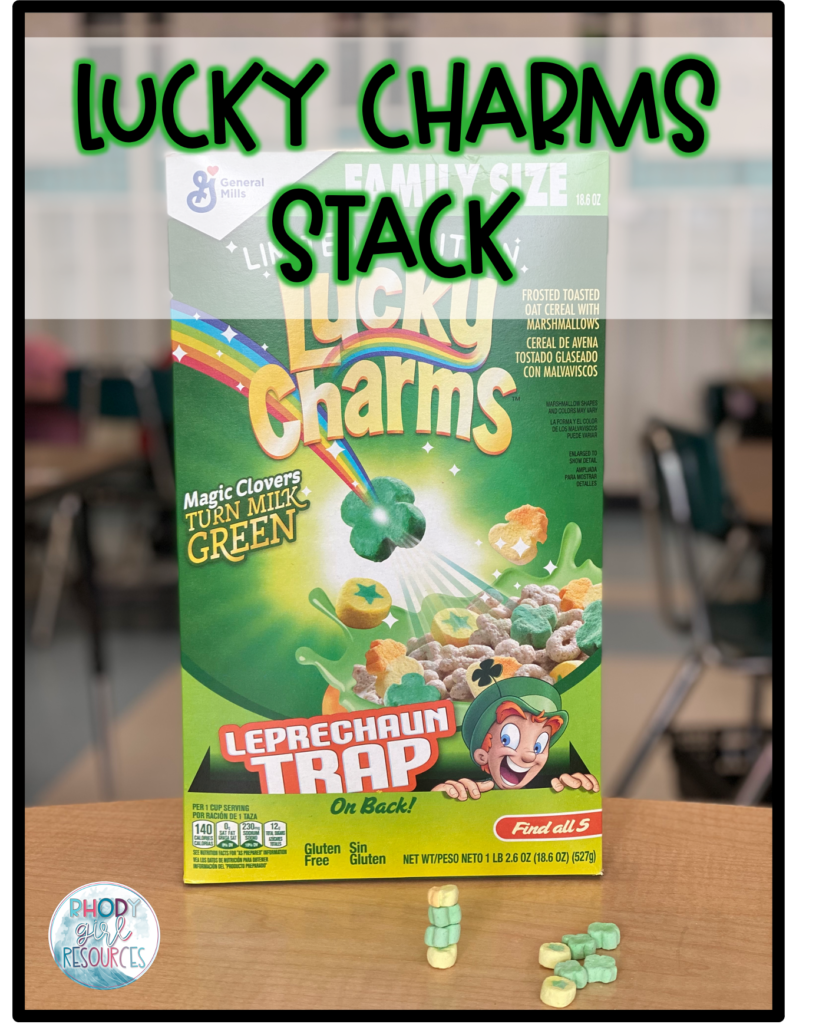
14. Lucky Charms Stack

Materials: Lucky Charms

How to Play: Race to stack the marshmallows. The highest stack after one minute wins!

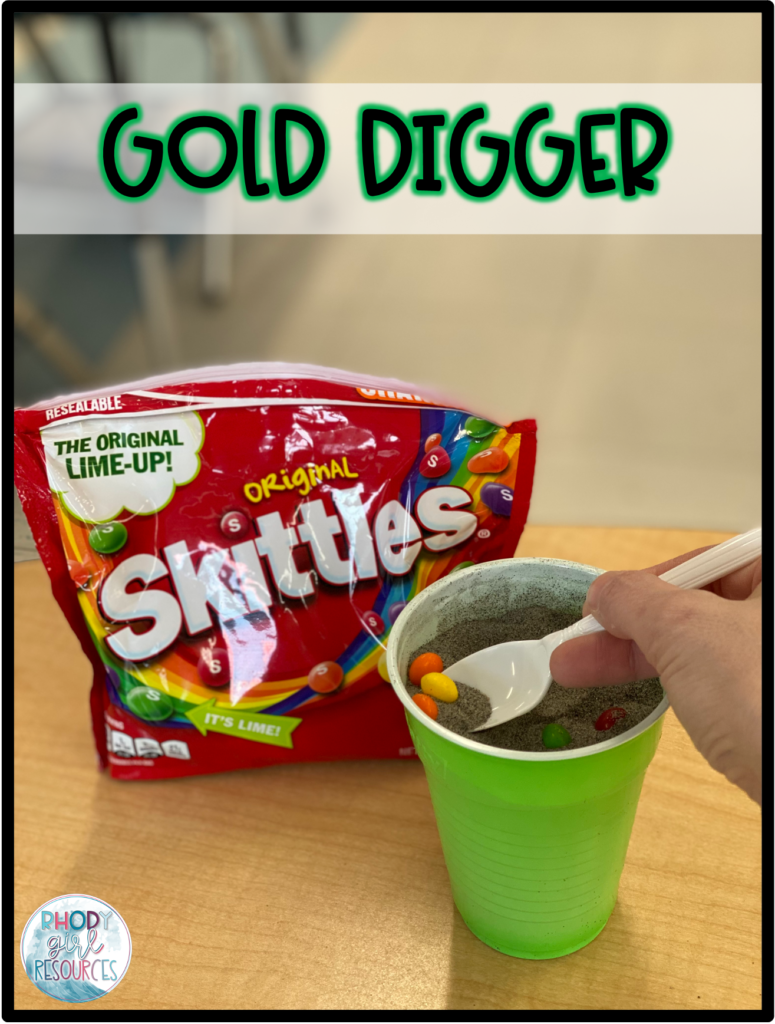
15. Gold Digger

Materials: Sand, Cups, Spoons, and Skittles

How to Play: Race to remove the gold Skittles from the sand. The person who removes the most in one-minute wins!

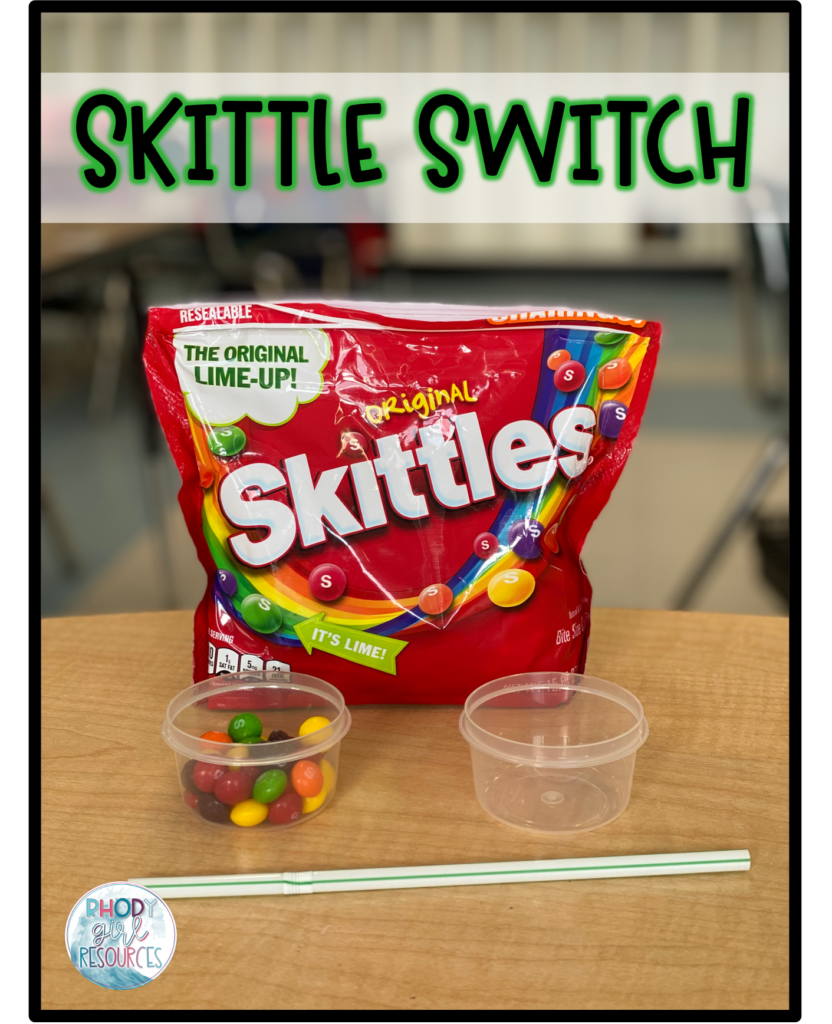
16. Skittle Switch

Materials: Skittles, Cups, and Straws

How to Play: Using a straw, try to move all of the Skittles from one cup to another in one minute.

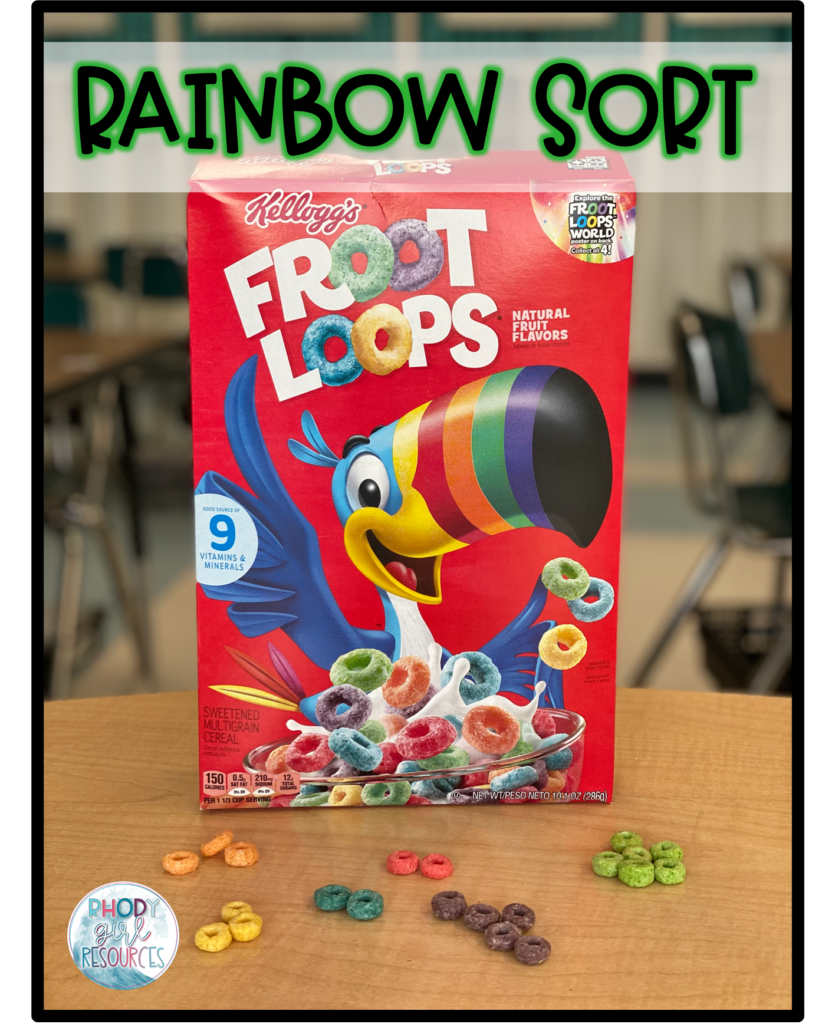
17. Rainbow Sort

Materials: Froot Loops

How to Play: In one minute, race to sort your Froot Loops by color.

The ultimate goal is to have fun! Embrace the excitement and time with your students as they build relationships, laugh, and find a new favorite activity.

Are you still unsure about using Minute to Win It games in your classroom? Give them a try with the freebie below.

Filed Under: Classroom Fun & Community Building, Holidays, St. Patrick's Day, Uncategorized Tagged With: classroom party, classroom rewards, games, holidays, minute to win it, St. Patrick's Day

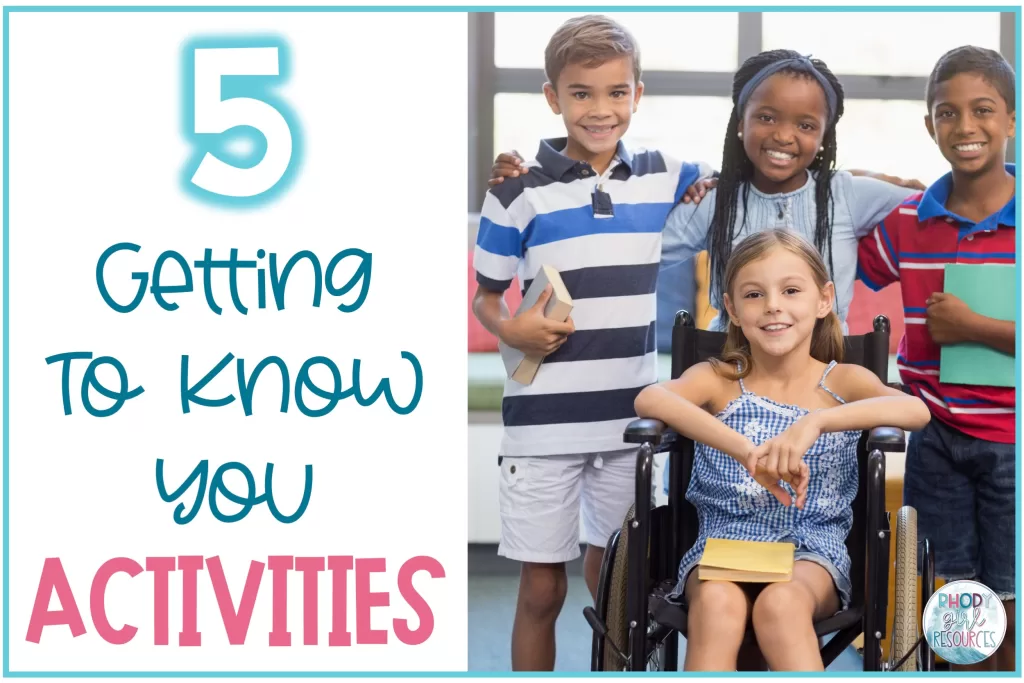
5 Getting to Know You Activities for Students

Getting to know you activities for students are an important part of back to school. They help you learn about your students and build classroom community. Through these activities, relationships can be fostered as students learn things about their classmates and things they have in common. Getting to know you activities can also help teachers guide instruction and make connections.

Students standing together in a classroom participating in getting to know you activities.

Getting to know you activities do not have to be complicated. Teachers do not need anything extra added to their plates, especially at the beginning of the school year. The pressure to start instruction and begin curriculum is always high, but you won’t ever regret taking the time to implement some of these activities.

Getting to Know You All About Me Activities

Sprinkle these activities throughout the first week. Each one requires minimal prep or materials but meets the need to learn about your students.

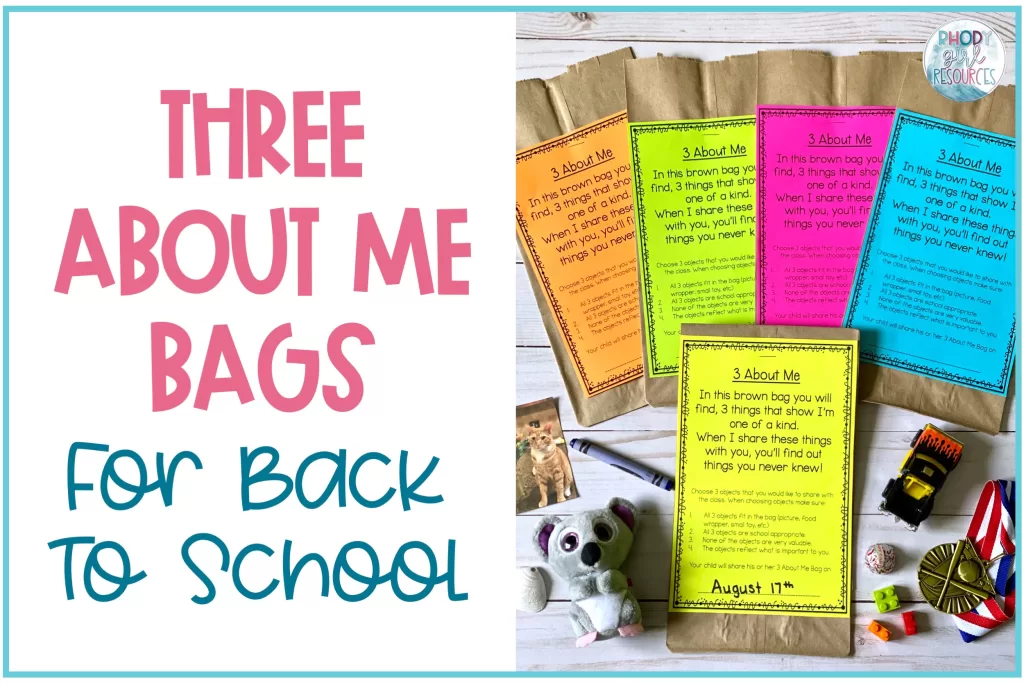
3 About Me Bags

These bags are low-prep and a great home to school connection. All you have to do is attach the printable to a paper bag and send them home. Students collect 3 things to share about themselves, place them in the bag, and return them to school. Sharing the bags is very flexible. Pick a schedule (all at once, one a day) that works best for your classroom.

All about me bags for back to school.

I always start by sharing my own bag with my class. This gives students a chance to see examples of what they could put in their own bag and lets them get to know a little bit about their teacher.

Pom Pom Share Get to Know You Ice Breaker Questions

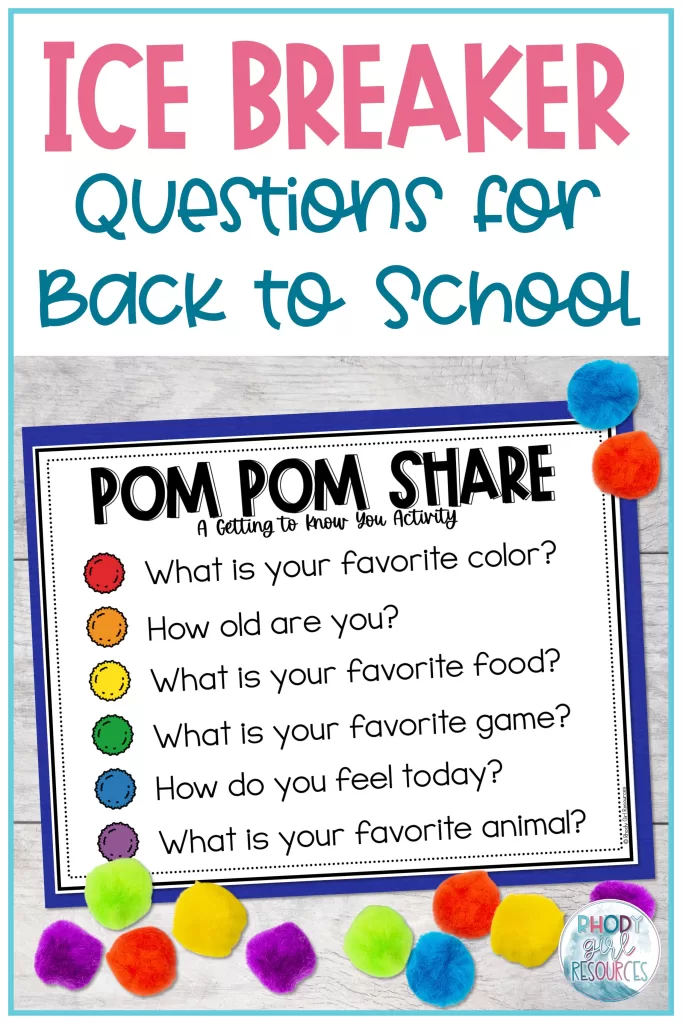
Another quick activity that is also low prep is Pom Pom Share. This All About Me activity only needs pom poms. Display the icebreaker questions under a document camera or project them on an interactive whiteboard. Students pull a pom pom and then answer the questions next to the matching color.

Pom pom share a getting to know you activity for students.

Pom Pom Share can be done whole class during morning meeting, in small groups, or with partners. Change the questions up and you can use it more than once! You can grab a sample of this activity to try for yourself below.

Would You Rather Getting to Know You Activities

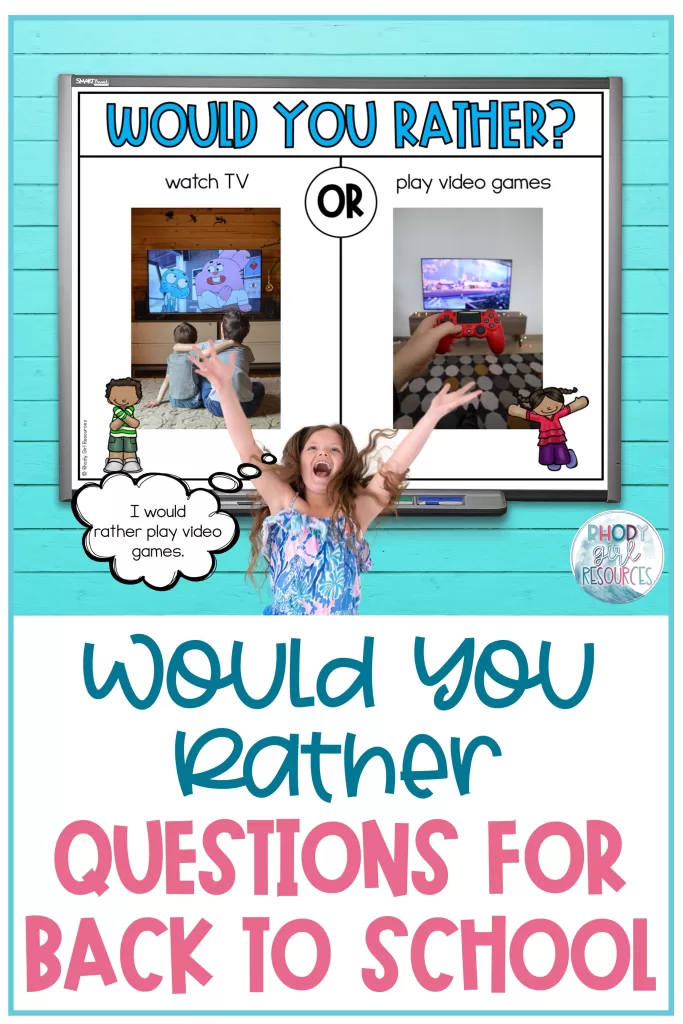
Would you rather questions can also help you learn about your students’ interests, likes, and dislikes. The best part about these would you rather questions is they integrate movement! Students listen to the question and two choices. Each choice has a movement picture next to it. Students show their answers by completing the matching exercise. Now you’ve got a get to know you activity and brain break in one!

Getting to Know You All About Me Crafts

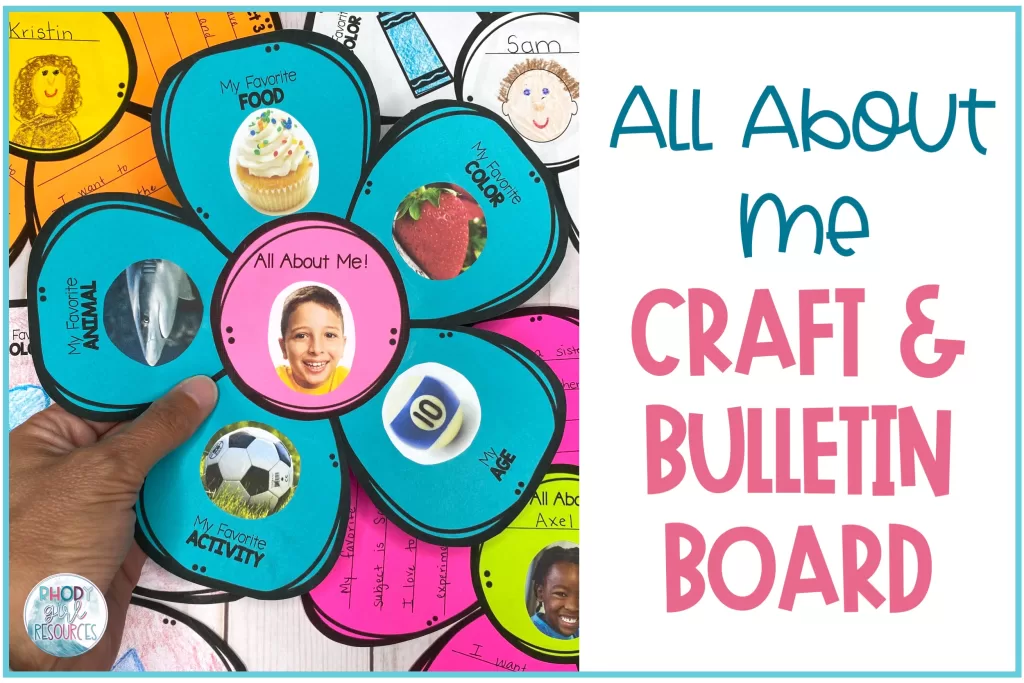
If you’re looking for something a little more in-depth with a final product, these all-about-me crafts can meet multiple needs. First, they are a great way for students to share about themselves plus they make a great beginning of the year bulletin board. Complete these all-about-me crafts in the classroom or send them home as a family project.

All About Me craft that can be used as for getting to know you activities.

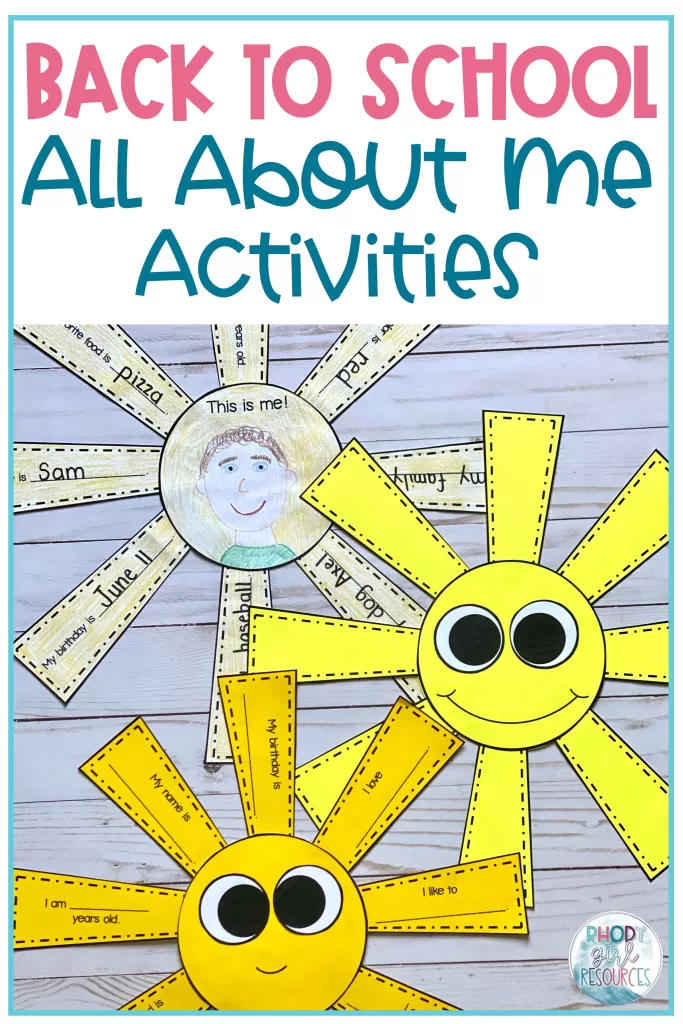
These flowers and suns can be differentiated and used with a variety of grades. Students can draw, cut out pictures, or write to share information about themselves. Allow student to present their creation or display the whole class together and make an all-about-me bulletin board.

Examples of sunshine All About Me crafts.

What are your favorite ways to build classroom community and get to know your students?

Filed Under: Classroom Fun & Community Building, Uncategorized

Writing Crafts to Bring Writing Alive in Your K-2 Classroom

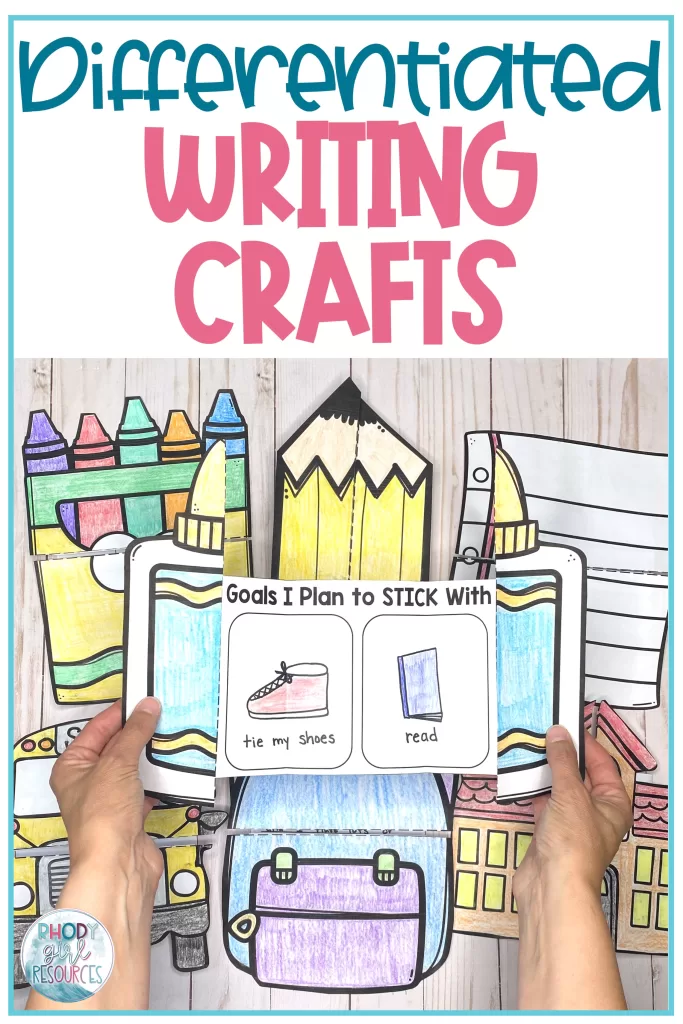
Writing crafts are a hands-on and engaging way to get students to write! Use them to showcase student writing, share student learning, create a bulletin board, or make cards. They are low prep and can be integrated throughout different subjects making writing crafts a welcome classroom addition.

Hands holding an example of summer writing crafts.

What Are Writing Crafts?

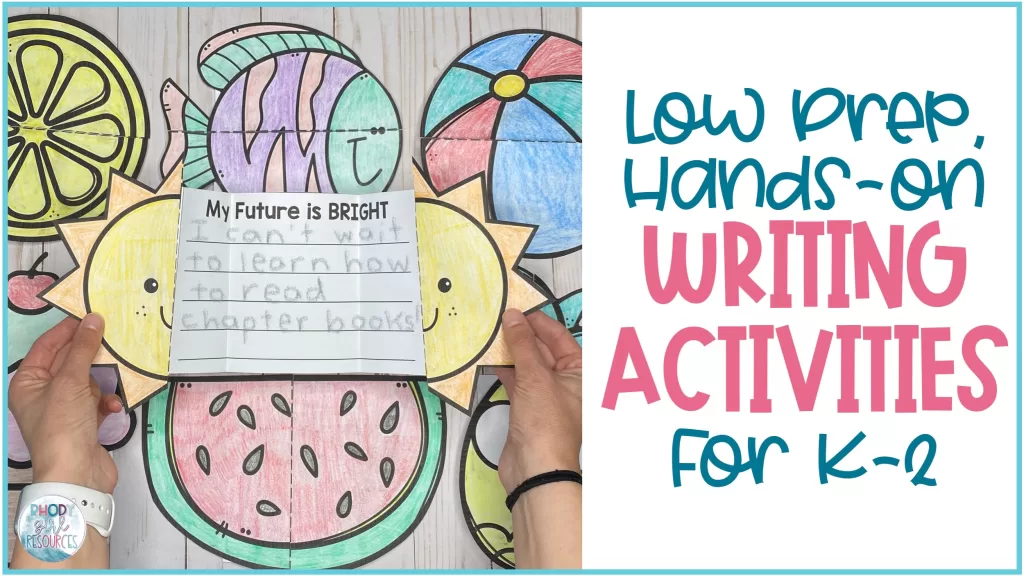
Writing crafts pair students’ work with a thematic image to present their writing in a new way. Each writing craft only uses two pieces of paper. Students color and cut out the image, then attach their writing pages to complete the project.

Each resource has a variety of images and inserts. Choose what meets your needs, print, copy, and you are ready. Students writing sentences can use the lined versions, while others are provided blank spaces to draw and label. Choose from the included writing prompts or create your own using the editable templates.

Hands holding back to school writing crafts.

Once students understand how to assemble writing crafts, they can do it independently. Add writing craftivities to your writing block, place them at your writing center, or use them as an activity during literacy stations.

How to Use Writing Crafts

In school, students learn and practice different types of writing, including informational, opinion, how-to, poetry, and narrative. Writing or drawing on plain paper can become repetitive. Using these writing foldables, students can practice different types of writing or publish and share everything they’ve learned in a nontypical way.

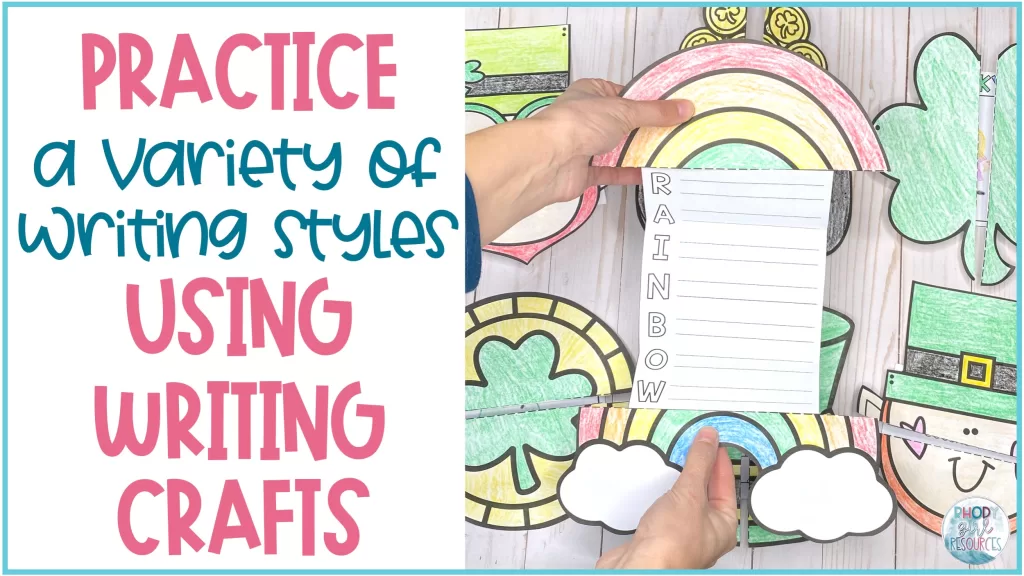
St. Patrick's Day Writing activities

Teach or Practice Different Writing Styles

Using writing crafts, students can explore and practice different writing styles. For example, each set includes a theme word where students can write an acrostic poem. Additionally, use the St. Patrick’s Day writing activities to practice how-to writing and share the steps for “How to Catch a Leprechaun.” Meanwhile, the Spring and other seasonal resources allow students to share their opinions about their favorite things to do. Practice making a list using the bucket list craft in the Summer writing crafts. Furthermore, each holiday has options to make cards, such as Valentine’s Day Cards or Mother’s Day Cards. The possibilities are endless and will get students’ creativity flowing!

Integrate Other Subjects

Writing crafts are for all subjects! They come in various themes for each holiday and season, making them perfect for integrating into science and social studies! Students can share what they learned about the Pilgrims, write a thank you card for Veterans, or sequence the life cycle of a butterfly using these writing activities.

Earth day writing crafts to show ing integration of science and writing.

Maintain student interest and use them all year long with the abundance of options included! Pick and choose the best activities for your class, or grab the bundle to save money and be ready for the whole school year.

Try writing crafts and see if they are right for your classroom using this freebie!

Filed Under: Uncategorized, Writing Tagged With: writing, writing center

How to Use Quick, Easy, and Fun Printable Fine Motor Activities

As teachers, we know the importance of fine motor skills and their impact on classroom activities. Strong fine motor skills provide a foundation for many classroom tasks, such as writing, turning a page, cutting with scissors, and more. Each year, students enter the classroom with varying fine motor skills. Integrating printable fine motor activities is one way to support and improve fine motor skills in the classroom.

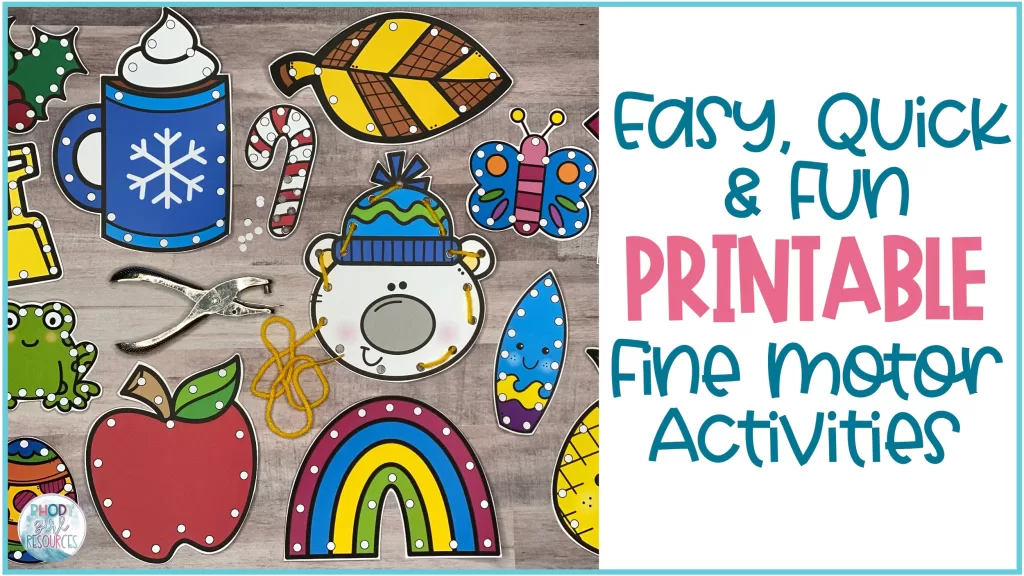
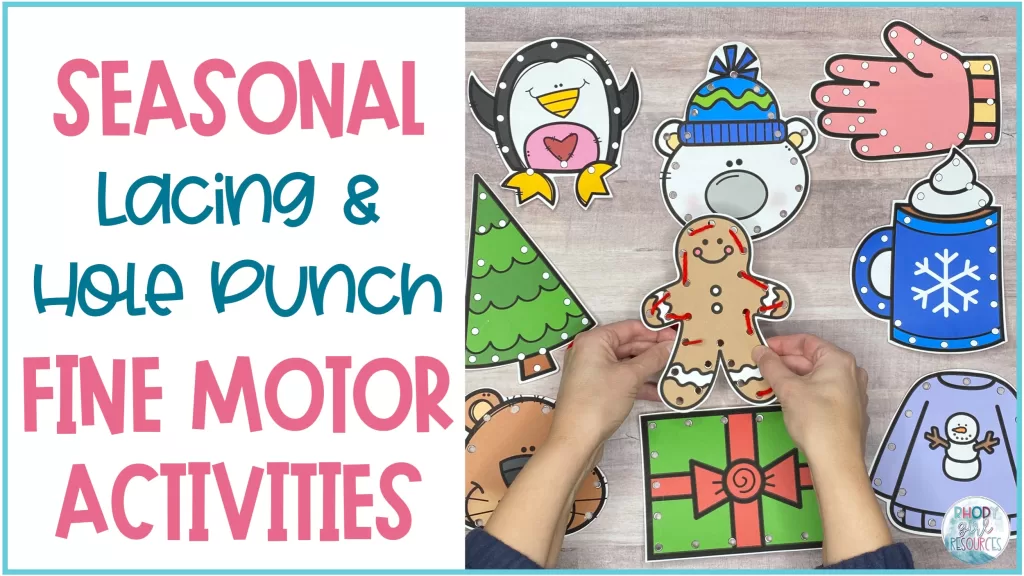
Examples of lacing and punch cards for fine motor skills practice

What are Fine Motor Skills?

Fine motor skills are tasks and movements you complete using small muscles in parts of the body. Cutting, grasping, squeezing, pinching, and tracing are all ways to strengthen fine motor skills involving the hands. These fine motor skills are important because they will later assist children with getting dressed, feeding themselves, writing their names, and playing an instrument.

Why are Fine Motor Skills Activities Important?

Success in school depends on good fine motor skills. Just like it takes time to build muscle and increase endurance through exercise, it also takes time to build and support fine motor skills. Practice is key for these skills to develop.

Printable Fine Motor Activities

Printable fine motor activities are a fun and simple way to provide this practice in the classroom. You can create printable fine motor activities with yarn and a hole punch. Students will have so much fun lacing and punching holes they won’t realize they are building their hand muscles. These fine motor skills activities can be used during centers, for early finishers, or at a station. They are quick, easy to change, and engaging!

Seasonal lacing and punch cards to build fine motor skills.

Lacing Activities

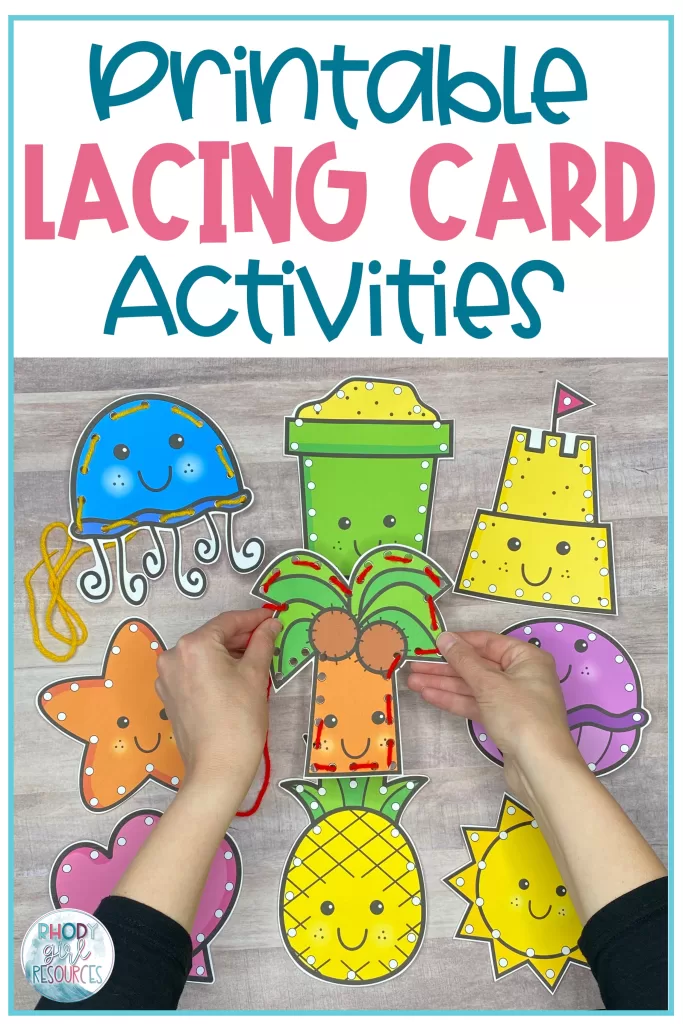
Lacing activities help develop fine motor skills, which will later support other skills, such as tying shoes. To prep lacing cards, you will first print the large picture cards. Next, laminate them for durability and then punch out the holes. Provide your students with yarn or string, and they are ready to lace. Students will feed the yarn up and down through the holes around the shape.

Hands showing how to lace a card for printable fine motor activities

Hole Punch Activities

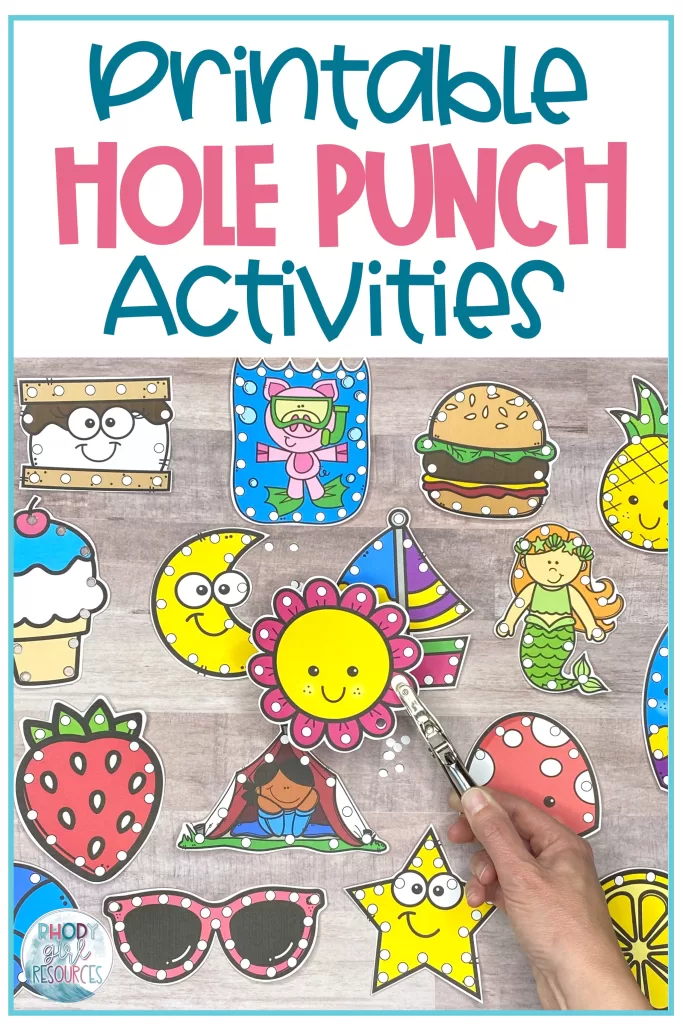
A hole puncher takes printable fine motor activities to a whole new level. The new tool makes the activity special, and your students will be begging to use it! I use these hole punchers in my classroom. They are easy for little hands to squeeze and don’t jam.

For hole punch activities, you can print the small or large cards in color or black and white. You can cut around the shape or let your students cut them out to support their fine motor skills again. I typically copy many black and white cards, toss them in a basket with a hole puncher, and set them free.

Hand a showing how to hole punch using printable fine motor activities

Lacing and hole punch activities can be used year-round by changing the images. With sets for spring, summer, fall, or winter, you have enough printable fine motor activities for the whole school year!

Try hole punch and lacing activities with this free set, and if you are looking for more fine motor activities, you can learn more here.

Filed Under: Fine Motor & Sensory, Uncategorized Tagged With: fine motor, lacing cards, punch cards

  • 1
  • 2
  • 3
  • 4
  • Next Page »
  • Email
  • Facebook
  • Instagram
  • Pinterest

GET FREEBIES!!

Search

Categories

Latest on Instagram

Happy 100th Day!! Have you celebrated the 100th da Happy 100th Day!! Have you celebrated the 100th day already?

We spent the day:
⭐️ Sharing what we would buy with $100
⭐️ Getting out our wiggles with 100th Day Would You Rather questions
⭐️ Reading books about 100
⭐️ Making Crowns
⭐️ Brainstorming 100 ways to make 100
⭐️ STEM building with 100 objects

And more!

What’s your favorite activity to do on the 100th day?

#100thdayofschool #100thdaycelebration #secondgradeteacher #secondgrade #secondgraderocks
What’s one of your favorite places in your classro What’s one of your favorite places in your classroom?

Mine is my small group table, which also serves as my desk. So much happens in this little space. I feel like you can learn so much about your students working with them one on one or in small groups, and the connections are made even stronger here. 

#secondgrade #secondgradeclassroom #secondgradeteacher #smallgroupteaching #classroompic #classroomspace #iteachsecond
A few little snippets from our day in second grade A few little snippets from our day in second grade!

Comment to let me know what you’d like to see more of or know more about. 

#secondgradeteacher #secondgrade #teachersofinstagram #classroomroutines #teacherlife #teacherday #lifeintheclassroom
This was the perfect way to transition back after This was the perfect way to transition back after winter break. It got my students up and moving and allowed us review classroom expectations. 

#teachingideas #brainbreak #movementbreak #classroomexpectations #classroomrules #iteachtoo #teachersofinstagram
What are your classroom must haves? Let’s help ea What are your classroom must haves?

Let’s help each other out and share things that make your classrooms run smoother.

My top 3:
⭐️ Doorbell
⭐️ Electric Pencil Sharpener 
⭐️ Water Bottle Holders 

#teacherhacks #teachermusthave #classroommanagement #teachersofig #iteachsecond #secondgradeteacher
Let’s get to know each other! Comment with what Let’s get to know each other! 

Comment with what else you’d like to know about me and what we have in common both inside and outside the classroom. 

#teachergram #teacherig #teacherinstagram #teacherinsta #secondgradeteacher #secondgradeteachers #secondgraderocks
This student gift for families checks all the boxe This student gift for families checks all the boxes. It’s affordable, easy, meaningful, and cute!

They’re personalized but also winter themed instead of just Christmas. 

I grabbed all the supplies from @michaelsstores during their Black Friday sale. I’ve also seen the ornaments on Amazon and in other craft stores. 

Are you team family gifts? If so, what’s your favorite one to make?

#secondgrade #secondgradeteacher #studentgifts #studentchristmasgifts #secondgradecrafts #decemberintheclassroom
Come along as I get my second grade classroom read Come along as I get my second grade classroom ready for the week ahead. 

Report cards  went home today and we have two nights of conferences this week, on top of the typical December hustle and bustle. 

Trying to stay organized and ahead.  Who am I kidding? 🤣🤣🤣 Hope you all have an amazing week!

#secondgradeteacher #secondgradeclassroom #secondgrade #secondgraderocks #secondgradeteachers
Halloween was exhausting but so much fun!! It’s m Halloween was exhausting but so much fun!!

It’s my first year in second grade so it was exciting to try some new things but also see how some favorites work with a different age. 

Time to recharge with some candy for tomorrow. Do  you have school tomorrow?

#halloweenintheclassroom #halloweenfun #secondgrade #secondgradefun #secondgradeteacher #secondgradeteachers

Latest on Facebook

Rhody Girl Resources

2 years ago

Rhody Girl Resources
Let’s keep these dollar deals going into the new year!! Search #2024deals on Teachers Pay Teachers January 1-2 to check out my Winter Would You Rather Brain Breaks, CVC Secret Code Worksheets, and hundreds of other resources marked down to $1.#cvcwordsactivities #cvcwords #wouldyouratherquestions #wouldyourather #teacherresources #teacherdeals #tptsales #elementaryteacher #phonicsactivity #kindergarten #firstgrade ... See MoreSee Less

Photo

View on Facebook
· Share

Share on Facebook Share on Twitter Share on Linked In Share by Email

Rhody Girl Resources

2 years ago

Rhody Girl Resources
Let’s ring in the New Year with some dollar deals!!! Search #toast23 on Teachers Pay Teachers to find hundreds of resources marked down to a dollar. Ive included my Minute to Win It Games and Word Mapping Worksheets. Minute to Win It Games are perfect for a classroom reward, for classroom parties, or as a community building activity. Word Mapping supports the science of reading and works great in small groups, as a follow up to a phonics lesson, or as a literacy center. #kindergartenteachers #firstgradeteachers #teacherdeals #teacherresources #phonicsactivity #minutetowinitgames ... See MoreSee Less

Photo

View on Facebook
· Share

Share on Facebook Share on Twitter Share on Linked In Share by Email

Rhody Girl Resources

2 years ago

Rhody Girl Resources
Looking for a last minute Veterans activity or a fun way to practice beginning sounds and CVC words? I’ve got you covered! Grab these two resources plus hundreds more for only $1 by searching #turkey23 on Teacher Pay Teachers November 8 & 9. ... See MoreSee Less

Photo

View on Facebook
· Share

Share on Facebook Share on Twitter Share on Linked In Share by Email

Rhody Girl Resources

2 years ago

Rhody Girl Resources
Do you love a sale?Today September 4 and tomorrow September 5 search #laboroflove on Teachers Pay Teachers for thousands of resources marked down to $1. #teacherspayteachers #teacherspayteacherssale #STEMResources #stemactivities #stemactivitiesforkids #minutetowinitgames #ClassroomRewards ... See MoreSee Less

Photo

View on Facebook
· Share

Share on Facebook Share on Twitter Share on Linked In Share by Email

Rhody Girl Resources

3 years ago

Rhody Girl Resources
Get Ready for the TPT sale with this awesome prize!To enter just:🤍Like and save this photo.🤍Follow @weekendteachergiveaways🤍Follow everyone @weekendteachergiveaways is following.🤍Comment on @weekendteachergiveaways post and tell us what you want to grab during the sale in the comments below🤍Tag a friend!! Each comment with a different tag counts as an extra gi.ve.aw.ay entry!Bonus entries:🤍 Share the @weekendteachergiveaways main post in your stories for 3 extra entries🤍This gi.ve.aw.ay closes Tues, August 1st at 10 pm EST. The winner will be contacted via DM and must respond within 12 hours or a new winner will be chosen. We will NEVER ask for CC info or for you to click any links- please report and block anyone who does.🤍This giv.eaw.ay is not sponsored, endorsed, or associated with Instagram, or TPT. This giveaway is open worldwide.#WTGP2001 #teachersofthegram #teachersofig #teachersareawesome #TeachersRock #teachergram #teachersofinsta ... See MoreSee Less

Photo

View on Facebook
· Share

Share on Facebook Share on Twitter Share on Linked In Share by Email

Latest on Pinterest

Copyright © 2026 · Website Design By Jumping Jax Designs